
High-Mileage Vehicles: What Changes About Maintenance After 100,000 Miles

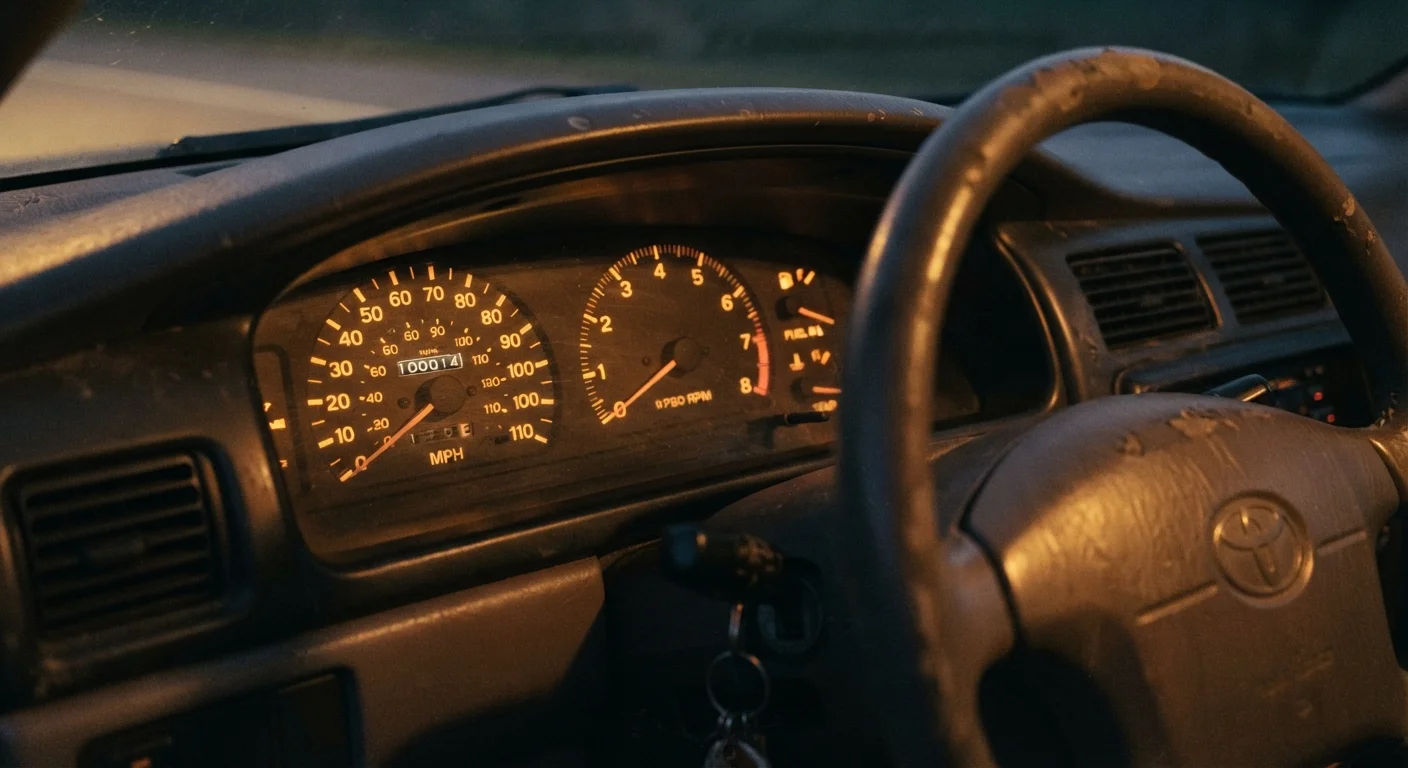
Photo: BridgeWish.com | Reliable Source Of Information editorial
Key Takeaways
- Several key components - timing belts, spark plugs, and coolant - reach end-of-life near or after 100,000 miles.
- High-mileage engines benefit from shorter oil change intervals and oil formulated for older engines.
- Rubber components like hoses, belts, and seals degrade with age and heat cycles, not just mileage.
- Transmission and differential fluid are often overlooked but become critical in high-mileage vehicles.
- More frequent inspections - not just more frequent replacements - are the cornerstone of high-mileage maintenance.
Why 100,000 Miles Is a Real Turning Point
The 100,000-mile mark isn't arbitrary. It represents roughly a decade of operation for average drivers, enough cycles of heating, cooling, vibration, and friction to meaningfully change the condition of rubber, metal, and fluid throughout a vehicle. Components that were well within spec at 60,000 miles may be approaching the end of their service life - not because the car is failing, but because materials have finite lifespans.
The good news is that a vehicle crossing this threshold isn't automatically unreliable. Many engines and transmissions are engineered to last well beyond 200,000 miles with correct care. What changes is the nature of the maintenance required: it becomes more inspection-driven, less predictable, and more sensitive to deferred service. As our guide on extending maintenance intervals explains, pushing past recommended schedules carries real mechanical consequences - and those consequences compound in older vehicles.
Understanding which systems deserve closer attention - and why - allows you to make informed decisions about cost, safety, and priorities rather than reacting to breakdowns after the fact. This is about staying ahead of the curve, not chasing problems.
Keep a Simple Maintenance Log
What to Inspect, Replace, and Monitor
High-mileage maintenance isn't one single service - it's a shift in mindset. The standard maintenance intervals in your owner's manual remain valid baselines, but certain areas now demand more frequent attention or have crossed into replacement territory for the first time.
What you will need
Owner's Manual
Reference for manufacturer-specified maintenance intervals specific to your make, model, and engine.
Service History Records
Identify which high-mileage services have already been performed and which are overdue.
High-Mileage Engine Oil
Formulated with seal conditioners to reduce leaks in older engines with worn gaskets.
Qualified Mechanic
Conduct a thorough inspection of wear-prone components that are difficult to assess without lifting the vehicle.
Don't Skip Your Owner's Manual
Pull Your Service History and Identify Gaps
Before changing anything, know what has already been done. Gather all receipts, dealer records, or inspection reports and note which major services - coolant flush, spark plugs, transmission fluid, timing belt - have been completed and at what mileage. This prevents duplicate work and immediately reveals what's overdue.
Re-evaluate Your Oil Change Interval
High-mileage engines often have slightly worn piston rings and seals, which can introduce combustion gases into the oil more readily. Many mechanics suggest shortening the oil change interval modestly - even if you were previously following a 7,500- or 10,000-mile schedule - and switching to an oil labeled for high-mileage engines. These formulas typically contain seal conditioners that can reduce minor seeping. See our oil change interval guide for more context on what the science actually says.
Inspect and Replace Rubber Components
Hoses, belts, gaskets, and seals are made from rubber compounds that harden and crack over time - independent of mileage. Coolant hoses, the serpentine belt, valve cover gaskets, and axle boots should all be visually inspected. Squeeze coolant hoses; they should feel firm but pliable, not hard or spongy. Any cracking, swelling, or oil residue on exterior engine surfaces is a signal to act.
Address the Timing Belt if Applicable
Many engines use a rubber timing belt that synchronizes the crankshaft and camshaft. Most manufacturers specify replacement between 60,000 and 105,000 miles. If your vehicle has a timing belt and the replacement interval has passed - or is unknown - schedule this service. Confirm with your mechanic whether your engine is an interference design, which carries higher risk of engine damage upon belt failure.
Flush Transmission and Differential Fluids
Automatic and manual transmission fluids degrade under heat and friction over time. Many manufacturers specify transmission fluid changes between 30,000 and 60,000 miles under severe conditions - yet this service is frequently skipped. By 100,000 miles, fluid that hasn't been changed is often darkened and depleted of its protective additives. Differential fluid in rear-wheel-drive and four-wheel-drive vehicles follows similar logic and is equally easy to overlook.
Schedule a Comprehensive Inspection
Beyond fluid and belt intervals, high-mileage vehicles benefit from a professional once-over of suspension components - ball joints, tie rod ends, struts or shocks, and wheel bearings. These parts don't have simple mileage replacement schedules; they're assessed by feel and visible wear. Ask your mechanic to inspect the brake lines and fuel lines for corrosion as well, particularly if you live in a region where roads are salted in winter. For a broader framework, our complete car ownership and maintenance guide covers what these systems do and how to evaluate them.
Timing Belt Failure Can Total an Engine
Developing consistent habits matters as much as any single service. Our article on habits that extend vehicle life details the day-to-day practices that separate vehicles that reach 200,000 miles from those that don't. And if you want to better understand your maintenance schedule as a whole, our maintenance schedule explainer decodes what the intervals in your owner's manual actually mean.
The content on this site is for informational purposes only and is not a substitute for professional advice. Always consult a qualified professional for guidance specific to your situation.