
Your Car's Maintenance Schedule, Explained

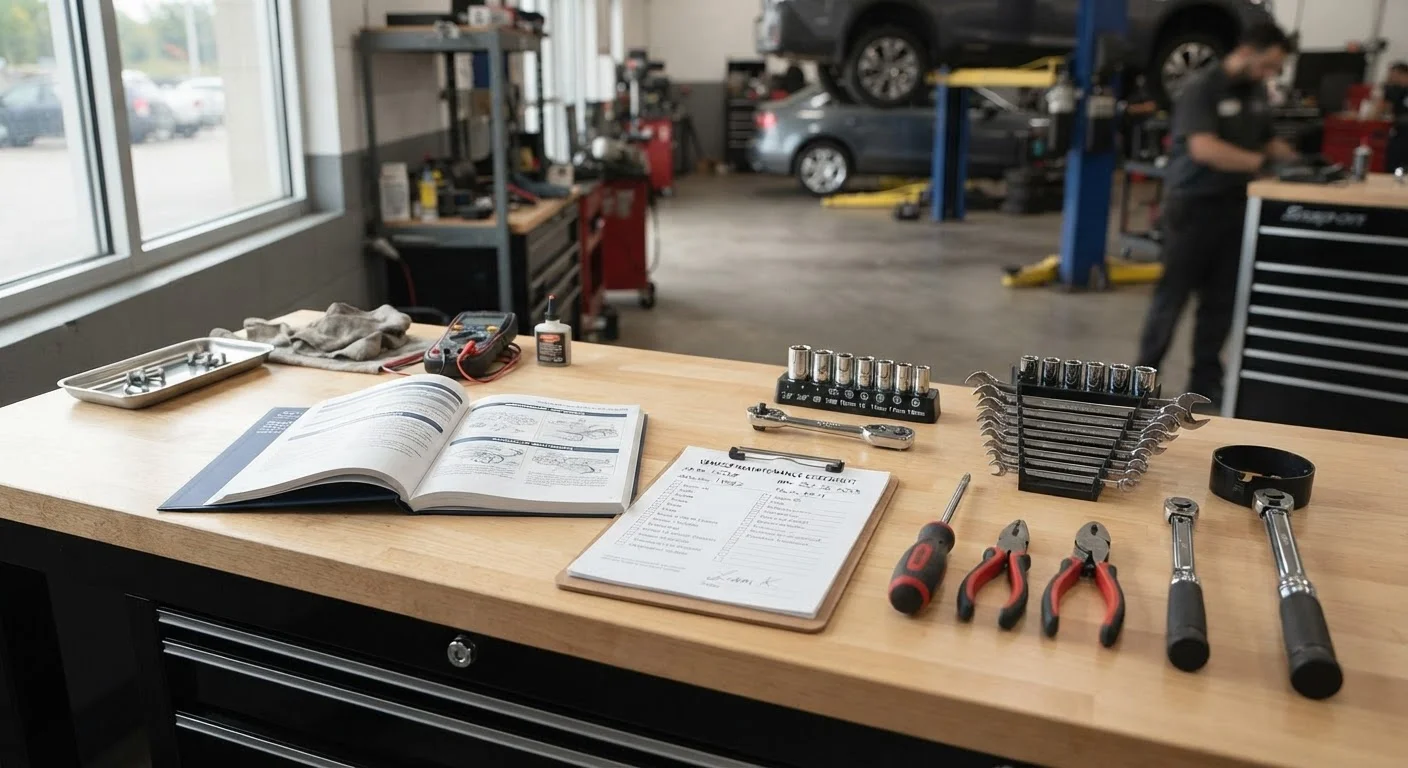
Photo: BridgeWish.com | Reliable Source Of Information editorial
Key Takeaways
- Your owner's manual - not the shop's sticker - is the definitive source for your vehicle's service intervals.
- Maintenance schedules separate 'normal' and 'severe' driving conditions, which affect how often you need service.
- Missing scheduled service can void warranty coverage and lead to far more expensive repairs down the road.
- Mileage and time intervals both apply - whichever comes first triggers the service.
- Keeping a written maintenance log protects your resale value and supports warranty claims.
What a Maintenance Schedule Actually Contains
Open your owner's manual to the maintenance section and you'll typically find a table organized by mileage milestones - commonly 5,000, 15,000, 30,000, 60,000, and 90,000 miles - alongside time-based triggers like every 12 months. Each row lists a specific component or fluid, and columns indicate whether it should be inspected, replaced, or serviced at that interval.
The schedule covers a predictable set of items: engine oil and filter, tire rotation, air and cabin filters, brake fluid, coolant, transmission fluid, spark plugs, belts, and battery condition. Some tasks recur frequently; others appear only at major milestones. The key rule: whichever comes first - mileage or time - triggers the service. A car driven very little still needs annual or biennial fluid checks because fluids degrade chemically over time regardless of miles driven.
For a full breakdown of every maintenance category and what each involves, see the complete maintenance overview covering routine, seasonal, and mileage-based tasks.
Start With Your Owner's Manual
Normal vs. Severe Service: Why the Distinction Matters
Most maintenance schedules include two tracks: normal and severe service. Normal service applies to typical highway commuting in moderate climates. Severe service applies when your driving regularly involves conditions that put greater stress on vehicle components.
Common severe-duty triggers include:
- Frequent short trips under five miles, especially in cold weather
- Stop-and-go city driving for extended periods
- Towing trailers or hauling heavy cargo regularly
- Driving in extreme heat, cold, or dusty environments
- Extended engine idling
If severe conditions apply to your daily driving, your oil, filters, and transmission fluid may need attention at shorter intervals than the normal schedule suggests. Many drivers underestimate how often their driving qualifies as severe - particularly urban commuters who rarely merge onto a highway.
~35%
Drivers who skip or delay scheduled maintenance
Industry surveys conducted by automotive associations have consistently found that a significant portion of US drivers are behind on at least one scheduled maintenance item at any given time.
7,500-10,000 mi
Typical modern oil change interval with conventional oil
Most major automakers now specify intervals well above the old 3,000-mile guideline for current engine designs using modern motor oils.
Up to 15,000 mi
Oil change interval with full synthetic oil (select vehicles)
Several manufacturers specify extended intervals for full synthetic oil in specific engine configurations - always confirm with your owner's manual.
The Mileage Milestones Worth Knowing
While every vehicle differs, certain service points are nearly universal across makes and models. Understanding what typically falls at major intervals helps you plan and budget rather than react.
- Every 5,000-10,000 miles
- Oil and filter change (interval varies by oil type and engine); tire rotation.
- Every 15,000-30,000 miles
- Air filter inspection or replacement; cabin air filter; brake inspection.
- Every 30,000-60,000 miles
- Transmission fluid (varies widely by vehicle); coolant flush; brake fluid replacement; spark plugs (conventional).
- Every 60,000-100,000 miles
- Timing belt replacement (interference engines only); long-life spark plugs; differential fluid.
If your vehicle is approaching or past 100,000 miles, some of these intervals shift and additional components deserve closer attention. The maintenance considerations for high-mileage vehicles cover what changes and why.
Common Misconceptions That Cost Drivers Money
Several widely repeated maintenance myths lead drivers to either overspend or dangerously delay service.
The 3,000-mile oil change. This rule was appropriate for older engines using conventional oil, but it no longer applies to most modern vehicles. Many manufacturers specify 7,500 to 10,000 miles for conventional oil and up to 15,000 miles for full synthetic. Following outdated advice means paying for unnecessary oil changes. See what the science and your manual actually say about oil change intervals.
"My car runs fine, so it doesn't need service." Many degrading fluids and wearing components produce no noticeable symptoms until they fail. Brake fluid absorbs moisture over time, reducing its boiling point - a problem you won't feel until braking performance drops under heavy use.
The shop's reminder sticker overrides the manual. Service shops often use conservative, generalized intervals. Your owner's manual is the authoritative source for your specific vehicle. If a shop recommends a service well ahead of the manual's schedule without a specific diagnostic reason, it's worth asking why.
“The owner's manual is the most underused document in car ownership. Drivers who read it tend to spend less on repairs over time - not because they're lucky, but because they understand what their vehicle actually needs.”
— Automotive Engineering Perspective, General industry insight from automotive maintenance professionals
Tracking Service and Protecting Your Investment
Knowing the schedule is only half the equation - documenting what's been done completes the picture. A maintenance log serves three practical purposes: it helps you stay on schedule, supports warranty claims if a covered component fails, and demonstrates care to future buyers.
A basic log can be a small notebook kept in the glove box or a spreadsheet. Record the date, odometer reading, service performed, shop name, and cost. Receipts are ideal, but even handwritten notes add credibility. Why the maintenance paper trail matters more than most drivers realize explains exactly what to track and how to organize it effectively.
For drivers new to vehicle ownership, the beginner's guide to what car maintenance actually involves provides a practical starting point - covering schedules, fluids, tires, and when to bring in a professional. And if you've received a shop estimate and aren't sure what the line items mean, reading a mechanic's estimate breaks down the terminology so you can evaluate charges with confidence.
Frequently Asked Questions
The content on this site is for informational purposes only and is not a substitute for professional advice. Always consult a qualified professional for guidance specific to your situation.