
Reading a Mechanic's Estimate: What Those Line Items Actually Mean

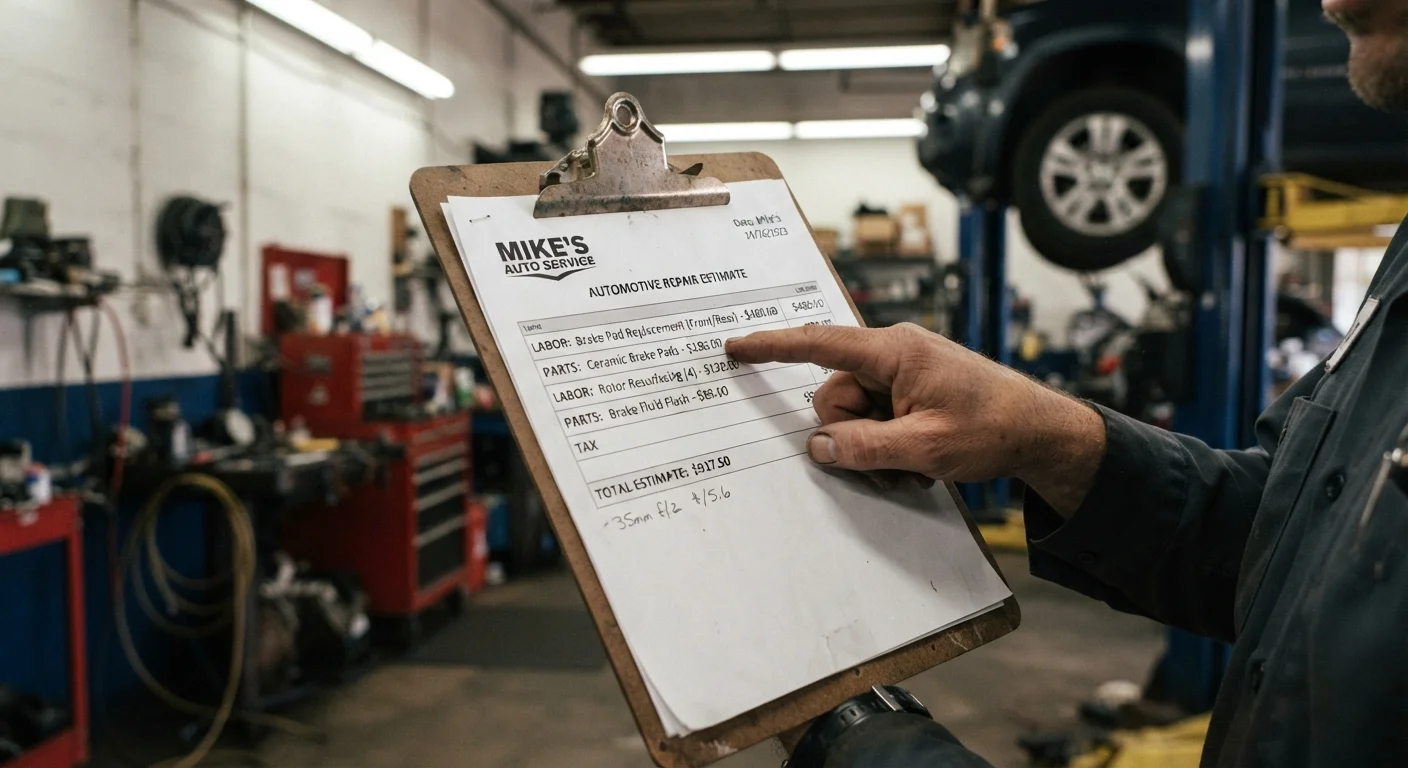
Photo: BridgeWish.com | Reliable Source Of Information editorial
Key Takeaways
- Labor charges are calculated using flat-rate hours set by industry guides, not actual time on the clock.
- OEM parts come from the original manufacturer; aftermarket parts are made by third parties and vary widely in quality.
- A diagnostic fee is a legitimate charge for the technician's time to identify the problem.
- Shop supply fees and environmental disposal fees are standard, but unusually high figures are worth questioning.
- Always ask for the written estimate before authorizing work, and request your old parts back when possible.
Labor Hours: Why the Clock Works Differently at a Shop
The labor section of an estimate is often the largest figure - and the most misunderstood. Shops don't charge based on how long a technician actually spends on your car. Instead, they use a flat-rate system drawn from industry-standard labor guides (published by data providers like Mitchell or Chilton). Each repair job is assigned a set number of hours, and you're billed for that amount whether the tech finishes faster or slower.
For example, a brake pad replacement might be listed as 1.5 labor hours at a shop rate of $120 per hour - so $180 in labor - even if an experienced mechanic completes it in 45 minutes. This system rewards efficiency and is standard across the industry. What you should verify is that the labor hours listed match the job described. If you're charged 3 hours for a task most guides list at 1 hour, ask for an explanation.
Ask for a Written Estimate Before Authorizing Anything
Parts: OEM, Aftermarket, and Remanufactured Explained
Every parts line item will include a part number, description, quantity, and unit price. Understanding the part type matters as much as the price.
- OEM (Original Equipment Manufacturer): Parts made to the same specifications as your factory components. Generally more expensive, but guaranteed to fit and often backed by a manufacturer warranty.
- Aftermarket: Parts made by independent manufacturers. Quality varies significantly by brand and part type. Some aftermarket parts meet or exceed OEM quality; others don't. Ask your shop what brand they're using and whether it carries a warranty.
- Remanufactured (Reman): Used cores that have been rebuilt to a functional standard - common for alternators, starters, and brake calipers. These can be a cost-effective option when quality-controlled.
For context on how parts costs can compound over a vehicle's lifespan, see our guide to your car's maintenance schedule.
~55%
Of repair costs often attributable to labor
Industry data consistently shows labor accounts for roughly half or more of a typical automotive repair bill, making it the most important line item to understand.
$75-$150
Typical diagnostic fee range
Most independent and dealership shops in the US charge within this range for a standard diagnostic session, though complex electrical or drivability issues may cost more.
Fees You'll See - and How to Evaluate Them
Beyond parts and labor, most estimates include additional line items that aren't always self-explanatory.
- Diagnostic Fee
- Legitimate and expected. Covers the technician's time to identify the problem using scan tools, inspections, or test drives. Typically ranges from $75 to $150 depending on complexity and region.
- Shop Supply Fee
- A percentage-based or flat charge covering consumables (rags, cleaners, fasteners). Industry standard is roughly 5-10% of labor, capped at a reasonable amount. Review this figure if it seems disconnected from the scope of work.
- Environmental / Hazmat Disposal Fee
- Covers proper disposal of fluids, filters, and other regulated materials. A small, flat fee is normal and reflects real compliance costs.
- Sublet Charges
- If your shop outsources part of the work (such as alignment or glass repair) to a specialist, those costs may appear as a sublet line. Ask who's doing the work and whether you could go directly to that specialist.
Some of these charges echo the kind of add-ons worth scrutinizing in any service context - see our breakdown of dealer add-ons that often cost more than they're worth for a related perspective.
How to Review an Estimate Before Signing
Before authorizing any repair, take a few deliberate steps to evaluate the document in front of you.
- Verify the complaint description matches what you reported. The estimate should reflect the specific symptom or system you brought the car in for.
- Check that all items are authorized. A shop should not add work without calling you first. Any additional findings discovered during the repair should appear as a separate authorization.
- Ask about part warranties. Reputable shops warranty both parts and labor for a defined period - commonly 12 months or 12,000 miles, though this varies.
- Request your old parts back. For major components, asking for the removed parts confirms the work was actually done.
- Get a second opinion on large jobs. For estimates over several hundred dollars, a second written quote from a licensed shop is a reasonable step, not an insult.
If you're weighing whether to handle smaller maintenance items yourself, our DIY vs. shop guide can help you decide where the line is.
State Laws Vary on Estimate Requirements
Frequently Asked Questions
The content on this site is for informational purposes only and is not a substitute for professional advice. Always consult a qualified professional for guidance specific to your situation.