
The Real Tradeoffs of Extending Maintenance Intervals Beyond the Owner's Manual

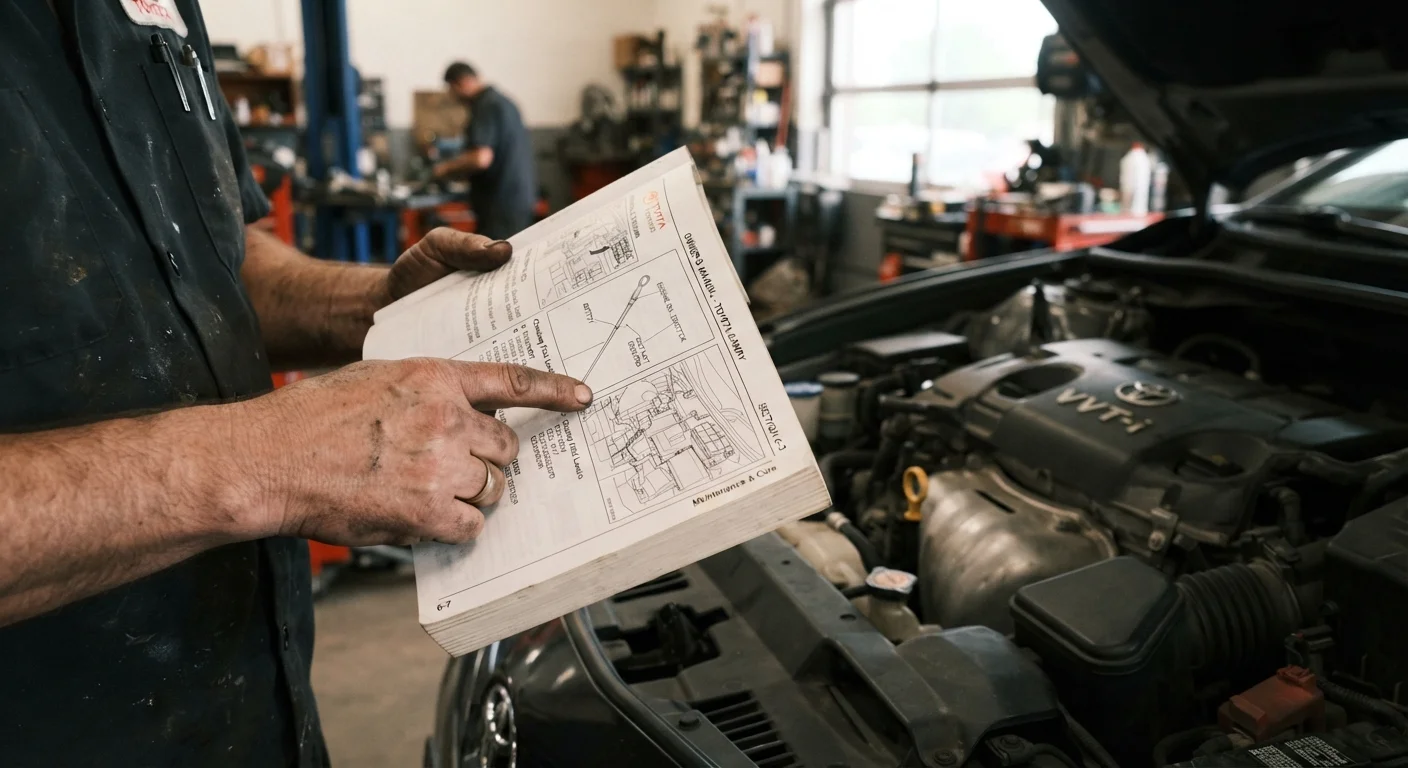
Photo: BridgeWish.com | Reliable Source Of Information editorial
Key Takeaways
- Extending maintenance intervals can save money short-term but risks accelerating wear on critical components.
- Modern synthetic oils and longer-life fluids have made some extended intervals genuinely viable - for specific vehicles and driving conditions.
- High-mileage vehicles, harsh driving conditions, and older fluid formulations reduce the margin for safely stretching service timelines.
- Skipping intervals rarely voids a warranty outright, but documented neglect can complicate claims when component failure occurs.
- The owner's manual remains the most vehicle-specific, manufacturer-validated guide for service timing.
Reduced short-term service costs and fewer shop visits
Stretching oil changes from 5,000 to 7,500 miles using full synthetic oil, for example, can meaningfully reduce annual maintenance expenses without necessarily increasing wear risk on modern engines designed for longer intervals.
Modern synthetic fluids genuinely support longer service lives
Full synthetic motor oils and long-life coolants are engineered with additive packages that resist oxidation and thermal degradation far longer than older formulations, providing a real - not imaginary - margin beyond traditional intervals.
Less frequent disruption to driving schedule and vehicle downtime
Fewer service appointments means less time arranging transportation, waiting at a shop, or scheduling around a vehicle being off the road - a practical benefit for drivers with demanding schedules.
Aligns with manufacturer-published extended intervals on newer models
Many automakers have formally extended their published oil change intervals to 7,500-10,000 miles or more, reflecting advances in engine design and lubricant chemistry - so following these extended schedules is factory-sanctioned, not improvised.
Accelerated internal wear when oil breaks down prematurely
Oil that has exceeded its effective service life loses its ability to maintain a protective film between metal components, increasing friction on bearings, camshaft lobes, and cylinder walls in ways that compound invisibly over time.
Coolant degradation leads to costly corrosion damage
As coolant ages, its corrosion inhibitors deplete and the fluid becomes acidic, attacking aluminum components including the radiator, water pump housing, and cylinder head - repairs that can run into thousands of dollars.
Clogged filters reduce performance and load ancillary systems
An overdue engine air filter restricts combustion airflow and can reduce fuel economy; a clogged cabin air filter forces the blower motor to work harder, shortening its service life over time.
Severe driving conditions shrink the safe extension margin significantly
Short-trip, stop-and-go, or high-heat driving degrades fluids faster than the normal-condition intervals assume, meaning drivers in these circumstances have far less buffer before real damage begins.
Complicates warranty and insurance claims if neglect is documented
While missing a single interval rarely voids a warranty automatically, a documented pattern of overdue services can give manufacturers grounds to deny powertrain claims tied to lubrication or cooling system failures.
Why Drivers Push Intervals - And What the Manual Is Actually Saying
The pull toward stretching a maintenance interval is easy to understand: service visits cost money and time, and if the oil still looks clean or the coolant gauge reads normal, skipping a few thousand miles can feel harmless. But the owner's manual doesn't set intervals based on visible symptoms - it sets them based on engineering data about how fluids and components degrade under expected operating conditions.
Understanding what your maintenance schedule is actually communicating matters before deciding to deviate from it. Intervals account for heat cycles, oxidation rates, contaminant accumulation, and mechanical wear - factors that don't always produce warning signs until damage is already done. That context is the foundation for any honest evaluation of the tradeoffs involved.
The Case for Extended Intervals: Where It Has Merit
There are legitimate scenarios where stretching beyond the printed interval carries minimal additional risk. Full synthetic motor oils are engineered to resist thermal breakdown and oxidation far longer than conventional formulations. Many automakers now publish oil change intervals of 7,500 to 10,000 miles - or higher - specifically because synthetic lubricants support it. See how synthetic and conventional oils differ for a closer look at what drives those differences.
Reduced short-term service costs and fewer shop visits
Stretching oil changes from 5,000 to 7,500 miles using full synthetic oil, for example, can meaningfully reduce annual maintenance expenses without necessarily increasing wear risk on modern engines designed for longer intervals.
Modern synthetic fluids genuinely support longer service lives
Full synthetic motor oils and long-life coolants are engineered with additive packages that resist oxidation and thermal degradation far longer than older formulations, providing a real - not imaginary - margin beyond traditional intervals.
Less frequent disruption to driving schedule and vehicle downtime
Fewer service appointments means less time arranging transportation, waiting at a shop, or scheduling around a vehicle being off the road - a practical benefit for drivers with demanding schedules.
Aligns with manufacturer-published extended intervals on newer models
Many automakers have formally extended their published oil change intervals to 7,500-10,000 miles or more, reflecting advances in engine design and lubricant chemistry - so following these extended schedules is factory-sanctioned, not improvised.
Similarly, long-life coolants - typically labeled as OAT (Organic Acid Technology) or HOAT - are formulated for 150,000-mile or five-year service lives under normal conditions. Extending these intervals slightly on a relatively new vehicle, with documented fluid condition monitoring, represents a lower-risk decision than skipping a conventional coolant flush on a decade-old vehicle.
The Real Risks of Pushing Too Far
The risks are not hypothetical. Motor oil that has exceeded its effective service life loses viscosity and its ability to separate metal surfaces under load, accelerating wear on bearings, camshafts, and cylinder walls. The internal damage from delayed oil changes rarely appears immediately - it accumulates quietly until a costly failure makes itself known.
Accelerated internal wear when oil breaks down prematurely
Oil that has exceeded its effective service life loses its ability to maintain a protective film between metal components, increasing friction on bearings, camshaft lobes, and cylinder walls in ways that compound invisibly over time.
Coolant degradation leads to costly corrosion damage
As coolant ages, its corrosion inhibitors deplete and the fluid becomes acidic, attacking aluminum components including the radiator, water pump housing, and cylinder head - repairs that can run into thousands of dollars.
Clogged filters reduce performance and load ancillary systems
An overdue engine air filter restricts combustion airflow and can reduce fuel economy; a clogged cabin air filter forces the blower motor to work harder, shortening its service life over time.
Severe driving conditions shrink the safe extension margin significantly
Short-trip, stop-and-go, or high-heat driving degrades fluids faster than the normal-condition intervals assume, meaning drivers in these circumstances have far less buffer before real damage begins.
Complicates warranty and insurance claims if neglect is documented
While missing a single interval rarely voids a warranty automatically, a documented pattern of overdue services can give manufacturers grounds to deny powertrain claims tied to lubrication or cooling system failures.
Coolant that has broken down becomes acidic and begins corroding aluminum components - a growing concern given that modern engines use aluminum extensively in heads, radiators, and water pump housings. Air and cabin filters that are overdue restrict airflow, reducing fuel economy and placing extra load on the HVAC blower motor. The compounding effect of multiple overdue services is addressed in detail in the real costs of deferred maintenance.
40%
Engine wear increase from degraded oil lubrication
Engineering studies on lubricant performance have shown that oil operating well beyond its effective service life can allow metal-to-metal contact rates to increase substantially compared to freshly serviced oil.
5-7 years
Typical effective lifespan of long-life OAT coolant
Most OAT and HOAT coolants are formulated to protect cooling system components for approximately five to seven years or 150,000 miles under normal operating conditions, per general industry guidance.
Severe vs. Normal Driving: The Condition Your Manual Assumes
Most owner's manuals define two maintenance tracks: normal and severe. Severe driving - defined as frequent short trips under 10 miles, stop-and-go urban traffic, towing, dusty environments, or extreme temperature operation - shortens the effective life of virtually every fluid and filter. Many drivers operating under severe conditions are following the normal interval, unknowingly building in less margin than the manual intends.
What 'Severe' Driving Conditions Actually Means
High-mileage vehicles add another layer of consideration. After 100,000 miles, maintenance priorities shift - seals and gaskets become more vulnerable, and the tolerance for extended intervals on fluids narrows. Drivers of older, higher-mileage vehicles have the least margin for experimentation.
Making a Considered Decision
Extending intervals is not a binary choice between following every manufacturer recommendation exactly and ignoring them entirely. It's a decision that should account for your specific vehicle, the fluids it uses, your driving patterns, and your risk tolerance. The habits that consistently extend vehicle life center on informed, proactive decisions - not blanket shortcuts.
If you choose to extend an interval, keep records, monitor fluid condition where you're able, and use a qualified mechanic's assessment as a checkpoint. The persistent myths around maintenance timing often cut in both directions - some intervals are marketed as shorter than necessary, while others carry genuine engineering rationale that drivers underestimate.
For a comprehensive look at how all major service categories fit together, the complete maintenance overview from oil to timing belts provides the full picture of what's at stake across a vehicle's service life.
The content on this site is for informational purposes only and is not a substitute for professional advice. Always consult a qualified professional for guidance specific to your situation.