
Before You Skip That Service Appointment: The Real Costs of Deferred Maintenance

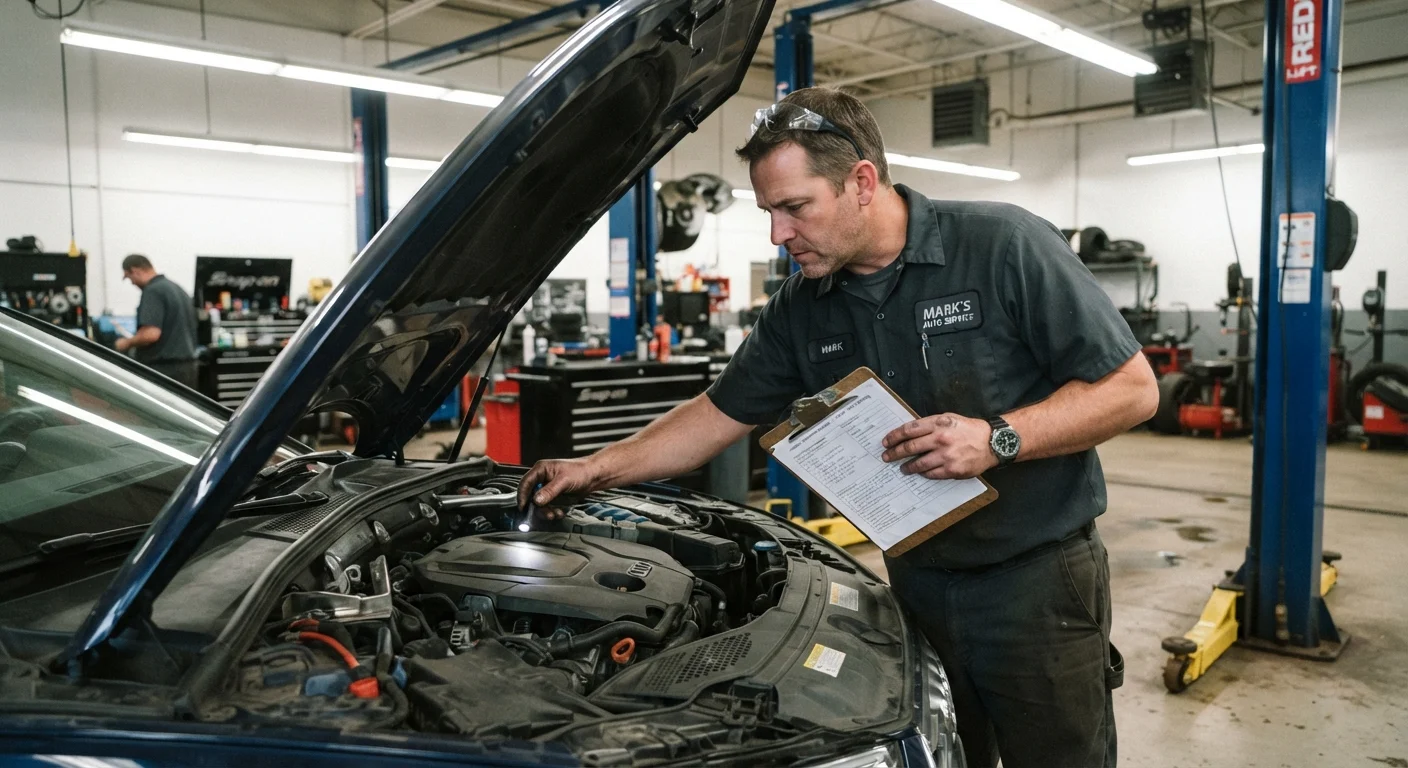
Photo: BridgeWish.com | Reliable Source Of Information editorial
Key Takeaways
- Skipping routine maintenance typically creates compounding repair costs that far exceed the original service price.
- Deferred oil changes, fluid checks, and filter replacements are among the most common - and costly - oversights.
- Manufacturer-recommended service intervals exist to protect both your vehicle and your wallet.
- Some maintenance items directly affect safety, not just longevity or performance.
- Keeping detailed service records supports resale value and warranty claims.
Prevents small problems from becoming major repairs
Catching a worn serpentine belt or low brake fluid during a routine service typically costs a fraction of the roadside tow, emergency repair, or component replacement that follows a failure.
Maintains fuel efficiency and performance
Dirty air filters, fouled spark plugs, and degraded engine oil all increase fuel consumption. Keeping these components fresh helps the engine operate at its designed efficiency.
Supports resale value through documented service history
Buyers and dealers routinely assess a vehicle's maintenance records; consistent upkeep signals lower risk and justifies a stronger asking price at trade-in or private sale.
Preserves manufacturer warranty coverage
Many powertrain warranties require adherence to the manufacturer's maintenance schedule; missed services can give an automaker grounds to deny a related warranty claim.
Reduces the likelihood of roadside breakdowns
The majority of non-collision breakdowns involve preventable causes - dead batteries, overheating, flat tires, and fuel system issues - that routine inspections are specifically designed to catch.
Upfront costs can feel burdensome on tight budgets
For households managing multiple financial priorities, a $150-$300 service appointment can be genuinely difficult to absorb, even when the long-term math favors paying it.
Not every recommended interval is equally urgent
Manufacturer schedules sometimes include services - like cabin air filter swaps - that affect comfort or efficiency but pose no immediate safety or mechanical risk if slightly delayed.
Service quality varies between providers
A maintenance appointment is only as valuable as its execution; rushed or careless work can leave problems undetected or, in rare cases, introduce new ones through improper reassembly.
Older vehicles may face diminishing returns
On a high-mileage vehicle with significant existing wear, the cost of comprehensive maintenance can occasionally approach or exceed the vehicle's market value, complicating the calculation.
Why Drivers Skip Service - And Why It Backfires
The reasoning is understandable: a $120 oil change or $200 coolant flush feels like an expense you can postpone when money is tight or your schedule is packed. But vehicles are systems in which components depend on one another, and when one element degrades unchecked, the failure rarely stays contained.
Consider an oil change. Engine oil lubricates hundreds of moving metal parts, carries heat away from critical surfaces, and suspends combustion byproducts. As oil ages, it breaks down, thickens, and loses its protective qualities. Running degraded oil accelerates wear on bearings, camshafts, and piston rings - components whose replacement can cost thousands of dollars. A skipped $100 oil change has a documented relationship with engine damage that runs into four or five figures.
The same compounding logic applies across the maintenance schedule. Worn brake pads score rotors. Low coolant leads to overheating that warps cylinder heads. Ignored transmission fluid darkens and loses its friction properties, contributing to premature clutch pack failure. See our analysis of extended maintenance intervals for a closer look at how pushing past recommended schedules affects specific systems.
Your Owner's Manual Is the Authoritative Source
The Pros of Staying Current With Maintenance
Routine service has benefits that go well beyond simply avoiding breakdowns.
Prevents small problems from becoming major repairs
Catching a worn serpentine belt or low brake fluid during a routine service typically costs a fraction of the roadside tow, emergency repair, or component replacement that follows a failure.
Maintains fuel efficiency and performance
Dirty air filters, fouled spark plugs, and degraded engine oil all increase fuel consumption. Keeping these components fresh helps the engine operate at its designed efficiency.
Supports resale value through documented service history
Buyers and dealers routinely assess a vehicle's maintenance records; consistent upkeep signals lower risk and justifies a stronger asking price at trade-in or private sale.
Preserves manufacturer warranty coverage
Many powertrain warranties require adherence to the manufacturer's maintenance schedule; missed services can give an automaker grounds to deny a related warranty claim.
Reduces the likelihood of roadside breakdowns
The majority of non-collision breakdowns involve preventable causes - dead batteries, overheating, flat tires, and fuel system issues - that routine inspections are specifically designed to catch.
$1,200+
Average cost of engine damage from oil neglect
Industry repair data consistently shows that oil-related engine damage - often linked to extended change intervals or low oil levels - ranks among the most expensive preventable failures.
3x
Cost multiplier when maintenance is deferred
Automotive maintenance research suggests that for many common failure modes, the resulting repair cost is roughly three times or more what the preventive service would have cost.
Consistent service records also matter at resale time. A vehicle with a documented history of on-schedule maintenance commands higher buyer confidence and, generally, a stronger asking price than one with gaps in its records. If your vehicle is still under a manufacturer's powertrain warranty, missed services documented in your owner's manual can sometimes give an automaker grounds to dispute a claim - making timely maintenance a financial safeguard in two directions at once.
The Cons - Real Limitations Worth Acknowledging
A balanced assessment requires acknowledging legitimate drawbacks to strict adherence to every recommended service interval.
Upfront costs can feel burdensome on tight budgets
For households managing multiple financial priorities, a $150-$300 service appointment can be genuinely difficult to absorb, even when the long-term math favors paying it.
Not every recommended interval is equally urgent
Manufacturer schedules sometimes include services - like cabin air filter swaps - that affect comfort or efficiency but pose no immediate safety or mechanical risk if slightly delayed.
Service quality varies between providers
A maintenance appointment is only as valuable as its execution; rushed or careless work can leave problems undetected or, in rare cases, introduce new ones through improper reassembly.
Older vehicles may face diminishing returns
On a high-mileage vehicle with significant existing wear, the cost of comprehensive maintenance can occasionally approach or exceed the vehicle's market value, complicating the calculation.
It's also worth noting that not all service recommendations carry equal urgency. Cabin air filter replacement, for example, affects comfort and HVAC efficiency - important, but not an immediate safety threat. Understanding which items are safety-critical versus convenience-oriented helps you make informed decisions when resources are genuinely constrained. Our guide to overlooked maintenance tasks for first-time owners breaks down which services most commonly slip through the cracks and why they matter.
How to Stay on Schedule Without Breaking the Budget
The goal isn't to spend money indiscriminately - it's to spend strategically. A few practical approaches help drivers stay current without financial strain.
- Follow the owner's manual, not the sticker. Quick-lube shops sometimes recommend service intervals shorter than what your manufacturer specifies. Your vehicle's manual is the authoritative source.
- Prioritize safety-critical items first. Brakes, tires, steering, and lighting systems directly affect your ability to control the vehicle and avoid collisions. These take precedence over convenience items when budgets are tight.
- Bundle services when possible. Combining an oil change with a tire rotation and multi-point inspection at a single visit can reduce labor costs compared to separate appointments.
- Create a simple maintenance log. Tracking what was done and when makes it easier to anticipate upcoming services and budget for them in advance.
Deferred maintenance in vehicles follows the same compounding logic found in other areas of ownership - a pattern discussed in the context of skipping routine home maintenance as well. Small neglected items rarely stay small.
The content on this site is for informational purposes only and is not a substitute for professional advice. Always consult a qualified professional for guidance specific to your situation.