
Tire Pressure and Wear: What the Numbers on Your Sidewall Actually Mean

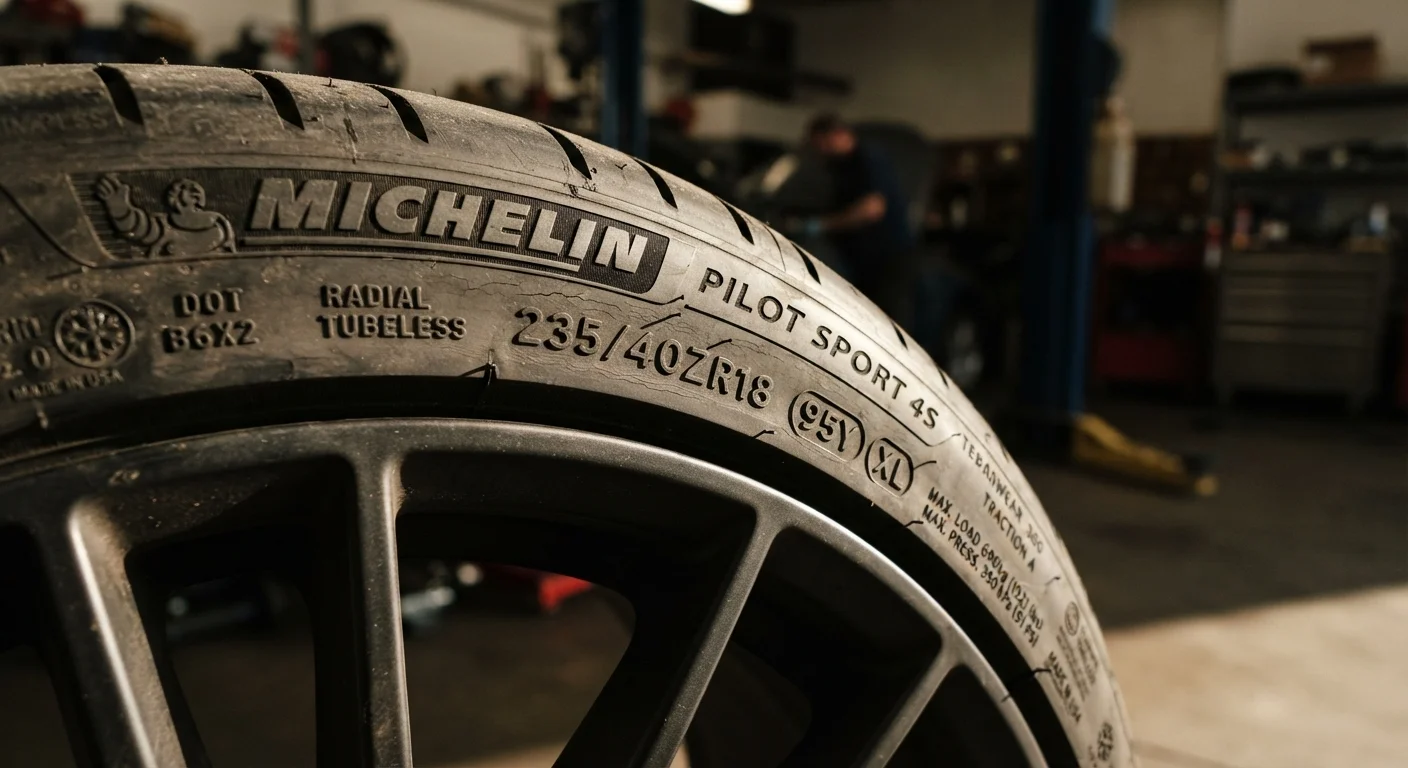
Photo: BridgeWish.com | Reliable Source Of Information editorial
Decoding the Sidewall: What That String of Characters Means
A typical tire sidewall displays a code like P215/65R17 98H. Each segment carries specific technical meaning that directly affects how safely that tire performs on your vehicle.
| Minimum legal tread depth (US) | 2/32 of an inch (Federal Motor Vehicle Safety Standards) |
| Recommended replacement threshold | 4/32" (especially in wet climates) (National Highway Traffic Safety Administration guidance) |
| Typical recommended tire PSI | 30-36 PSI (passenger cars) (Vehicle door jamb sticker; varies by model) |
| TPMS warning trigger point | 25% below recommended PSI (Federal TPMS regulations (FMVSS 138)) |
| Maximum tire age guideline | 6-10 years from manufacture date (Industry consensus; verify with your tire manufacturer) |
- P - Passenger vehicle designation. LT indicates light truck.
- 215 - Section width in millimeters (the tire's widest point, side to side).
- 65 - Aspect ratio: the sidewall height as a percentage of section width. Lower numbers mean a shorter, stiffer sidewall.
- R - Radial construction, the standard for modern passenger tires.
- 17 - Wheel diameter in inches the tire is designed to fit.
- 98 - Load index: a numeric code indicating maximum load capacity per tire. A load index of 98 corresponds to roughly 1,653 lbs.
- H - Speed rating: the maximum sustained speed the tire is tested to handle. H = 130 mph.
You'll also find a DOT code stamped on the sidewall. The last four digits reveal the manufacture date - the first two digits are the week, the last two are the year. A tire reading 2322 was made in the 23rd week of 2022. Most tire manufacturers and safety organizations recommend replacing tires older than six to ten years regardless of visible wear.
PSI: The Right Pressure for Your Vehicle
The number molded into the tire sidewall - often labeled Max Press followed by a PSI figure - is the maximum cold inflation pressure the tire can safely contain. This is not your target inflation pressure.
Your correct tire pressure is listed on the driver's door jamb sticker or in the owner's manual. It's vehicle-specific, not tire-specific, and typically falls between 30-36 PSI for passenger cars. Front and rear recommendations sometimes differ.
Check Pressure When Tires Are Cold
Check pressure when tires are cold - meaning the vehicle has been parked for at least three hours or driven fewer than a mile. Driving heats air inside the tire, raising PSI by 4-6 pounds, which can produce a false reading. A tire pressure warning light (TPMS) typically triggers at 25% below the recommended PSI - a significant deficit that affects handling and fuel economy before the light ever illuminates.
Reading Tread Wear: Patterns That Signal Problems
Tread depth is measured in 32nds of an inch. New tires typically start at 10/32" to 11/32". US law sets the minimum legal limit at 2/32", though many safety experts recommend replacement at 4/32" - especially in wet conditions, where tread channels the water your tire needs to displace to maintain road contact.
A quick check: insert a penny into the tread groove with Lincoln's head pointing down. If you can see the top of his head, you're at or below 2/32" - replace immediately. A quarter used the same way reveals 4/32" remaining.
Aspect ratio
The sidewall height expressed as a percentage of the tire's section width. A lower aspect ratio means a shorter, stiffer sidewall and typically sportier handling.
Load index
A numeric code stamped on the sidewall that corresponds to the maximum weight each tire can safely support. Always match or exceed the vehicle manufacturer's minimum requirement.
Speed rating
A letter code indicating the maximum sustained speed the tire is engineered to handle under controlled test conditions. It does not mean the vehicle should be driven at that speed.
DOT code
A Department of Transportation identification number molded into the sidewall. The final four digits encode the tire's week and year of manufacture.
TPMS
Tire Pressure Monitoring System - a federally mandated sensor system that alerts drivers when tire pressure drops significantly below the recommended level.
Cold inflation pressure
Tire pressure measured when the tire has not been driven on for at least three hours. This is the accurate baseline for comparing against your vehicle's recommended PSI.
Beyond depth, the pattern of wear tells you what's actually wrong:
- Center wear - Tread worn down the middle but intact at the edges signals chronic over-inflation. The tire bulges in the center, concentrating contact there.
- Edge wear (both sides) - Worn shoulders with a healthy center indicates under-inflation. The tire is running soft, splaying outward under load.
- One-sided shoulder wear - Excessive wear on just one edge points to misalignment. Have the alignment checked promptly.
- Cupping or scalloping - Irregular, wavy wear that looks scooped out is typically caused by worn shocks or struts causing the tire to bounce on the road surface.
- Feathering - Tread blocks that feel sharp on one side and rounded on the other often indicate a toe alignment problem.
Uneven wear doesn't just shorten tire life - it compromises braking distance and wet-road traction. If you notice any of these patterns, address the underlying cause before replacing the tire, or the problem will repeat. For related mechanical signals, see our guide on brake wear symptoms that often accompany alignment and suspension issues.
The content on this site is for informational purposes only and is not a substitute for professional advice. Always consult a qualified professional for guidance specific to your situation.