
The Science Behind Stopping Distances (And Why Speed Matters More Than You Think)

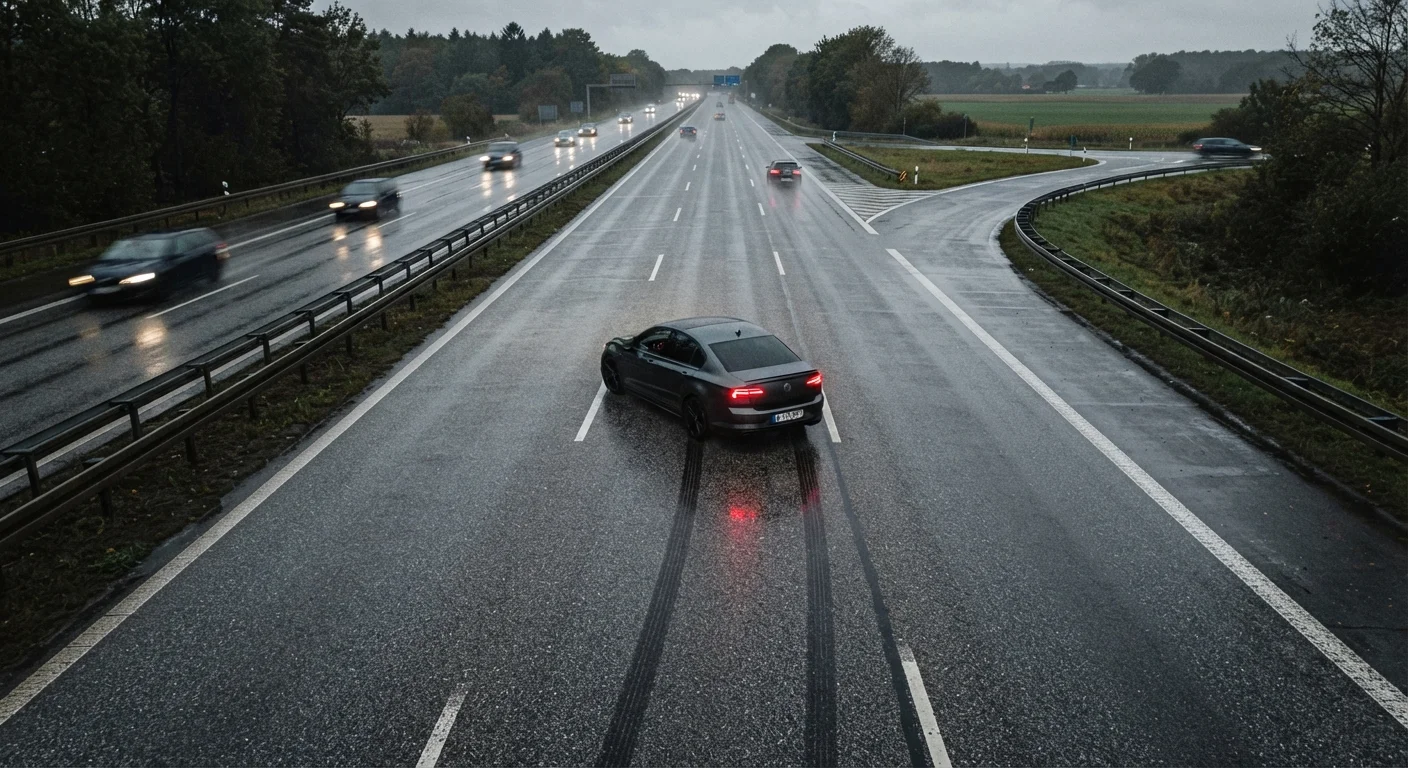
Photo: BridgeWish.com | Reliable Source Of Information editorial
Key Takeaways
- Stopping distance has two components: reaction distance and braking distance.
- Doubling your speed roughly quadruples the distance needed to stop - not double.
- Wet, icy, or worn-surface roads can dramatically extend braking distances.
- Reaction time typically adds 1-1.5 seconds of travel before brakes even engage.
- Maintaining a proper following distance is your most practical defense against stopping-related crashes.
The Two-Part Formula Every Driver Should Know
When you see a hazard on the road and slam the brakes, your car doesn't stop instantly - it travels a considerable distance before coming to rest. That total stopping distance is made up of two distinct phases, and understanding each one changes how you think about speed and space on the road.
Reaction distance is the ground covered while your brain registers a threat and your foot moves to the brake pedal. For an alert driver, this takes roughly 1 to 1.5 seconds. At 60 mph, that translates to approximately 88 to 132 feet of travel before braking even begins.
Braking distance is how far the vehicle continues moving after the brakes engage, until it reaches a full stop. This phase is where physics hits hardest: braking distance is proportional to the square of your speed. Going from 30 mph to 60 mph doesn't double your braking distance - it roughly quadruples it.
Together, these two components produce your total stopping distance. A driver going 30 mph on dry pavement might need around 75 feet total to stop. At 60 mph, that same driver under the same conditions could need well over 300 feet. That's the length of a football field.
~300+ ft
Total stopping distance at 60 mph on dry pavement
This estimate includes both reaction distance and braking distance for an alert driver - roughly the length of a standard American football field.
4×
Braking distance increase when speed doubles
Because kinetic energy scales with the square of speed, doubling velocity from 30 to 60 mph roughly quadruples the braking distance required.
50%+
Braking distance increase on wet pavement
Wet roads reduce tire-to-road friction significantly; some estimates suggest braking distance can increase by half or more compared to dry conditions.
132 ft
Distance traveled during reaction time at 60 mph
At 60 mph with a 1.5-second reaction time, a vehicle covers approximately 132 feet before the driver's foot even reaches the brake pedal.
Why Speed Is a Non-Linear Problem
Most drivers intuitively treat speed increases as proportional - go twice as fast, stop in twice the distance. But this mental model is dangerously incorrect. The physics of kinetic energy (KE = ½mv²) tell a different story: energy grows with the square of velocity. Your brakes must convert all of that kinetic energy into heat to bring the car to a halt.
Consider a practical illustration. Increasing speed from 20 mph to 40 mph - just 20 additional miles per hour - doesn't add a modest amount to your stopping distance. It adds roughly four times the braking distance. Nudge that up to 60 mph and the braking distance is nine times what it would be at 20 mph. This exponential relationship is why even modest speeding above a posted limit can have outsized consequences in a collision.
“Speed is the single biggest factor in both the likelihood and severity of a crash. The relationship between speed and stopping distance is not intuitive - it's exponential - and that gap between driver perception and physical reality is where crashes happen.”
— Road Safety Research Community, Composite view from traffic safety researchers and highway engineering literature
This also explains why speed limits near schools, pedestrian crossings, and intersections are set at lower values. A driver going 20 mph has a meaningful chance of stopping for an unexpected pedestrian; at 40 mph, the same scenario is far more likely to end in a serious crash.
For more context on how posted speed limits are set and what they legally require of you, see our article on speed limit myths drivers still believe.
Road Conditions, Vehicle Condition, and Other Multipliers
Stopping distance doesn't exist in a vacuum. Several real-world variables can push that number significantly higher - or, in the best case, keep it manageable.
- Surface conditions: Wet pavement can increase braking distance by 50% or more. Ice and packed snow can multiply it several times over. Road surface texture, gravel, and debris all reduce friction between tires and road.
- Tire health: Worn tire tread degrades grip, directly increasing braking distance. The legal minimum tread depth in most U.S. states is 2/32 of an inch, but safety experts generally recommend replacing tires at 4/32 to maintain reliable wet-weather stopping performance.
- Brake system condition: Worn brake pads, warped rotors, or low brake fluid all compromise stopping power. If your vehicle pulls to one side during braking or you feel pulsing through the pedal, have a qualified mechanic inspect the system. Our explainer on how disc and drum braking systems work covers the mechanics in more detail.
- Vehicle weight: Heavier vehicles carry more kinetic energy and typically require greater stopping distances. This is a key reason large trucks maintain longer following distances than passenger cars.
Check Your Tires Before Winter Driving
Translating Physics Into Daily Driving Habits
Understanding the science is only half the equation. The other half is applying it to how you drive every day.
Expand your following distance. The three-second rule - counting three full seconds between when the vehicle ahead passes a fixed point and when you do - provides a baseline buffer in dry, clear conditions. Rain, fog, or nighttime driving warrant four to six seconds. Heavy vehicles should apply even more.
Slow down before corners and hills. Terrain limits what you can see and react to. A hazard around a blind curve doesn't give you the luxury of your full reaction time - you need extra stopping margin built in beforehand.
Account for impairment. Fatigue, distraction, and any substance that slows cognitive processing all lengthen reaction time. An exhausted driver may have a reaction time of two seconds or more, adding significant distance before the brakes ever engage.
These habits are core principles of defensive driving. To explore the broader skillset, see our guide on defensive driving and how to practice it daily.
Frequently Asked Questions
The content on this site is for informational purposes only and is not a substitute for professional advice. Always consult a qualified professional for guidance specific to your situation.