
Brakes 101: How Disc and Drum Braking Systems Work

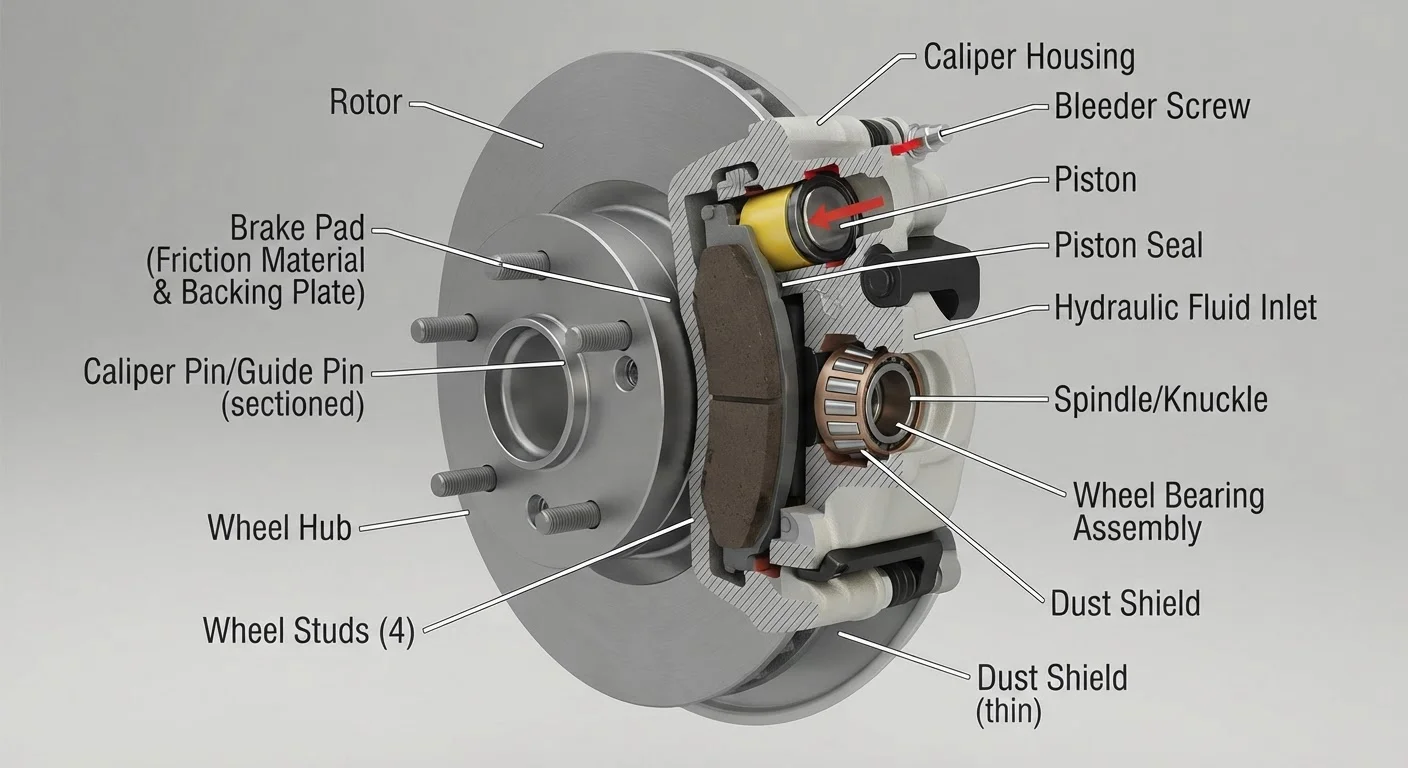
Photo: BridgeWish.com | Reliable Source Of Information editorial
Key Takeaways
- Disc brakes use a caliper to clamp pads against a spinning rotor to generate stopping friction.
- Drum brakes use curved shoes that press outward against a rotating drum - common on rear axles.
- Brake fluid transmits pedal force through the hydraulic system; keeping it clean matters.
- Heat, driving habits, and pad material all affect how quickly brakes wear down.
- Squealing, grinding, or a soft pedal are signals that a brake inspection is overdue.
Why Your Brakes Deserve Attention
Your vehicle's braking system is its single most important safety feature. Every time you slow for a red light or avoid a hazard, a precisely engineered chain of mechanical and hydraulic events brings thousands of pounds of moving metal to a controlled stop. Yet for most drivers, brakes remain out of sight and out of mind - until something goes wrong.
Understanding the basics of how brakes work doesn't require mechanical training. It simply requires knowing what the system is doing, what wears it down, and what signals it sends when service is due. That knowledge alone can prevent a minor maintenance issue from becoming a dangerous - and expensive - failure. For a broader look at keeping your vehicle road-ready, see our complete car maintenance guide.
Rotor
The flat metal disc in a disc brake system that spins with the wheel; brake pads clamp against it to create friction and slow the vehicle.
Caliper
The hydraulically actuated clamp in a disc brake system that squeezes the brake pads against both sides of the rotor when you press the pedal.
Brake Pads
Blocks of friction material housed in the caliper that press against the rotor to slow the wheel; they wear down over time and require periodic replacement.
Brake Shoes
Curved friction pads used in drum brake systems that press outward against the inside of the drum to create stopping force.
Hydraulic System
The network of brake fluid lines and cylinders that transmits the force of your foot pressing the pedal to the brake components at each wheel.
Brake Fade
A temporary loss of braking effectiveness caused by overheated brake components, most often experienced during prolonged or repeated heavy braking.
How Disc Brakes Work
Disc brakes are the dominant design on the front axles of modern passenger vehicles, and increasingly on all four wheels. The key components are the rotor (a flat metal disc that spins with the wheel), the caliper (a hydraulically actuated clamp), and the brake pads (friction material housed inside the caliper).
When you press the brake pedal, brake fluid transmits that force through hydraulic lines to the caliper. The caliper squeezes the brake pads against both faces of the spinning rotor. Friction converts the wheel's kinetic energy into heat, slowing the vehicle. When you release the pedal, hydraulic pressure drops, the caliper releases, and the pads pull back slightly from the rotor - allowing the wheel to spin freely again.
Disc brakes manage heat particularly well because the rotor is exposed to airflow, allowing it to cool between applications. This makes them the preferred design for front brakes, which handle the majority of braking force during a stop. To understand how speed and braking distance interact physically, our article on stopping distances and speed explains the physics in plain terms.
Let Engine Braking Help on Long Descents
How Drum Brakes Work
Drum brakes operate on a different principle and remain common on the rear axles of many economy and mid-range vehicles. The main components are the brake drum (a hollow cylinder that rotates with the wheel), the wheel cylinder (a small hydraulic actuator), and the brake shoes (curved friction pads mounted inside the drum).
When the pedal is pressed, hydraulic pressure pushes the wheel cylinder's pistons outward, forcing the curved shoes against the interior surface of the spinning drum. Friction slows the wheel. Drum brakes are cost-effective to manufacture and offer a natural self-energizing effect - the rotation of the drum helps pull one shoe tighter against the drum surface, amplifying braking force.
The trade-off is heat retention. Because the drum encloses the friction surfaces, heat has fewer ways to escape. Extended or repeated hard braking can cause brake fade - a temporary reduction in stopping power as components overheat. For everyday rear-axle braking loads, however, drum brakes perform reliably and economically.
Many Vehicles Use Both Systems
What Causes Brake Wear
Both disc and drum systems wear down through normal use, but several factors accelerate the process:
- Driving style: Frequent, hard braking generates more heat and friction than gradual, anticipatory slowing. City driving is inherently harder on brakes than highway cruising.
- Vehicle weight: Heavier vehicles - trucks, SUVs, and vehicles carrying full loads - require more braking force to stop, increasing wear on pads, shoes, and rotors.
- Pad and shoe material: Organic compounds wear faster but run quieter; semi-metallic and ceramic formulations last longer but may generate more dust or noise.
- Rotor and drum condition: Rotors that have become too thin from resurfacing, or drums that are scored, reduce braking effectiveness and wear pads faster.
- Brake fluid condition: Brake fluid absorbs moisture over time, which lowers its boiling point and can cause internal corrosion. Our guide to car fluids every driver should know explains how to read fluid condition and when flushing is warranted.
Warning Signs Your Brakes Need Service
Your brakes communicate through sound, feel, and pedal behavior. Recognizing these signals early keeps a manageable repair from becoming an urgent one.
- Squealing or squeaking: Most brake pads include a small metal wear indicator designed to squeal when pads thin to a critical level. Persistent squealing during normal braking is a prompt to schedule an inspection.
- Grinding: A metal-on-metal grinding sound typically means pads are fully depleted and the caliper or shoe backing plate is contacting the rotor or drum directly. This damages rotors and requires immediate attention.
- Vibration or pulsation in the pedal: Often indicates warped rotors - a common result of repeated heavy braking that causes uneven heat distribution across the rotor surface.
- Pulling to one side: If the vehicle drifts left or right during braking, one brake may be applying more force than the other, often due to a sticking caliper or uneven pad wear.
- Soft or spongy pedal: A pedal that travels further than normal before engaging suggests air in the brake lines or low brake fluid - both require prompt professional diagnosis.
For a deeper breakdown of what each symptom signals, our article on brake wear sounds and sensations walks through each warning sign in detail. And for a practical walkthrough of checking brake fluid yourself, see our guide to fluid checks every driver should do.
Don't Delay on Brake Warning Signs
Frequently Asked Questions
The content on this site is for informational purposes only and is not a substitute for professional advice. Always consult a qualified professional for guidance specific to your situation.