
The Science Behind Stopping Distances (And Why Speed Matters More Than You Think)

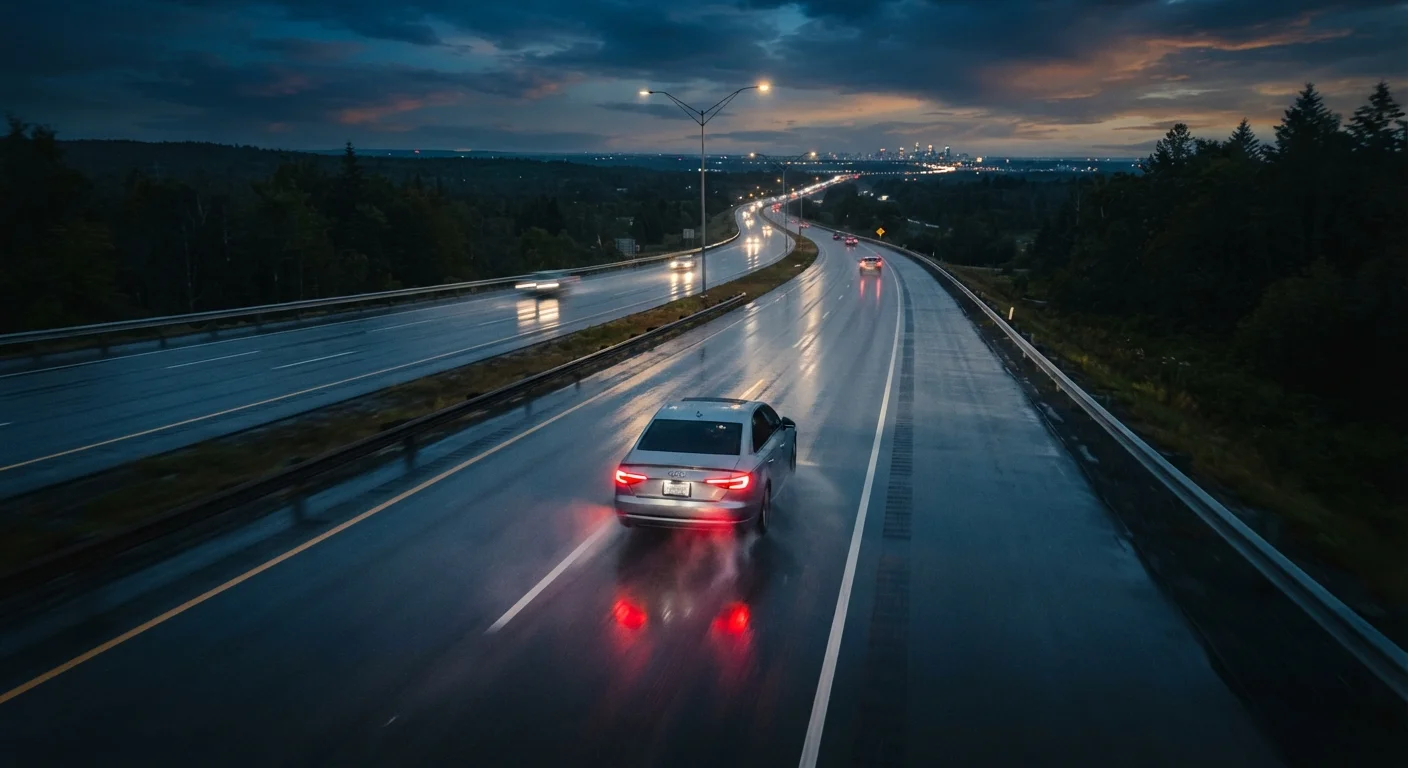
Photo: BridgeWish.com | Reliable Source Of Information editorial
Key Takeaways
- Stopping distance has two components: reaction distance and braking distance - both matter.
- Doubling your speed quadruples braking distance due to the physics of kinetic energy.
- Wet, icy, or worn road surfaces dramatically extend the distance needed to stop safely.
- Driver impairment - fatigue, distraction, or alcohol - lengthens reaction time and total stopping distance.
- Maintaining a larger following distance is the single most practical way to compensate for longer stopping distances at higher speeds.
Two Distances, One Dangerous Gap
Most drivers think about braking as a single action - press the pedal, car stops. In reality, stopping involves two separate phases that each consume road space before your car halts.
Reaction distance is the ground covered between the moment you perceive a hazard and the moment you actually engage the brake. The average driver reaction time is roughly 1.5 seconds under normal, alert conditions - but that window expands significantly with distraction, fatigue, or impairment. At 60 mph, a vehicle travels approximately 132 feet in that 1.5 seconds alone, before braking even begins.
Braking distance starts only after the brake is applied. It depends on vehicle speed, tire condition, brake system performance, and road surface friction. Together with reaction distance, it forms total stopping distance - the real buffer between you and whatever lies ahead.
Extend Your Following Distance Early
Understanding this two-phase model is why traffic laws around following distance and speed limits are set where they are. The margins are smaller than most drivers assume.
Why Speed Is Exponentially Dangerous
Speed's relationship to stopping distance is not linear - it's exponential. This surprises many drivers who assume that going 10 mph faster adds a proportional amount of stopping distance. It does not.
Braking distance is governed by kinetic energy, which scales with the square of velocity. A vehicle traveling at 60 mph has four times the kinetic energy of the same vehicle at 30 mph - and therefore requires approximately four times the braking distance to stop, all else being equal. Push that to 70 mph versus 35 mph, and the relationship holds: the faster vehicle needs roughly four times the space.
4×
Braking distance increase when speed doubles
A consequence of kinetic energy scaling with the square of velocity - a core principle of Newtonian physics applied to vehicle dynamics.
132 ft
Distance traveled at 60 mph in 1.5 seconds
This is the reaction distance alone - before brakes are even applied - assuming an average alert driver reaction time of 1.5 seconds.
50%+
Increase in braking distance on wet pavement
Water reduces tire-to-road friction, extending the distance required for a vehicle to reach a complete stop under normal braking.
This is why even modest speed increases on highways carry outsized risk. The physics do not negotiate. For a deeper look at how this plays out on interstates, see our article on highway driving habits that separate safe drivers from risky ones.
Road Conditions and Their Multiplier Effect
Pavement friction is the invisible variable most drivers underestimate. Dry asphalt provides the best grip; everything else - rain, snow, ice, loose gravel, or worn lane markings - reduces the friction coefficient between tire and road, directly extending braking distance.
- Wet pavement: Can increase braking distance by 50% or more. Hydroplaning at highway speeds can temporarily eliminate braking effectiveness entirely.
- Snow-covered roads: Stopping distance can be 3 to 4 times longer than on dry pavement.
- Ice: Stopping distances can be up to 10 times greater than on dry roads, depending on temperature and ice type.
- Worn tires: Reduced tread depth lowers the tire's ability to channel water and grip the road, extending stopping distance even in conditions that appear manageable.
ABS Does Not Shorten Stopping Distance
Nighttime conditions compound the problem - not because roads change, but because night driving reduces visibility and slows perception, which extends reaction distance. Reduced visibility means hazards are seen later, leaving less total stopping margin.
Putting It Into Practice
Understanding stopping distance physics is only useful if it changes driving behavior. The most direct application is following distance. Tailgating is dangerous not because of driver aggression, but because it mathematically eliminates the stopping margin physics requires.
The 3-second rule - allowing at least 3 seconds between your vehicle and the one ahead - is a practical minimum on dry roads at moderate speeds. In rain, at highway speeds, or with a heavy vehicle, extend that buffer to 4-6 seconds. The goal is to keep total stopping distance inside the gap ahead of you at all times.
Speed itself deserves a second look. Many drivers carry false assumptions about posted limits - for a reality check, see speed limit myths drivers still believe. The posted number is not a safety guarantee; it is a ceiling calibrated for ideal conditions. In rain or reduced visibility, it may already exceed a safe stopping margin.
No piece of driving technology - ABS, electronic stability control, or advanced driver assistance - fully overrides the physics of kinetic energy. These systems optimize braking within physical limits; they do not eliminate stopping distance. Awareness, speed management, and following distance remain the driver's most reliable tools.
Frequently Asked Questions
The content on this site is for informational purposes only and is not a substitute for professional advice. Always consult a qualified professional for guidance specific to your situation.