
Zero-Based Budgeting vs. the Envelope Method: Two Approaches to Every Dollar

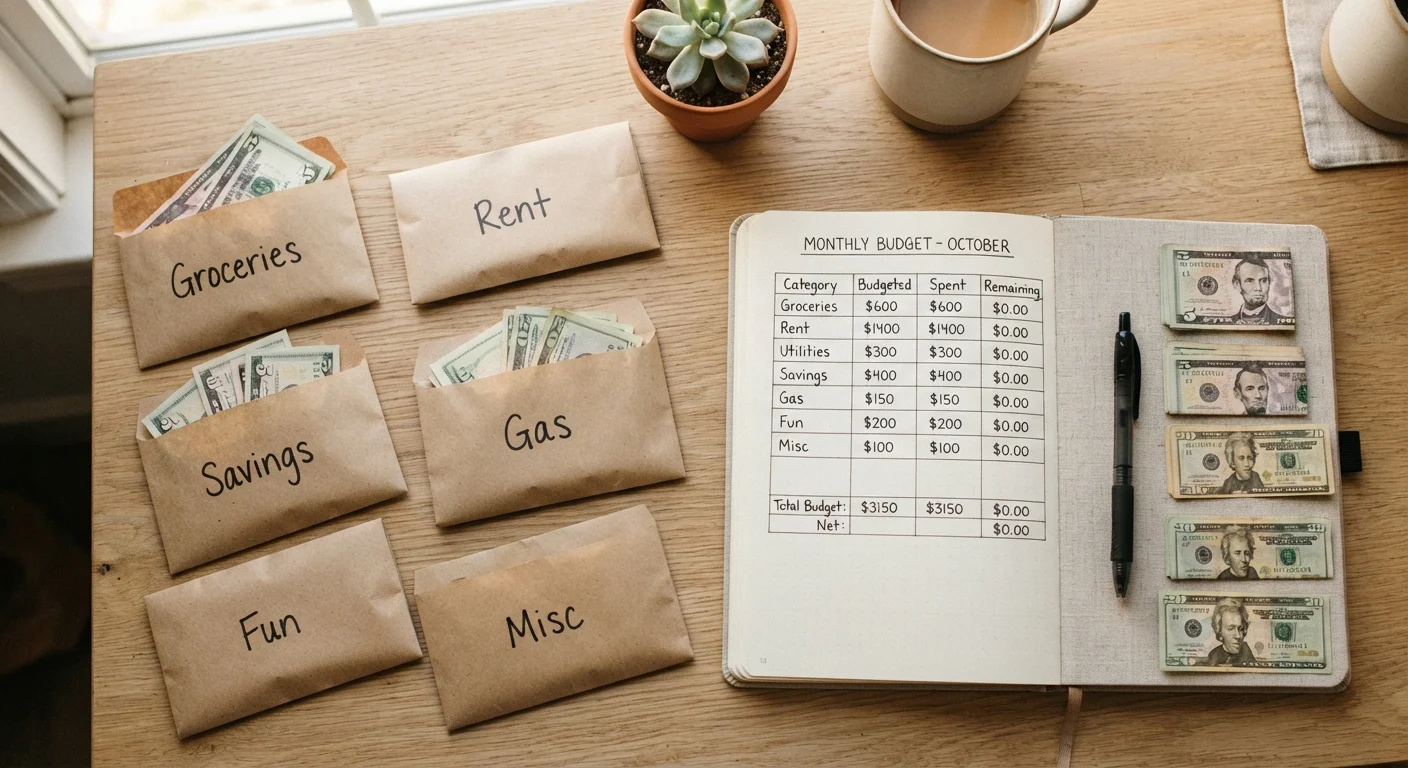
Photo: BridgeWish.com | Reliable Source Of Information editorial
Key Takeaways
- Zero-based budgeting assigns every dollar of income to a category until the balance reaches zero - on paper or digitally.
- The envelope method physically separates cash into spending categories so you stop when each envelope is empty.
- Both systems require intentional planning before spending, not just tracking after the fact.
- Zero-based budgeting works well for variable income; envelopes excel at curbing habitual overspending.
- Neither method suits everyone - your spending habits and lifestyle should guide the choice.
How Each Method Works
Both zero-based budgeting and the envelope method share a core philosophy: money gets assigned a purpose before you spend it, not just tracked after. But the mechanics differ significantly.
Zero-based budgeting (ZBB) starts with your total monthly take-home income and subtracts every planned expense - rent, utilities, groceries, savings contributions, debt payments, and discretionary categories - until the remainder equals zero. That doesn't mean spending everything; savings and investments count as assigned categories. The goal is that no dollar sits unaccounted for. If you're new to structured budgeting, a step-by-step first budget guide can help you list income and expenses clearly before applying ZBB.
The envelope method takes a more physical approach. You withdraw cash at the start of the month, divide it into labeled envelopes by spending category (groceries, gas, dining out, entertainment), and spend only what's in each envelope. When an envelope empties, that category is done for the month - no transfers, no card swipes to compensate. For a deeper look at how the system is structured, see the envelope budgeting explainer.
| Criterion | Zero-Based Budgeting | The Envelope Method |
|---|---|---|
| Core mechanism | Assign all income to categories on paper/app | Divide cash into labeled physical envelopes |
| Cash required | No - works digitally | Yes - primarily cash-based |
| Setup time | Moderate - rebuild each month | Low - withdraw and sort cash |
| Best for irregular income | Yes - flexible monthly reset | Less ideal - harder to adjust |
| Covers full budget | Yes - all income and expenses | Typically discretionary only |
| Behavioral spending brake | Moderate - requires discipline | Strong - physical cash limit |
| Works with digital payments | Yes - fully compatible | Difficult - cash-only by design |
Strengths, Weaknesses, and Where Each Breaks Down
Zero-based budgeting's biggest advantage is flexibility. You rebuild it each month, so it adapts when income changes or a large expense appears. It also works well digitally - several budgeting apps replicate ZBB without requiring cash. The downside: it demands time and discipline each month to plan accurately. If you skip a planning session, the system loses its teeth.
The envelope method's strength is behavioral. Handing over physical cash feels more "real" than tapping a card, which research in consumer behavior consistently associates with more cautious spending. The friction is built in. The weakness is practicality - many bills are automatic or online-only, so envelopes typically cover only discretionary categories rather than your full budget. It also requires regular ATM visits and safe cash storage.
Digital Envelope Tools Exist
If you're weighing ZBB against other popular frameworks, a comparison of zero-based budgeting and the 50/30/20 rule lays out the key differences. For a broader grounding in budgeting vocabulary, a plain-language glossary of budgeting terms covers the essentials.
Choosing the Right Fit for Your Household
The right budgeting method is the one you'll actually use consistently. Consider these factors:
- Income stability: Variable or freelance income pairs well with ZBB since the plan resets monthly. Fixed salaries work with either method.
- Spending patterns: If you consistently overspend in one or two categories, envelopes target that problem directly. If overspending is scattered across many categories, ZBB's full-picture view may be more useful.
- Comfort with tools: ZBB can be done on a spreadsheet or app; envelopes need only paper and cash. Neither requires advanced financial knowledge.
- Cash usage: If you rarely use cash, a digital ZBB approach is more practical. Forcing yourself to withdraw cash when you don't normally use it adds friction that can lead to abandoning the system.
Some households blend both: using ZBB to plan the full monthly budget and envelopes (physical or digital) for the two or three categories where overspending is a recurring problem. Building a budget that reflects your real life explores how to make whichever system you choose sustainable over the long term. Whichever method you start with, the goal is the same: directing money toward savings and financial goals rather than letting spending happen by default.
This article is for general informational and educational purposes only and does not constitute personalized financial advice. Consult a qualified financial professional for guidance specific to your situation.
The content on this site is for informational purposes only and is not a substitute for professional advice. Always consult a qualified professional for guidance specific to your situation.