
Reading Your Credit Report Without Getting Lost

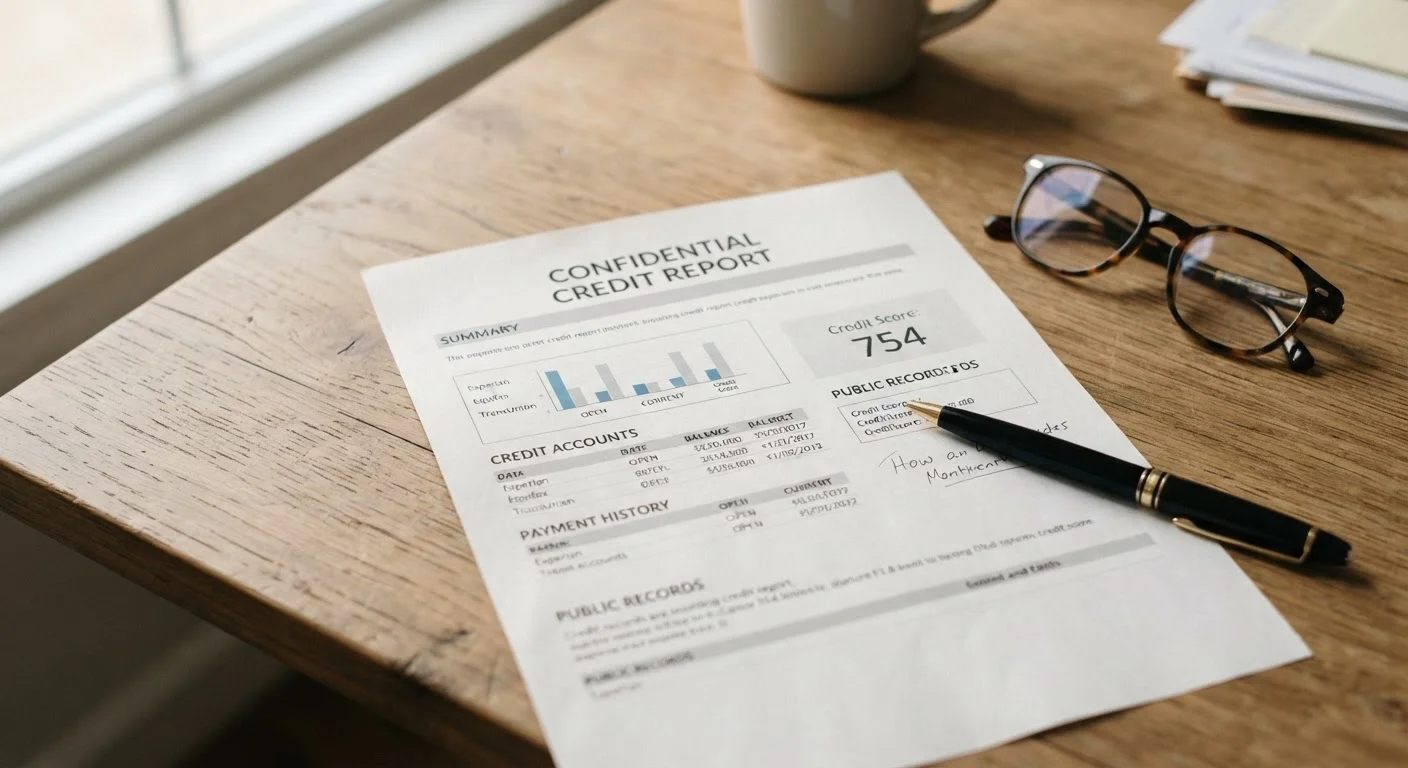
Photo: BridgeWish.com | Reliable Source Of Information editorial
Key Takeaways
- A credit report has five main sections: personal info, accounts, inquiries, public records, and collections.
- Errors on your report can lower your credit score - you have the right to dispute them for free.
- You can request a free report from each bureau annually at AnnualCreditReport.com.
- Credit reports and credit scores are different documents serving different purposes.
- Hard inquiries appear on your report and can temporarily affect your score; soft inquiries do not.
Why Your Credit Report Is Worth Understanding
Lenders, landlords, and sometimes employers pull your credit report to evaluate financial reliability. Yet most consumers never read one until something goes wrong - a denied loan, a suspicious inquiry, or an unexpectedly low score. Getting familiar with the report before a high-stakes moment is one of the simplest, highest-return financial habits you can build.
It's also worth distinguishing the report from the score. Your credit report is the raw data file - every account, every payment record, every inquiry. Your credit score is a numerical summary calculated from that data. They're related but separate documents. Our article on credit reports vs. credit scores explains how they interact.
The Consumer Financial Protection Bureau (CFPB) estimates that a meaningful share of consumers have at least one error on their credit report. Those errors can suppress your score and cost you money in higher interest rates - yet they're often fixable once you know they're there.
What you will need
What You'll Need Before You Start
AnnualCreditReport.com
The federally authorized site where you can request free reports from Equifax, Experian, and TransUnion.
Pen and paper or a notes app
Used to flag any account entries, dates, or balances that appear incorrect as you review each section.
Account statements
Cross-reference your actual balances and payment history against what each credit bureau is reporting.
Once you have your report in hand, set aside 15-30 minutes without interruption. Work through each of the three bureau reports systematically using the steps below. If numbers or ratings seem confusing, remember that understanding what score ranges mean can help you contextualize what you're reading.
Obtain your credit reports from all three bureaus
Visit AnnualCreditReport.com - the only federally mandated free source - and request reports from Equifax, Experian, and TransUnion. Download or print all three. Because each bureau receives data independently, the same account can appear differently across reports, so reviewing all three matters.
Verify your personal information section
The first section lists your name, current and former addresses, date of birth, Social Security number (partially masked), and employers. Confirm every entry reflects your actual identity. Unfamiliar addresses or name variations can indicate a data mix-up with another consumer - or in some cases, fraud.
Review the accounts section (trade lines) carefully
This is the largest section. Each account - credit cards, auto loans, mortgages, student loans - appears as a trade line showing the creditor name, account type, date opened, credit limit or loan amount, current balance, payment status, and a month-by-month payment history grid.
Check each trade line for: accurate balances, correct open/close dates, and no late payments you don't recognize. A single incorrect 30-day late mark can meaningfully affect your score.
Examine the inquiries section
This section splits into two types. Hard inquiries occur when you apply for credit and are visible to lenders - they can modestly lower your score for up to two years. Soft inquiries (background checks, pre-approval screenings, your own checks) are not visible to lenders and do not affect your score. See our guide to hard vs. soft inquiries for a fuller breakdown.
Flag any hard inquiry you don't recognize - it could indicate someone applied for credit in your name.
Check public records and collections
Public records may include bankruptcies. Collections entries appear when a debt has been sold to a collections agency after extended non-payment. Both carry significant negative weight. Confirm any entry listed actually belongs to you and verify the reported dates - negative items have legally mandated expiration periods (generally seven years for most items, ten for Chapter 7 bankruptcy) under the Fair Credit Reporting Act (FCRA).
Dispute any errors you find
Each bureau operates its own online dispute portal, and disputes are free. Submit a dispute with supporting documentation (statements, letters) and the bureau is generally required to investigate within 30 days under the FCRA. Keep copies of everything you submit. If an item is confirmed inaccurate, the bureau must correct or remove it.
Common Mistakes to Avoid When Reading Your Report
Don't Rely on a Single Bureau's Report
One frequent mistake is confusing an account's status with its payment history. An account can show a current zero balance (status: closed, paid) while still displaying historical late payments in the grid - those historical marks still count. Don't assume a closed or paid-off account is a clean slate.
Another common error is reviewing only one bureau's report. Because data furnishers report independently, an error at one bureau won't necessarily appear at another. A discrepancy between bureaus is itself a signal worth investigating.
Finally, don't conflate your credit report with a loan estimate or other financial disclosure. Those are separate documents with different structures - our guide to reading a Loan Estimate covers that territory if you're preparing for a mortgage application.
Spread Your Free Reports Throughout the Year
This article is for general informational purposes only and does not constitute personalized financial or legal advice. For guidance specific to your situation, consult a qualified financial professional.
The content on this site is for informational purposes only and is not a substitute for professional advice. Always consult a qualified professional for guidance specific to your situation.