
Secured vs. Unsecured Debt: Why the Distinction Matters

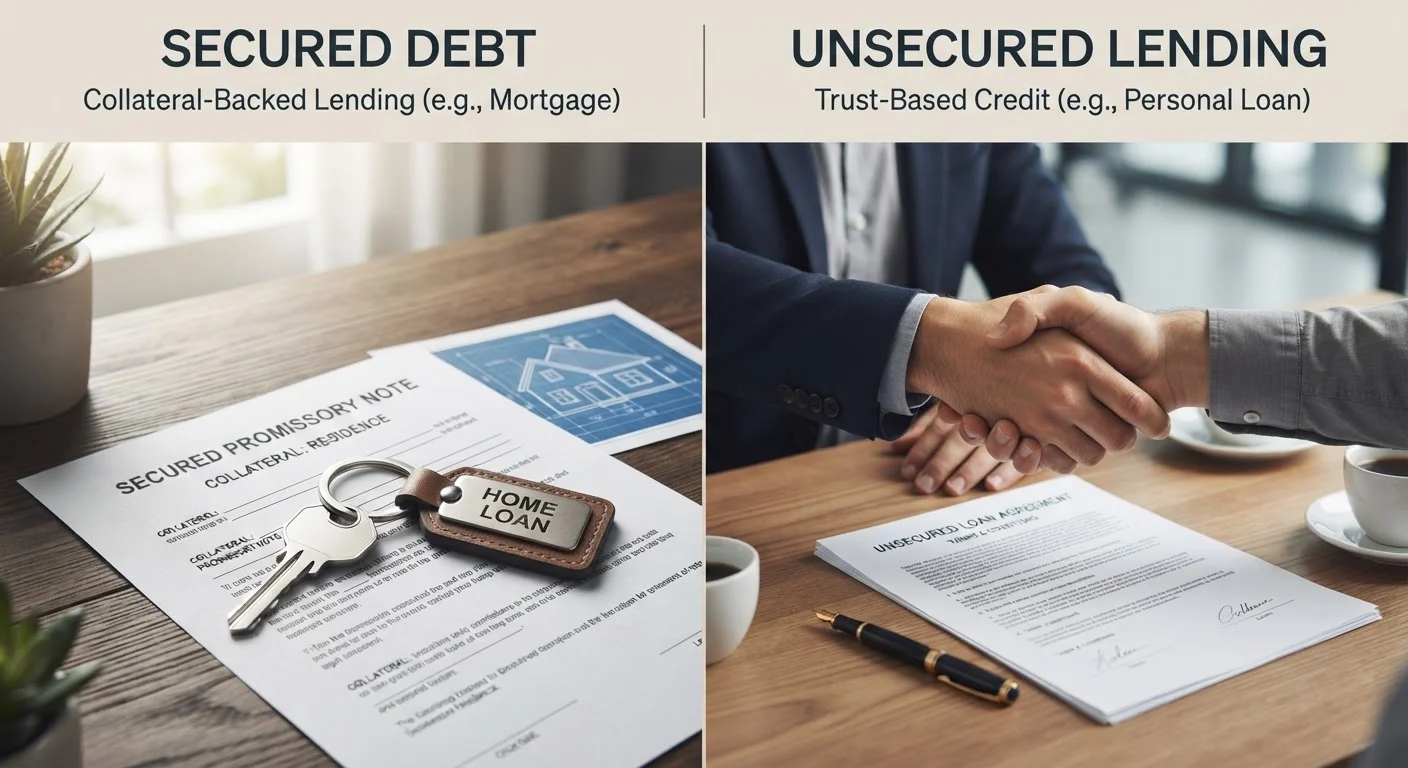
Photo: BridgeWish.com | Reliable Source Of Information editorial
Key Takeaways
- Secured debt requires collateral; defaulting gives the lender legal right to seize that asset.
- Unsecured debt carries no collateral requirement but typically comes with higher interest rates.
- Missing payments on secured debt puts specific property at immediate risk of repossession or foreclosure.
- Lenders can still pursue wages and bank accounts for unpaid unsecured debt through court judgments.
- The type of debt you hold can affect your credit score in distinct ways.
- Understanding this distinction helps you evaluate risk before taking on any new financial obligation.
What Makes Debt 'Secured' or 'Unsecured'?
Every debt you carry falls into one of two fundamental categories - secured or unsecured - and the difference comes down to one question: did you pledge an asset to get the loan?
Secured debt is tied to a specific piece of collateral. A mortgage is backed by your home; an auto loan is backed by your vehicle. If you stop making payments, the lender has a legal right to reclaim that asset - through foreclosure in the case of a mortgage, or repossession for a car. The collateral is what makes the loan feel "safe" to the lender, which is why secured loans typically carry lower interest rates.
Unsecured debt carries no such pledge. Credit cards, personal loans, medical bills, and most student loans are unsecured - the lender extended credit based on your credit history, income, and perceived ability to repay. There's no specific property for the lender to seize the moment you miss a payment, though that doesn't mean there are no consequences.
For a closer look at how this distinction plays out specifically in credit products, see how secured and unsecured credit differ.
| Criterion | Secured Debt | Unsecured Debt |
|---|---|---|
| Collateral required | Yes - specific asset pledged | No - based on creditworthiness |
| Common examples | Mortgage, auto loan, HELOC | Credit cards, personal loans, medical debt |
| Typical interest rates | Generally lower | Generally higher |
| Consequence of default | Foreclosure or repossession of asset | Collections, lawsuits, wage garnishment |
| Lender recourse speed | Faster - collateral can be seized | Slower - requires legal process |
| Accessibility for lower credit scores | Often easier - collateral offsets risk | Harder - creditworthiness is sole basis |
| Loan amounts | Typically larger | Typically smaller |
The Real Consequences of Default
The collateral question isn't just technical - it determines how quickly and how severely your situation deteriorates if you can't make payments.
With secured debt, the consequences are direct and swift. Miss enough mortgage payments and you face foreclosure; fall behind on an auto loan and the lender can repossess the vehicle without a court order in most states. You lose the asset, and you may still owe a deficiency balance - the gap between what the asset sold for and what you still owed.
Unsecured debt follows a different path. Lenders can't immediately seize property, but they can report missed payments to credit bureaus, charge off the account, sell it to a collections agency, and ultimately sue you. A court judgment can lead to wage garnishment or a bank account levy - outcomes that are disruptive even if slower to arrive.
Bankruptcy Treats These Debts Differently
Understanding how each debt type interacts with your credit profile matters too. Different debt types affect your credit score in distinct ways, and knowing which debts carry the most scoring weight helps you prioritize repayment.
Interest Rates, Risk, and Practical Trade-offs
Lenders price risk. Because secured loans are backed by collateral, they typically offer lower interest rates - sometimes substantially lower. A 30-year fixed mortgage might carry a rate far below what you'd pay on an unsecured personal loan for the same dollar amount, precisely because the lender has a claim on the home if things go wrong.
Unsecured debt reflects the lender's higher exposure. With nothing to reclaim, they compensate through higher rates and stricter credit requirements. Credit card APRs frequently run well above 20%, while personal loan rates vary widely based on creditworthiness.
~$1.14T
Total U.S. credit card debt outstanding
According to Federal Reserve data, Americans collectively carried over $1 trillion in revolving credit card balances - the largest category of unsecured consumer debt.
~$12.5T
Total U.S. mortgage debt outstanding
Federal Reserve Flow of Funds data shows residential mortgage debt as the dominant form of secured consumer borrowing in the United States.
20%+
Typical credit card APR range
Federal Reserve consumer credit data consistently shows average credit card interest rates well above those on secured installment loans like mortgages.
When evaluating any new borrowing - whether it's an auto loan or a personal line of credit - the secured/unsecured distinction should be an early filter in your analysis. If you're weighing auto financing options specifically, compare dealer financing with direct bank lending to understand how the collateral structure interacts with where you borrow from.
If you're already carrying multiple debt obligations, the type of debt matters for consolidation decisions too. Debt consolidation has genuine uses and real limitations - and secured versus unsecured status affects which debts can realistically be bundled together.
This article is for general informational purposes only and does not constitute personalized financial, legal, or tax advice. Consult a qualified financial professional before making decisions about debt, borrowing, or your individual financial situation.
The content on this site is for informational purposes only and is not a substitute for professional advice. Always consult a qualified professional for guidance specific to your situation.