
Cast Iron vs. Stainless Steel: Choosing the Right Everyday Pan

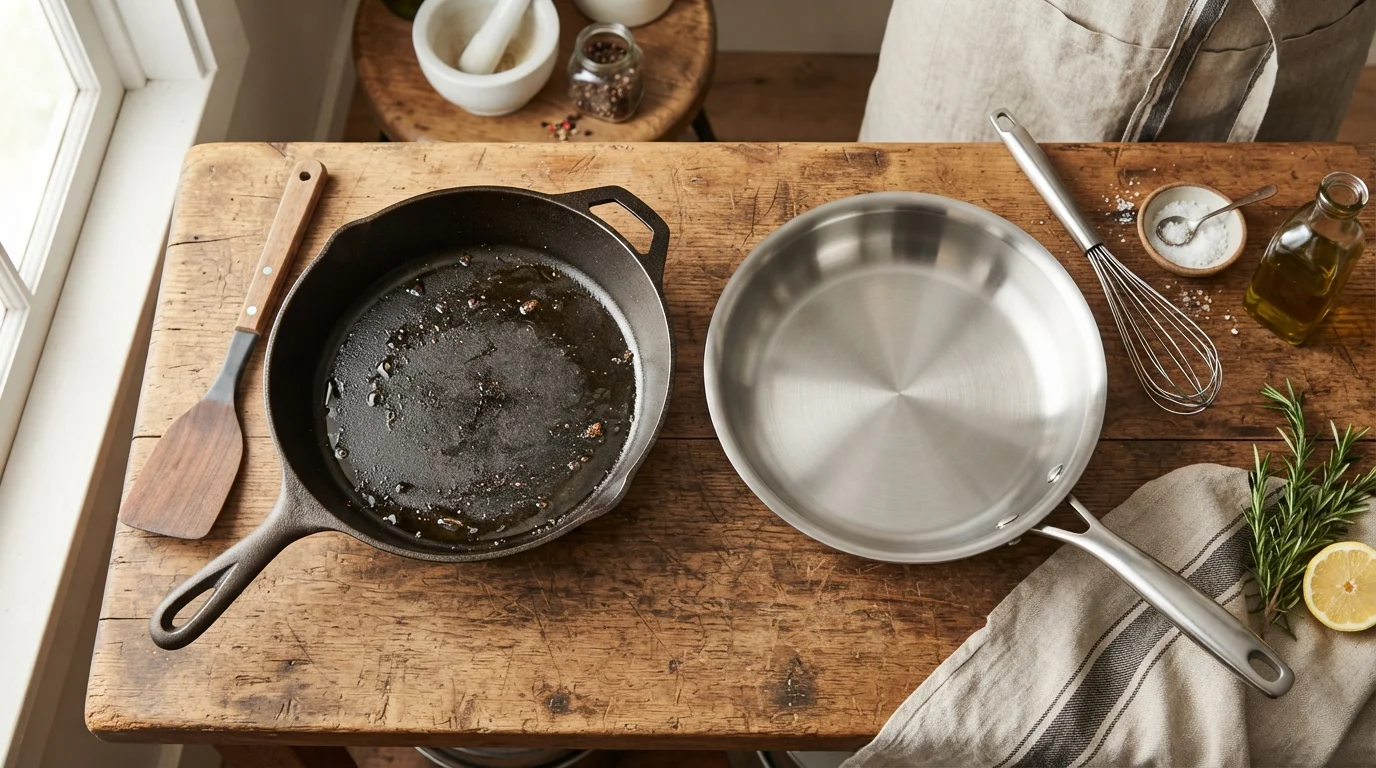
Photo: BridgeWish.com | Reliable Source Of Information editorial
Key Takeaways
- Cast iron retains heat longer, making it ideal for searing and high-heat baking tasks.
- Stainless steel heats and cools faster, giving cooks more precise temperature control.
- Cast iron requires seasoning and careful drying; stainless steel is dishwasher-safe and low-maintenance.
- Acidic foods like tomatoes can damage cast iron seasoning and react with the metal.
- Most home cooks benefit from owning one of each rather than choosing just one.
- Neither pan is universally superior — the right choice depends on what and how you cook.
How Each Pan Handles Heat
Heat behavior is the most important practical difference between these two materials, and understanding it changes how you cook.
Cast iron is a slow heater — it takes several minutes to warm up evenly across the surface. But once hot, it holds that temperature exceptionally well. Place a cold chicken thigh on a properly preheated cast iron skillet and the pan barely flinches. That thermal stability is why cast iron produces such consistent, deep sears and why it transitions so naturally from stovetop to oven. The role of pan temperature in cooking outcomes is especially visible with cast iron — slow, patient preheating is the difference between sticking and success.
Stainless steel heats up faster and responds more quickly when you turn the flame up or down. That responsiveness is a genuine advantage when you need to reduce a sauce, adjust a sauté mid-cook, or avoid burning delicate proteins. The trade-off is that stainless loses heat more readily when cold ingredients land in the pan, which can cause uneven browning if the pan wasn't hot enough to begin with.
| Criterion | Cast Iron | Stainless Steel |
|---|---|---|
| Heat retention | Excellent — holds heat very well | Moderate — loses heat faster |
| Heat responsiveness | Slow to adjust | Fast to adjust |
| Oven-safe temperature | Virtually unlimited | Varies by handle material |
| Acidic food compatibility | Not recommended | Fully compatible |
| Seasoning required | Yes, ongoing | No |
| Dishwasher-safe | No | Generally yes |
| Weight | Heavy (5–8 lbs typical) | Lighter (2–4 lbs typical) |
| Induction compatible | Yes | Yes (most) |
Maintenance and Care: What You're Signing Up For
The daily upkeep for these two pans is genuinely different, and it's worth being honest about what fits your habits.
Cast iron must be seasoned — a process of baking thin layers of oil onto the surface to create a protective, naturally non-stick coating. A well-seasoned cast iron is a pleasure to cook on, but it demands consistent care. After washing (hand-wash only, minimal soap), it needs to be dried immediately and thoroughly to prevent rust. Acidic foods cooked repeatedly in cast iron — tomatoes, wine-based sauces, citrus — can strip seasoning and cause metallic off-flavors.
Stainless steel needs no seasoning and tolerates dishwasher cleaning. It is fully non-reactive, meaning it won't interact with acidic ingredients. The main challenge with stainless is sticking: proteins will stick if the pan isn't preheated properly before adding fat. A simple test — a drop of water should bead and skitter across the surface before you add oil — helps avoid this. For cooks exploring the distinctions between sautéing, pan-frying, and stir-frying, stainless is a responsive tool for all three techniques.
A Note on Cast Iron and Rust
Which Pan Earns a Spot in Your Kitchen?
For most everyday cooks, the real answer is both — they complement each other rather than compete. A 10- or 12-inch cast iron skillet handles your weekend eggs, seared pork chops, and oven-finished frittatas. A stainless steel sauté pan or skillet handles weeknight pasta sauces, fish fillets, and anything where fast heat adjustment or easy cleanup matters.
If you can only start with one, consider your cooking habits honestly. Do you cook mostly protein-forward meals at high heat and don't mind a bit of upkeep? Cast iron will serve you well. Do you cook varied weeknight dinners, work with acidic ingredients regularly, and want minimal fuss? Start with stainless.
~5–8 lbs
Typical weight of a 12-inch cast iron skillet
Cast iron's weight is a common barrier for some cooks, particularly when draining liquids or cooking for extended periods.
400°F+
Minimum oven-safe temp for most stainless pans
Oven-safe temperature varies by handle construction; all-metal stainless pans generally tolerate higher temperatures than those with silicone or plastic handles.
Either way, both pans reward technique over shortcuts. Learning how to read and manage heat — not just which pan to own — is the skill that makes the biggest difference at the stove.
The content on this site is for informational purposes only and is not a substitute for professional advice. Always consult a qualified professional for guidance specific to your situation.