
Why Your Pan Temperature Matters More Than Your Recipe

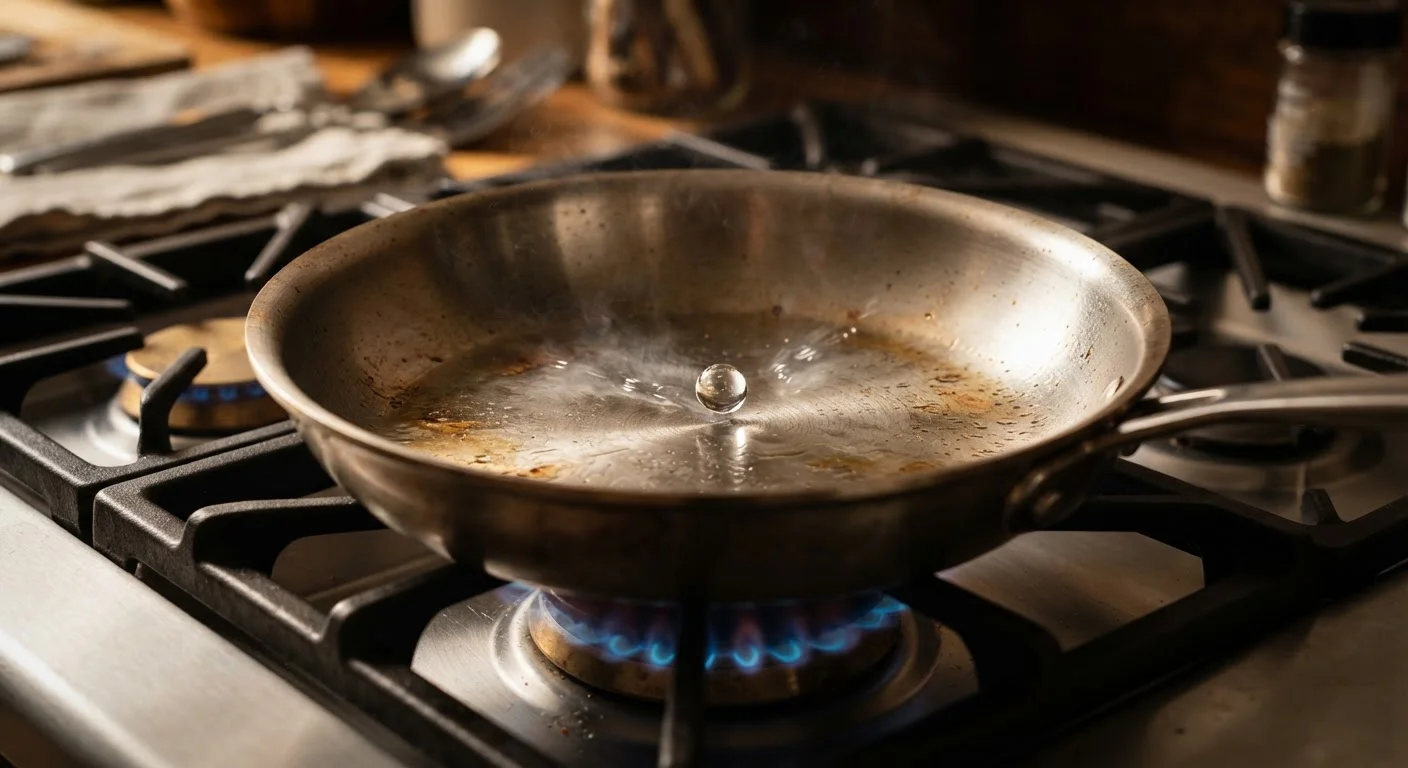
Photo: BridgeWish.com | Reliable Source Of Information editorial
Key Takeaways
- Adding food to an under-heated pan causes sticking and steaming instead of proper browning.
- Overheated pans burn the outside of food while leaving the inside undercooked.
- Simple visual and tactile cues — not a thermometer — tell you when a pan is at the right temperature.
- Pan material and burner size both affect how evenly and quickly heat distributes.
- Matching oil choice to pan temperature prevents smoking and off-flavors.
Why Pan Temperature Is the Variable Most Recipes Leave Out
A recipe can tell you exactly how long to cook a chicken thigh, but it can't tell you what your particular burner, your pan, and your kitchen's ambient temperature will actually do to that chicken. Temperature is the single most influential variable in stovetop cooking — and most home cooks manage it largely by guesswork.
The consequences show up on the plate: pale, steamed vegetables instead of caramelized ones; a steak that sticks to the pan and tears instead of releasing cleanly; eggs that cook in a rubbery gray layer rather than a tender golden one. None of these problems come from a bad recipe. They come from heat that was either too low, too high, or added too quickly.
Learning to read and adjust your pan temperature doesn't require special equipment. It requires knowing what to look for — and understanding why those signals matter. Our guide to stovetop heat zones covers how your burner distributes heat unevenly, which affects every pan you use.
The Most Common Pan Temperature Mistakes
Adding food to a cold or barely-warm pan.
Cranking heat to maximum to "speed things up."
Moving food immediately after it hits the pan.
Using the wrong oil for the pan temperature.
Ignoring pan material when estimating preheat time.
For a deeper look at how these principles apply across different stovetop cooking methods, see our breakdown of sautéing, pan-frying, and stir-frying — each technique operates in a distinct temperature range.
Never Leave an Empty Pan Unattended on High Heat
Reading Your Pan Without a Thermometer
Professional cooks don't typically take a pan's temperature with a probe — they read a set of reliable cues instead. Learning these signals gives you real-time feedback at the stove.
310°F
Approximate smoke point of extra-virgin olive oil
The USDA and culinary science sources note that extra-virgin olive oil begins to degrade and smoke at lower temperatures than many refined oils, making it unsuitable for high-heat searing.
~374°F
Temperature at which the Maillard reaction accelerates
Food scientists generally place the Maillard reaction's most active browning range above roughly 280°F, with faster, deeper crust development occurring at higher surface temperatures.
- The shimmer test: After adding oil to a preheated pan, watch for the oil to move fluidly and shimmer with faint ripples. That's your cue to add food.
- The smoke check: A faint wisp of smoke from the oil means the pan is at or above the oil's smoke point. Reduce heat immediately or remove the pan briefly before adding food.
- The sizzle test: A drop of water should sizzle and evaporate almost immediately in a properly heated pan. If it sits quietly, the pan needs more time. If it explodes into steam, the heat is too high for most tasks.
- The visual release: Protein placed in a correctly heated pan will stick briefly, then release cleanly once a crust forms. If food tears, it needed either more time or a properly preheated surface.
Understanding doneness cues goes hand-in-hand with temperature control. Our article on judging doneness without a thermometer covers the visual and tactile signs experienced cooks rely on.
Heat Control Affects Food Safety Too
This article is for general informational and educational purposes. For food safety guidance specific to your situation, consult official sources such as the USDA FoodSafety.gov or a qualified culinary professional.
The content on this site is for informational purposes only and is not a substitute for professional advice. Always consult a qualified professional for guidance specific to your situation.