
Understanding Heat Zones on Your Stovetop and Oven

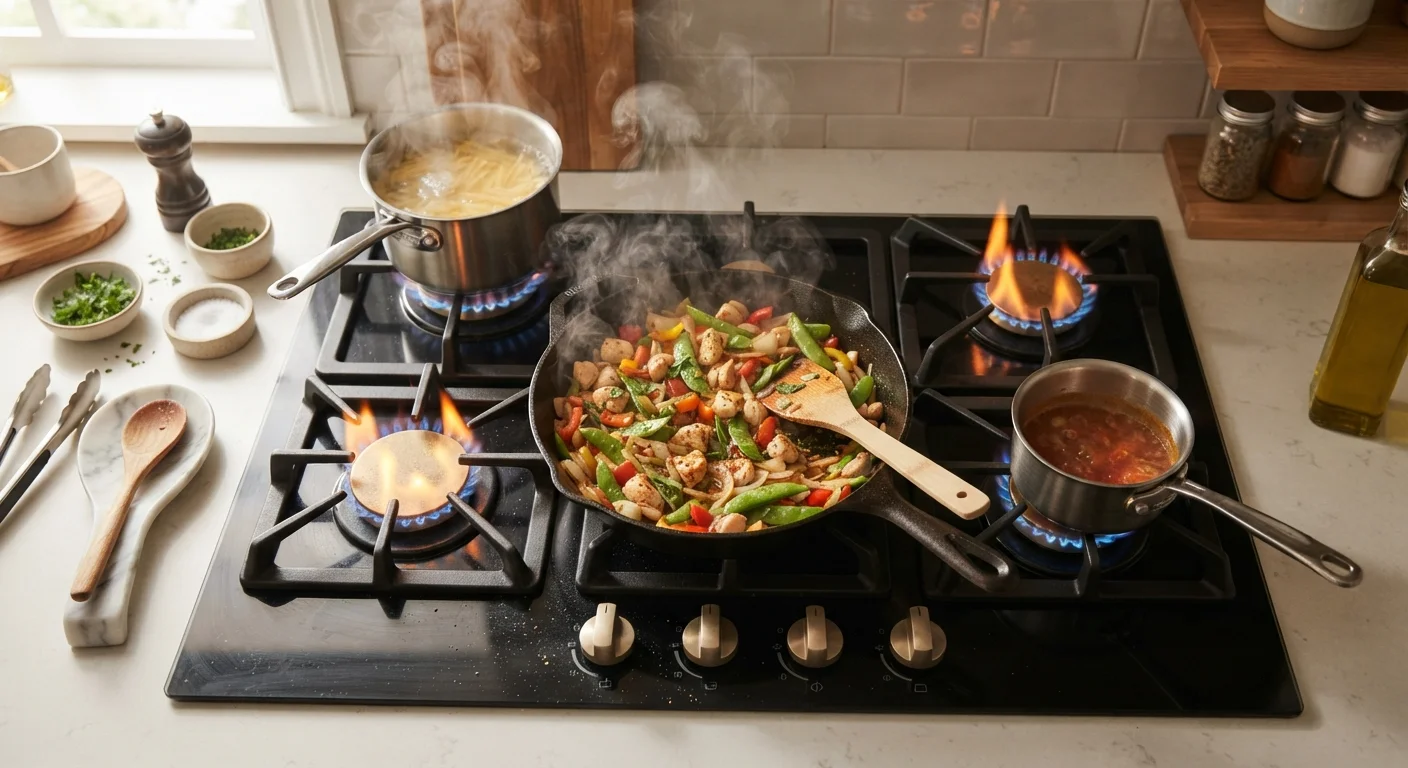
Photo: BridgeWish.com | Reliable Source Of Information editorial
Key Takeaways
- Every stovetop and oven has hot spots and cool zones that affect how food cooks.
- Gas burners concentrate heat at the center flame; electric coils create a ring-shaped hot zone.
- Oven heat rises, making the top rack consistently hotter than the bottom rack.
- Rotating pans and repositioning food during cooking corrects for uneven heat.
- A simple flour or bread test can map your oven's specific hot spots.
Why Heat Is Never Perfectly Uniform
A stovetop dial set to "medium" and an oven set to 375°F both imply precision — but what's actually happening inside is messier. Heat sources don't broadcast perfectly even warmth across every inch of a cooking surface. They concentrate, rise, cycle, and behave differently depending on your appliance type, pan material, and even where you place food in the oven.
This isn't a flaw you need to fix. It's a characteristic you can learn to use. Once you understand where your heat zones are, you stop fighting inconsistent results and start predicting them — and correcting for them before they become problems.
For a deeper look at how temperature affects browning, sticking, and flavor, see our guide on pan temperature and cooking outcomes.
Stovetop Heat Zones: Gas vs. Electric
On a gas burner, heat radiates outward from the central flame. This means the center of your pan — directly above the flame — is almost always the hottest point, while the outer edges of the pan sit in noticeably cooler air. A large skillet on a small burner will have cool corners, which matters enormously when you're searing meat or stir-frying vegetables.
On an electric coil burner, the hot zone forms a ring matching the coil's shape, which can leave the very center of a pan slightly cooler than the edges sitting over the coil itself. Glass-ceramic and induction surfaces are more uniform, but they still transmit heat unevenly when a pan doesn't match the element's diameter.
Map Your Oven Before You Need It
Matching your pan size to your burner size is one of the simplest ways to reduce hot spot problems on any stovetop. When a pan is significantly larger than the burner beneath it, the outer portion of the pan never reaches proper cooking temperature.
These stovetop dynamics become especially relevant when you're choosing between cooking techniques. See how sautéing, pan-frying, and stir-frying differ for guidance on which method suits your ingredients and heat source.
Oven Heat Zones: Rack Position and Air Flow
Inside a conventional oven, heat rises — which means the top rack consistently runs hotter than the bottom. The broiler element at the top and the bake element at the bottom both cycle on and off to maintain your set temperature, creating temperature swings of 25°F or more throughout the cook cycle.
Horizontal hot spots are also common. Many ovens run hotter near the back wall, where hot air circulates first, and cooler near the door. This is why cookies on a sheet pan often brown faster at the back.
25°F+
Typical oven temperature swing during a bake cycle
Conventional ovens cycle their heating elements on and off to maintain the set temperature, causing fluctuations that can exceed 25°F above or below the dial setting.
10–20°F
Temperature difference between top and bottom oven racks
Because heat rises, the top rack in a conventional oven consistently runs hotter than the bottom — a well-documented characteristic of standard home ovens.
Convection ovens add a fan that actively circulates air, reducing (though not eliminating) hot spots. If your oven has a convection setting, it's worth using it for roasting and baking when even browning matters.
Understanding oven heat zones connects directly to broader cooking principles — for context on how dry heat methods like roasting differ from moist methods, our explainer on dry heat vs. moist heat cooking is a useful companion read.
Practical Strategies for Working With Heat Zones
Once you know your appliance's quirks, a few habits make a real difference:
- Rotate pans mid-cook. For baked goods especially, rotating your sheet pan or baking dish 180 degrees halfway through the cook time counters back-to-front hot spots.
- Move food deliberately on the stovetop. If you notice one side of a pan browning faster, shift food toward the cooler edge to control the pace.
- Use the right rack for the right task. Top rack for broiling and aggressive browning; center rack for even baking; bottom rack for crisping pizza crusts or pie shells.
- Preheat fully. An oven that hasn't reached temperature yet has extreme hot zones near the heating element. Allow at least 15–20 minutes after the preheat signal before placing food inside.
As you develop these habits, you'll also start reading visual and textural cues more instinctively. Our guide on judging doneness without a thermometer builds on this kind of hands-on heat awareness.
Frequently Asked Questions
The content on this site is for informational purposes only and is not a substitute for professional advice. Always consult a qualified professional for guidance specific to your situation.