
Dry Heat vs. Moist Heat Cooking: How Each Method Shapes Food

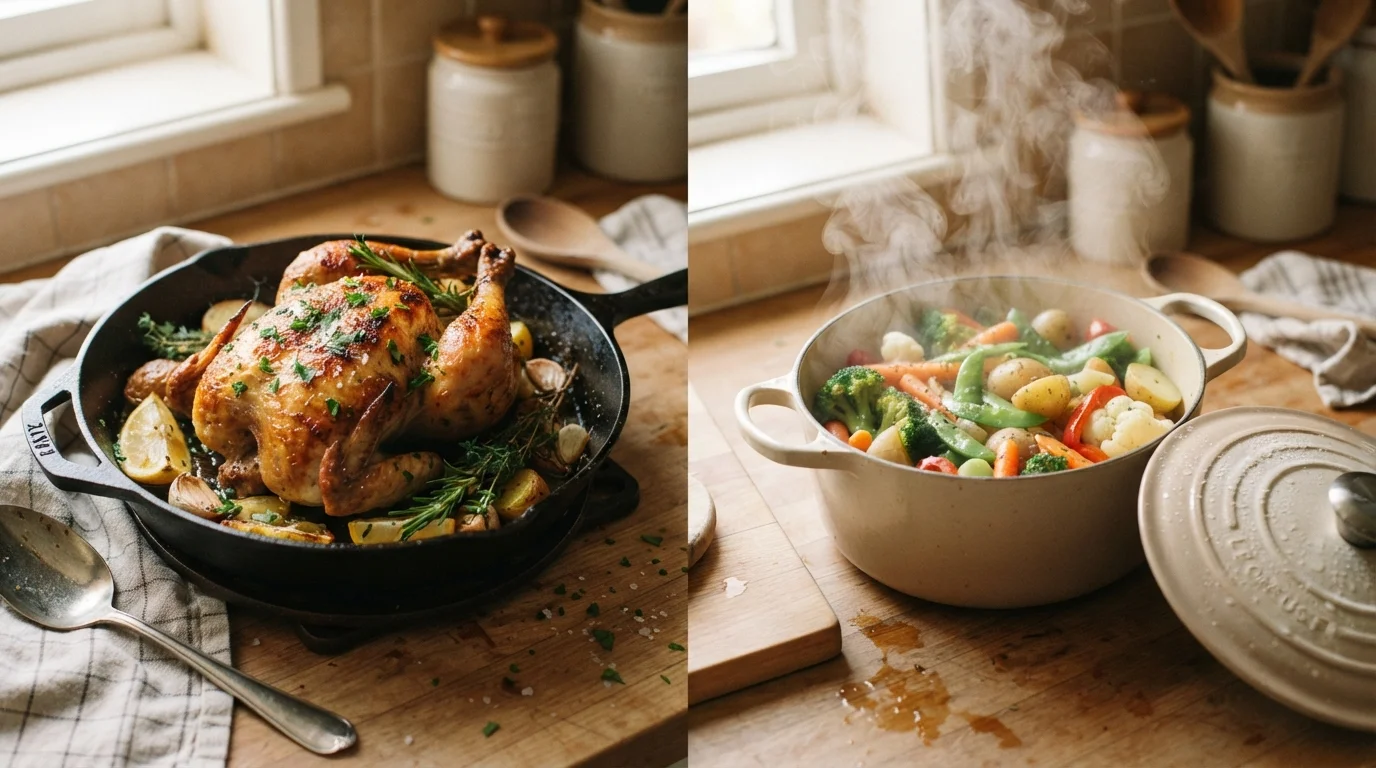
Photo: BridgeWish.com | Reliable Source Of Information editorial
Key Takeaways
- Dry heat cooking uses hot air, metal, or fat — no added water — to brown and crisp food surfaces.
- Moist heat cooking uses water, steam, or broth to gently break down proteins and tenderize tough cuts.
- The Maillard reaction, responsible for browning and savory flavor, only occurs in dry heat environments.
- Choosing the right method depends on the ingredient's texture, fat content, and your desired outcome.
- Many dishes combine both methods — searing first, then braising — to capture benefits of each.
The Core Distinction: What Each Method Actually Does
Every cooking technique falls into one of two fundamental categories: dry heat or moist heat. The difference is straightforward — dry heat methods transfer energy through hot air, hot metal, or fat, while moist heat methods use water, steam, or a water-based liquid as the primary transfer medium.
This distinction matters because water and air conduct heat very differently, and those differences show up directly on your plate. When food cooks in a dry environment above roughly 300°F, surface moisture evaporates quickly, temperatures at the food's exterior can climb well above the boiling point of water (212°F), and browning reactions — especially the Maillard reaction — can begin. In a moist environment, the presence of water keeps temperatures at or near 212°F regardless of how high you set the burner, which prevents browning but allows other chemical changes to occur.
Understanding which environment you're creating is the starting point for making intentional decisions in the kitchen. For a closer look at how stovetop techniques like sautéing relate to this framework, see our guide on sautéing, pan-frying, and stir-frying.
Dry Heat Methods: Building Flavor Through Browning
Dry heat techniques include roasting, baking, grilling, broiling, sautéing, pan-frying, and stir-frying. What unites them is the absence of added liquid and the potential for surface temperatures to exceed the boiling point of water.
The most significant flavor event in dry heat cooking is the Maillard reaction — a chemical process between amino acids and sugars that occurs roughly above 280°F. It produces hundreds of flavor compounds and creates the brown crust on a seared steak, the golden skin on a roasted chicken, and the toasted notes in bread. Caramelization, a separate but related process involving the browning of sugars, also occurs in dry heat environments.
Pat Food Dry Before Dry Heat Cooking
Dry heat is typically the right choice for tender, naturally fatty, or naturally moist proteins and vegetables — cuts that don't need extended cooking time to become palatable. A pork tenderloin, fish fillet, or asparagus spear will cook beautifully with dry heat; a beef shank or lamb shoulder will not.
The choice of fat matters in dry heat cooking too. Different oils behave differently at high temperatures — our article on cooking oil smoke points and best uses explains how to match oil to method.
Moist Heat Methods: Tenderness, Depth, and Gentle Cooking
Moist heat techniques include boiling, simmering, steaming, poaching, and braising. Because water caps the cooking temperature at 212°F (at sea level), these methods work slowly and gently — a key advantage for the right ingredients.
Tough cuts of meat — short ribs, chuck roast, pork shoulder — contain high amounts of collagen, a connective tissue protein. Extended exposure to moist heat above roughly 160°F converts collagen into gelatin, transforming an otherwise chewy piece of meat into something tender and silky. This is why braising and slow-simmering are the preferred methods for these cuts, not roasting at high heat.
| Dry Heat | Moist Heat | |
|---|---|---|
| Heat medium | Hot air, metal, or fat | Water, steam, or broth |
| Max surface temperature | Well above 212°F | At or near 212°F |
| Browning (Maillard reaction) | Yes — produces crust and color | No — browning cannot occur |
| Best for | Tender, fatty, or naturally moist ingredients | Tough, collagen-rich cuts and delicate proteins |
| Nutrient retention | Good (no leaching into liquid) | Steaming is high; boiling can reduce water-soluble vitamins |
| Common techniques | Roasting, grilling, broiling, sautéing | Braising, steaming, poaching, simmering |
Steaming deserves special mention: it is one of the gentlest moist heat methods, keeping food out of direct contact with water and preserving water-soluble vitamins (like vitamin C and B vitamins) more effectively than boiling. It also maintains vibrant color in vegetables.
Poaching — submerging food in liquid held just below a boil — suits delicate proteins like eggs, fish, and chicken breast that would toughen under high heat.
Combining Both Methods for Better Results
Many classic techniques deliberately combine dry and moist heat. Braising is the most common example: food is first seared in a dry pan to develop a browned crust, then transferred to a covered pot with liquid to finish cooking low and slow. The result captures caramelized surface flavor from the dry phase and deep tenderness from the moist phase.
Similarly, some cooks finish a moist-cooked dish under a broiler to add a caramelized top layer — cassoulet and mac and cheese being everyday examples. Recognizing these hybrid approaches as intentional strategy — not just habit — is part of building kitchen fluency.
Knowing when your heat is working correctly is the next step. Our guide on judging doneness without a thermometer covers the visual and tactile cues that tell you your food is ready, regardless of which method you've used.
This article is for informational purposes only. Cooking times, temperatures, and outcomes can vary depending on equipment, altitude, and ingredient variables. Always use safe food-handling practices and ensure proteins reach safe internal temperatures.
The content on this site is for informational purposes only and is not a substitute for professional advice. Always consult a qualified professional for guidance specific to your situation.