
Cooking Oils Decoded: Smoke Points, Flavor, and Best Uses

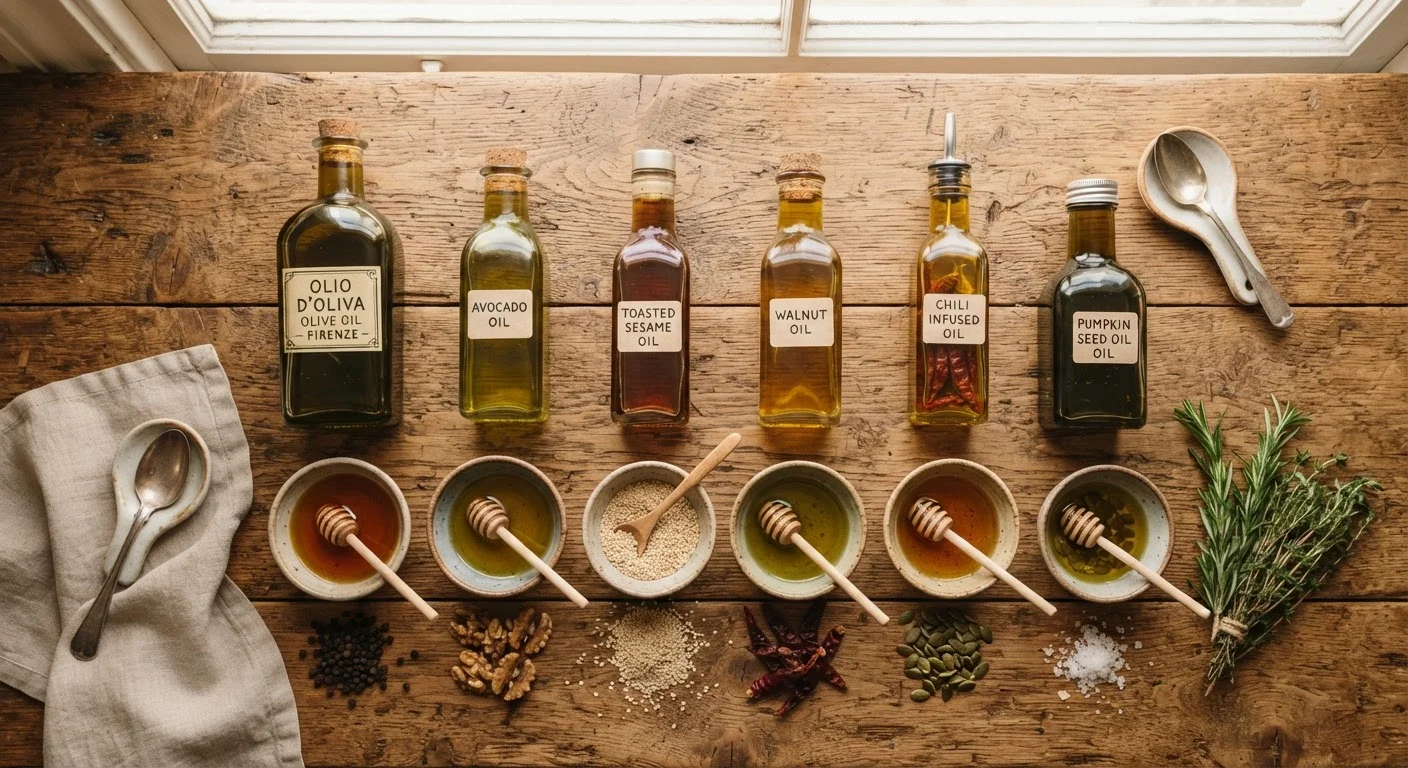
Photo: BridgeWish.com | Reliable Source Of Information editorial
Why Smoke Point Is the Starting Point
Every cooking oil has a smoke point — the temperature at which it begins to visibly smoke and break down. Once an oil crosses that threshold, it doesn't just smell unpleasant; it releases compounds that can affect the flavor of your food and degrade the oil's quality. Choosing an oil with a smoke point well above your target cooking temperature gives you a meaningful safety margin.
Heat method matters here. A quick sauté over medium heat runs around 300–350°F. High-heat stir-frying can push 400°F or higher. Deep frying typically requires 350–375°F sustained. Knowing where your cooking lands on that spectrum is the first step to choosing the right oil. For a deeper look at how heat level shapes your results, see why pan temperature matters more than your recipe.
| Extra virgin olive oil smoke point | ~325–375°F (Varies by quality and harvest freshness) |
| Refined avocado oil smoke point | ~500°F (One of the highest among common cooking oils) |
| Typical pan-frying temperature | 350–375°F (General culinary guideline) |
| Butter smoke point | ~300°F (Milk solids cause early browning and smoking) |
| Ghee smoke point | ~450°F (Milk solids removed during clarification process) |
| Canola oil smoke point | ~400°F (Widely cited culinary reference range) |
Common Oils and Where They Belong
Not all oils are interchangeable. Here's how the most widely used options break down by temperature range and flavor profile.
High-Heat Cooking (400°F and above)
- Refined avocado oil — smoke point around 500°F, nearly neutral taste. Excellent for searing, broiling, and high-heat roasting.
- Refined coconut oil — smoke point roughly 450°F. Mild flavor, solid at room temperature. Works well for high-heat sautéing and baking.
- Light or refined olive oil — smoke point around 465°F. Not to be confused with extra virgin; the refining process removes flavor compounds and raises heat tolerance.
Medium-High Heat (350–400°F)
- Canola oil — smoke point around 400°F, neutral flavor. A versatile everyday choice for pan-frying, roasting, and general cooking.
- Vegetable oil blends — typically refined, smoke points in the 400°F range. Neutral and affordable; well-suited to frying and baking.
- Grapeseed oil — smoke point around 420°F, light and clean-tasting. A good neutral option for sautéing and dressings.
Medium Heat and Finishing (Below 350°F)
- Extra virgin olive oil (EVOO) — smoke point roughly 325–375°F depending on quality. Its grassy, peppery flavor is best preserved as a finishing drizzle, in vinaigrettes, or for gentle sautéing over medium-low heat.
- Unrefined sesame oil — smoke point around 350°F. Intensely nutty and aromatic; typically added at the end of cooking as a flavor finisher, not a primary cooking fat.
- Butter and ghee — butter smokes around 300°F; ghee (clarified butter) reaches approximately 450°F. Ghee is a legitimate high-heat option; whole butter is best for low-heat cooking or finishing sauces.
Understanding how these oils behave at different temperatures connects directly to stovetop technique. The differences between sautéing, pan-frying, and stir-frying each call for different heat levels — and therefore different oils.
Smoke point
The temperature at which an oil begins to smoke and chemically break down. Cooking above an oil's smoke point can produce off-flavors and degrade the oil's quality.
Refined vs. unrefined oil
Refined oils have been processed to remove impurities and flavor compounds, which raises their smoke point and creates a more neutral taste. Unrefined oils retain more of their natural flavor and nutrients but typically have lower smoke points.
Finishing oil
An oil used as a final drizzle over a completed dish rather than as a cooking medium. Finishing oils prioritize flavor over heat stability.
Ghee
Clarified butter with the milk solids removed. The removal of milk solids significantly raises the smoke point compared to whole butter, making ghee suitable for higher-heat cooking.
Flavor as a Selection Factor
Smoke point isn't the only variable. Flavor is equally important, especially in cold preparations and finishing applications.
Neutral oils (canola, refined avocado, grapeseed, light olive) stay in the background, letting other ingredients carry the dish. These are the workhorses for everyday cooking.
Characterful oils (extra virgin olive, unrefined sesame, walnut, flaxseed) contribute their own flavor. Used correctly, they elevate a dish; used in the wrong context — like frying at high heat — they burn off or turn bitter before they can contribute anything positive.
A practical rule: save your most flavorful, expensive oils for cold uses and finishing. Use refined, neutral oils where heat is the primary variable. This approach preserves both flavor and cost-effectiveness.
A Note on Oil Storage
This article is for general informational purposes only. Nutritional and health considerations related to dietary fats should be discussed with a qualified healthcare provider or registered dietitian.
The content on this site is for informational purposes only and is not a substitute for professional advice. Always consult a qualified professional for guidance specific to your situation.