
The Real Difference Between Sautéing, Stir-Frying, and Pan-Frying

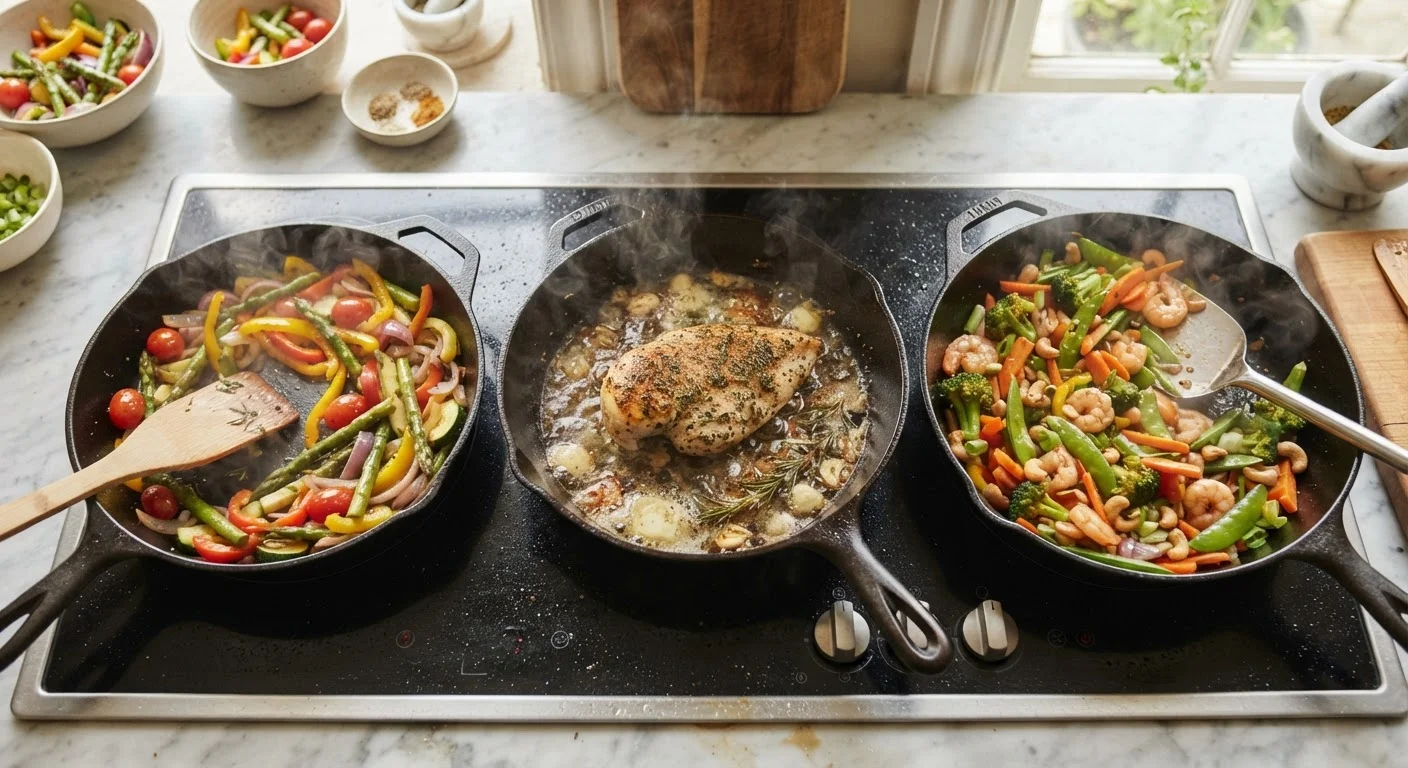
Photo: BridgeWish.com | Reliable Source Of Information editorial
Key Takeaways
- Sautéing uses medium-high heat and minimal fat to cook small, tender cuts with occasional stirring.
- Stir-frying uses very high heat, constant motion, and a small amount of oil — typically in a wok.
- Pan-frying uses more fat and moderate-to-high heat to cook thicker pieces with a golden crust.
- The right technique depends on the ingredient's size, density, and the texture you want to achieve.
- Oil choice matters for all three methods — always match your oil's smoke point to the technique's heat level.
Why These Three Techniques Get Confused
Sautéing, stir-frying, and pan-frying all happen on the stovetop, in a pan, with oil and heat. That surface similarity leads many home cooks to use the terms interchangeably — and then wonder why results don't match expectations. The differences come down to three variables: heat level, amount of fat, and how much you move the food. Get those right, and each technique delivers something the others simply can't.
Understanding how pan temperature shapes your results is the foundation — before you pick a technique, you need to understand what heat actually does to food.
Sautéing: Quick, Light, and Active
The word sauté comes from the French word meaning "to jump" — which tells you something about the motion involved. Sautéing uses medium-high heat, a thin film of fat (typically one to two teaspoons), and frequent tossing or stirring to cook food quickly and evenly.
It works best on small or thin pieces: sliced mushrooms, diced onions, shrimp, or chicken cutlets pounded thin. The goal is light browning on the exterior while keeping moisture inside. Because there's minimal fat and the food moves often, you get gentle color development — not a hard crust.
Common mistakes: overcrowding the pan (which traps steam and prevents browning) and starting with cold food (which drops pan temperature too sharply). For sautéing, a wide skillet — cast iron or stainless steel both work well — gives food room to cook without steaming.
Pat Food Dry Before Any Stovetop Method
Stir-Frying: High Heat, Constant Motion
Stir-frying takes the sauté concept and turns up every dial. It uses very high heat — higher than most home burners can fully replicate — a small amount of high-smoke-point oil, and continuous movement to cook bite-sized pieces in minutes. A wok's sloped sides are designed to keep food cycling through the hottest zone at the bottom.
The result is a texture called wok hei (literally "breath of the wok") in Chinese cooking — a slightly charred, smoky edge that you simply cannot achieve at lower temperatures. Vegetables stay crisp-tender rather than soft; proteins get a quick sear without drying out.
Prep is everything in stir-frying. Because cooking happens so fast, all ingredients must be cut uniformly and ready before the pan heats up. Choosing the right oil matters too — oils with high smoke points like refined avocado or peanut oil are better suited to stir-fry temperatures than olive oil.
| Sautéing | Stir-Frying | Pan-Frying | |
|---|---|---|---|
| Heat level | Medium-high | Very high | Medium to medium-high |
| Amount of fat | Very little (1–2 tsp) | Small amount (1–2 tsp) | Moderate (¼–½ inch of oil) |
| Movement of food | Frequent tossing | Constant stirring | Minimal — one or two flips |
| Best for | Thin, tender pieces | Bite-sized uniform cuts | Thick, dense cuts |
| Texture result | Light browning, moist interior | Crisp-tender, slightly charred | Deep golden crust |
| Typical pan | Wide skillet | Wok or large skillet | Heavy skillet or cast iron |
Pan-Frying: More Fat, More Crust
Pan-frying uses significantly more fat than sautéing — enough to come partway up the side of the food (typically ¼ to ½ inch of oil), but not enough to fully submerge it. Heat is steady at medium to medium-high, and the food is turned once or twice rather than moved constantly.
This method is designed for thicker, denser pieces: bone-in chicken thighs, pork chops, fish fillets with skin, or breaded cutlets. The combination of more fat and less movement allows a deep, even, golden-brown crust to form. The interior cooks through by the time the exterior is properly browned.
Pan-frying requires patience. Flipping too soon tears the crust before it sets. The food should release naturally from the pan when the crust is ready. This technique pairs well with a heavy pan that holds heat steadily, since temperature consistency is key to even browning.
To understand how these three dry-heat methods fit into the broader picture of cooking, see our overview of dry heat vs. moist heat cooking.
450–500°F
Typical stir-fry surface temperature
Food scientists and culinary educators note wok stir-frying requires surface temperatures well above standard sauté range to develop wok hei.
2–4 min
Average stir-fry cook time for vegetables
The high-heat, constant-motion method cooks bite-sized vegetables significantly faster than sautéing or pan-frying the same amount.
Choosing the Right Technique for the Ingredient
The clearest way to choose: start with the ingredient, not the technique.
- Delicate or thin pieces (sliced zucchini, shrimp, cherry tomatoes): sauté.
- Uniform bite-sized pieces you want crisp-tender fast (broccoli, snap peas, diced tofu): stir-fry.
- Thicker cuts needing a substantial crust (chicken thighs, salmon skin-on, pork chops): pan-fry.
It's also worth noting that the same ingredient behaves differently across methods. How a cooking method transforms a single ingredient is a concept worth exploring if you want to develop real kitchen intuition rather than just following recipes.
Don't Overcrowd the Pan
The content on this site is for informational purposes only and is not a substitute for professional advice. Always consult a qualified professional for guidance specific to your situation.