
Cast Iron vs. Stainless Steel: Choosing the Right Pan for How You Actually Cook

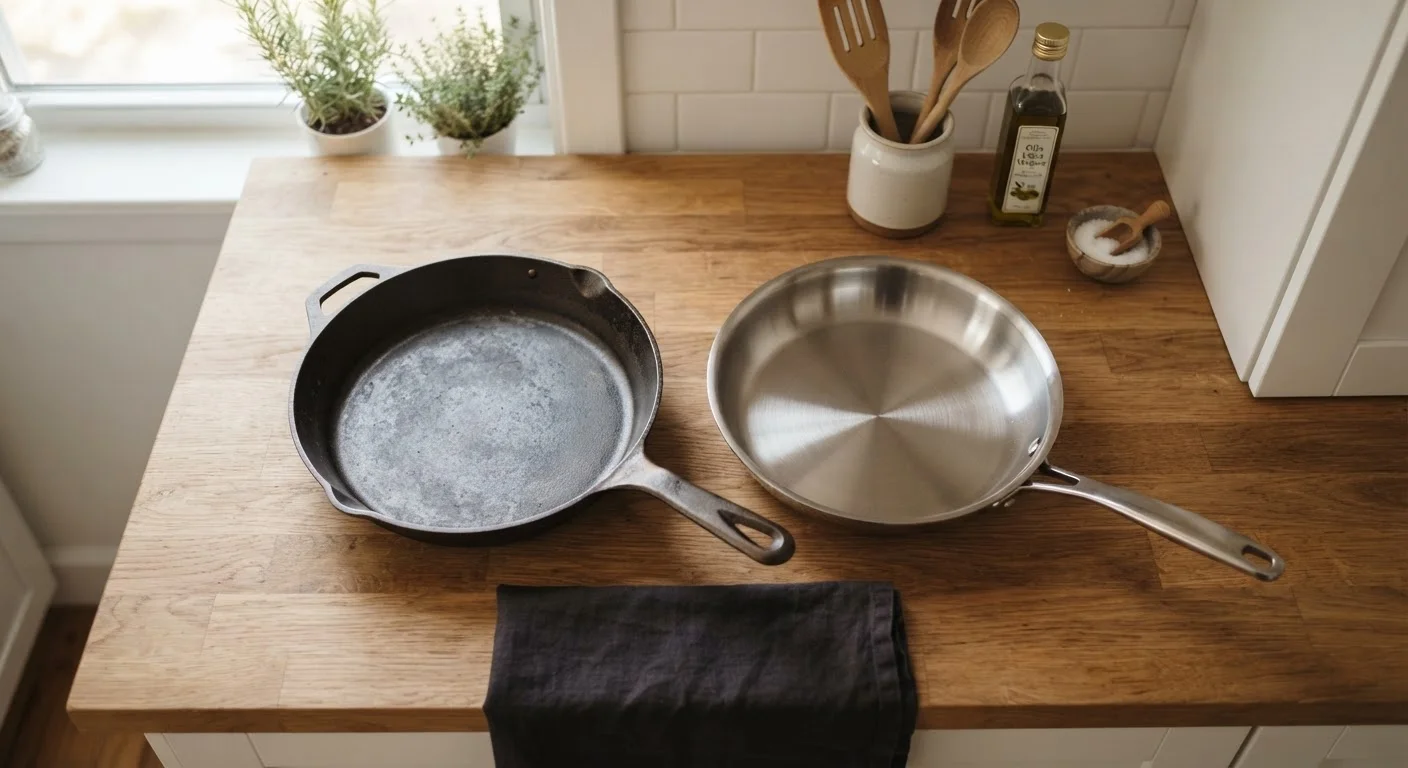
Photo: BridgeWish.com | Reliable Source Of Information editorial
Key Takeaways
- Cast iron retains heat exceptionally well, making it ideal for searing and high-heat cooking.
- Stainless steel heats and cools faster, giving you more responsive temperature control.
- Cast iron requires seasoning and careful drying to prevent rust; stainless steel is largely maintenance-free.
- Both pans can handle the oven, but cast iron tolerates higher temperatures without concern.
- The fond (browned bits) that forms in stainless steel is ideal for building pan sauces.
- Most home cooks benefit from owning one of each rather than choosing just one.
How Each Pan Handles Heat
The single biggest difference between cast iron and stainless steel is how they interact with heat — and understanding this shapes every cooking decision you'll make with either pan.
Cast iron is a slow starter but an outstanding heat-holder. It takes longer to come to temperature, but once hot, it holds that heat with remarkable consistency. Place a cold steak on a screaming-hot cast iron pan and the surface temperature barely dips — which is exactly what produces a deep, even crust. This thermal mass also makes cast iron the go-to for oven applications like skillet cornbread, frittatas, and pan pizzas.
Stainless steel heats up faster and responds more quickly when you raise or lower the burner. That responsiveness matters when you're sautéing vegetables, making a quick pan sauce, or cooking delicate proteins that need precise timing. The tradeoff is that stainless has less thermal mass, so adding cold food to the pan causes a more noticeable temperature drop.
Understanding pan temperature is crucial regardless of which material you use. See our guide to pan temperature for practical techniques on reading and controlling heat at the stove.
| Criterion | Cast Iron | Stainless Steel |
|---|---|---|
| Heat retention | Excellent — holds heat steadily | Moderate — responds faster to changes |
| Heat-up speed | Slow | Fast |
| Oven-safe temperature | Virtually unlimited | Up to ~500°F (varies by handle) |
| Reactivity with acid | Reactive — avoid prolonged acid cooking | Non-reactive — safe with all foods |
| Maintenance required | Regular seasoning and careful drying | Minimal — mostly dishwasher-safe |
| Weight (12-inch) | ~8–10 lbs | ~3–5 lbs |
| Pan sauce capability | Limited — not ideal for acid-based sauces | Excellent — builds fond easily |
| Natural non-stick potential | Yes, with proper seasoning | No — requires technique and fat |
Care, Maintenance, and Practical Realities
Maintenance is where these two pans diverge most sharply — and where many home cooks make their final decision.
Cast iron must be seasoned: a process of baking thin layers of oil onto the surface to create a naturally non-stick coating. A well-seasoned pan releases food easily and improves with use. But cast iron reacts to moisture and acid. You should dry it thoroughly after washing, avoid soaking it in water, and limit cooking highly acidic foods like tomatoes or wine-based sauces for extended periods. A little maintenance pays off in decades of reliable performance.
Stainless steel requires virtually no special care. It's non-reactive, so it handles acids, salt, and any food without concern. Most stainless pans are dishwasher-safe. The common complaint — food sticking — is almost entirely a technique issue rather than a material flaw. Preheating the pan properly and using sufficient fat resolves most sticking problems.
~500°F
Typical max oven temp for stainless steel pans
Handle material determines the limit; cast iron has no practical upper bound for standard home oven use.
8–10 lbs
Typical weight of a 12-inch cast iron skillet
Compared to roughly 3–5 lbs for a comparable stainless steel pan — a meaningful difference for everyday handling.
One more practical note: cast iron is significantly heavier. A standard 12-inch cast iron skillet can weigh over 8 pounds, which can be challenging when draining pasta water or maneuvering a full pan.
Matching the Pan to the Cooking Technique
Rather than declaring one pan universally superior, it's more useful to match each to the techniques it handles best.
Reach for cast iron when:
- Searing red meat, poultry, or thick fish fillets
- Deep-frying or shallow-frying (steady oil temperature matters)
- Baking in the oven at high heat — cast iron is safe at virtually any oven temperature
- Cooking eggs or pancakes once the seasoning is well-established
Reach for stainless steel when:
- Sautéing vegetables, building fond, and making pan sauces
- Cooking acidic dishes — tomato, lemon, wine
- Braising on the stovetop before moving to the oven
- Any task that benefits from quicker heat adjustment
If you want to sharpen your stovetop technique alongside your pan knowledge, our overview of sautéing, pan-frying, and stir-frying explains when each method applies and why pan choice matters for each one.
Do You Need to Choose Just One?
The content on this site is for informational purposes only and is not a substitute for professional advice. Always consult a qualified professional for guidance specific to your situation.