
Stock, Broth, and Bone Broth: What's Actually Different

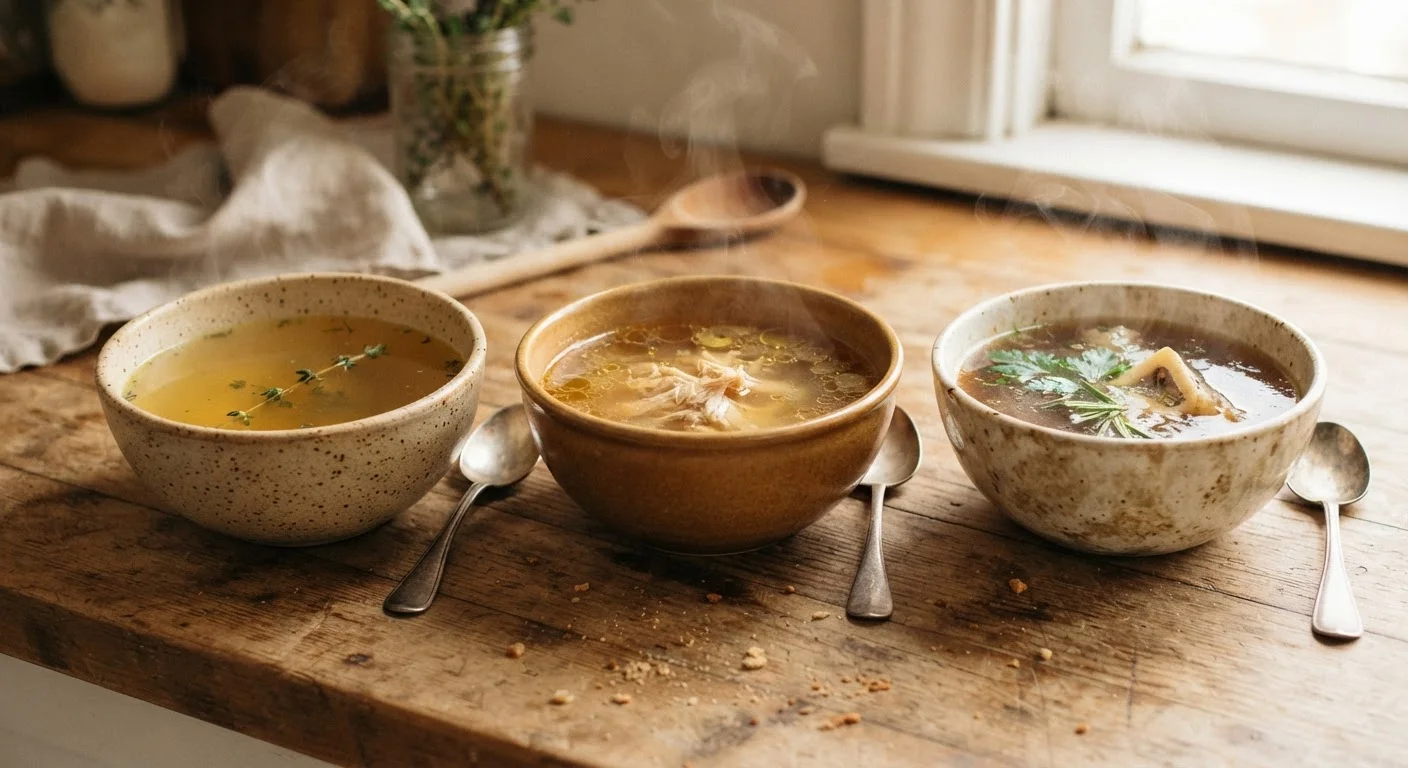
Photo: BridgeWish.com | Reliable Source Of Information editorial
Key Takeaways
- Stock is made from bones and produces a rich, gelatinous liquid ideal for cooking sauces and braises.
- Broth is made from meat and is seasoned enough to drink straight from a cup.
- Bone broth is essentially a very long-simmered stock, valued for its collagen content.
- Neither stock nor broth are interchangeable in every recipe — the choice affects texture and flavor.
- Homemade versions of all three give you more control over sodium and flavor intensity.
The Core Distinction: Bones vs. Meat
The single biggest factor separating stock from broth is the main ingredient. Stock is built on bones — roasted or raw — while broth is built on meat. That difference shapes everything else: texture, flavor, and how each liquid behaves in a recipe.
Because bones contain collagen, stock becomes gelatinous as it simmers. When you cool a proper homemade stock, it should set like a loose jelly. That gelatin is what gives body to a pan sauce or a braise — it creates the silky, coating quality that separates a great sauce from a watery one. Broth, by contrast, stays thin and liquid because meat doesn't release significant gelatin. It's lighter, more savory, and typically seasoned with salt, which is why it's palatable straight from a mug.
Another key difference: stock is usually unseasoned or only lightly seasoned. The idea is that the cook controls salt levels at the point of use. Broth tends to be seasoned throughout, which is why store-bought broth is often noticeably saltier than stock.
A Note on Store-Bought Labels
Where Bone Broth Fits In
Bone broth isn't a separate category so much as a variation on stock — specifically, a stock simmered for a much longer period, often 12 to 24 hours. The extended cooking time is meant to draw out maximum collagen and minerals from the bones. The result is a richer, darker liquid with a more pronounced flavor than a standard stock.
The term "bone broth" is partly a marketing distinction. It emerged alongside interest in collagen and gut health, positioning this long-cooked liquid as something to drink rather than just cook with. While bone broth does contain more collagen than a shorter-cooked stock, it's worth noting that many health claims associated with it are still being studied and should be evaluated critically. It can be a flavorful, nutrient-contributing part of an overall balanced diet — but it is not a guaranteed treatment or cure for anything.
12–24 hrs
Typical bone broth simmer time
Compared to 3–4 hours for chicken stock and 6–8 hours for beef stock, bone broth's extended cook time is what drives greater collagen extraction.
~6–12g
Collagen per cup in bone broth (estimated)
Estimates vary widely depending on bone type, water ratio, and cook time; no universally standardized figure exists across commercial and homemade products.
For everyday cooking, bone broth can substitute anywhere you'd use stock, though its deeper flavor may be more assertive in delicate dishes.
When to Use Each One
Choosing the right liquid matters more than most recipes let on. Here's a practical breakdown:
- Stock — Use when you need body and depth without adding salt early. It's the right choice for reductions, pan sauces, risotto, braising liquid, and soups where you control seasoning as you go. See our step-by-step guide to making stock from scratch to get started.
- Broth — Best when you need a quick, drinkable, already-seasoned liquid. Use it in soups and stews where the extra salt works in context, or as a light poaching liquid for vegetables and grains.
- Bone broth — Works in all the same applications as stock. It's also commonly consumed warm as a standalone drink, particularly by people looking to incorporate more collagen into their diet. Just be mindful of the stronger flavor in lighter dishes.
Understanding how heat and technique change ingredients more broadly — like how cooking methods transform the same ingredient — helps you make better decisions throughout your cooking process, not just with liquids.
Save Scraps for Your Next Batch
This article is for general informational purposes only and does not constitute medical or dietary advice. If you have specific health concerns, consult a qualified healthcare professional.
Frequently Asked Questions
The content on this site is for informational purposes only and is not a substitute for professional advice. Always consult a qualified professional for guidance specific to your situation.