
Hydration and Food: How What You Eat Affects Your Fluid Balance

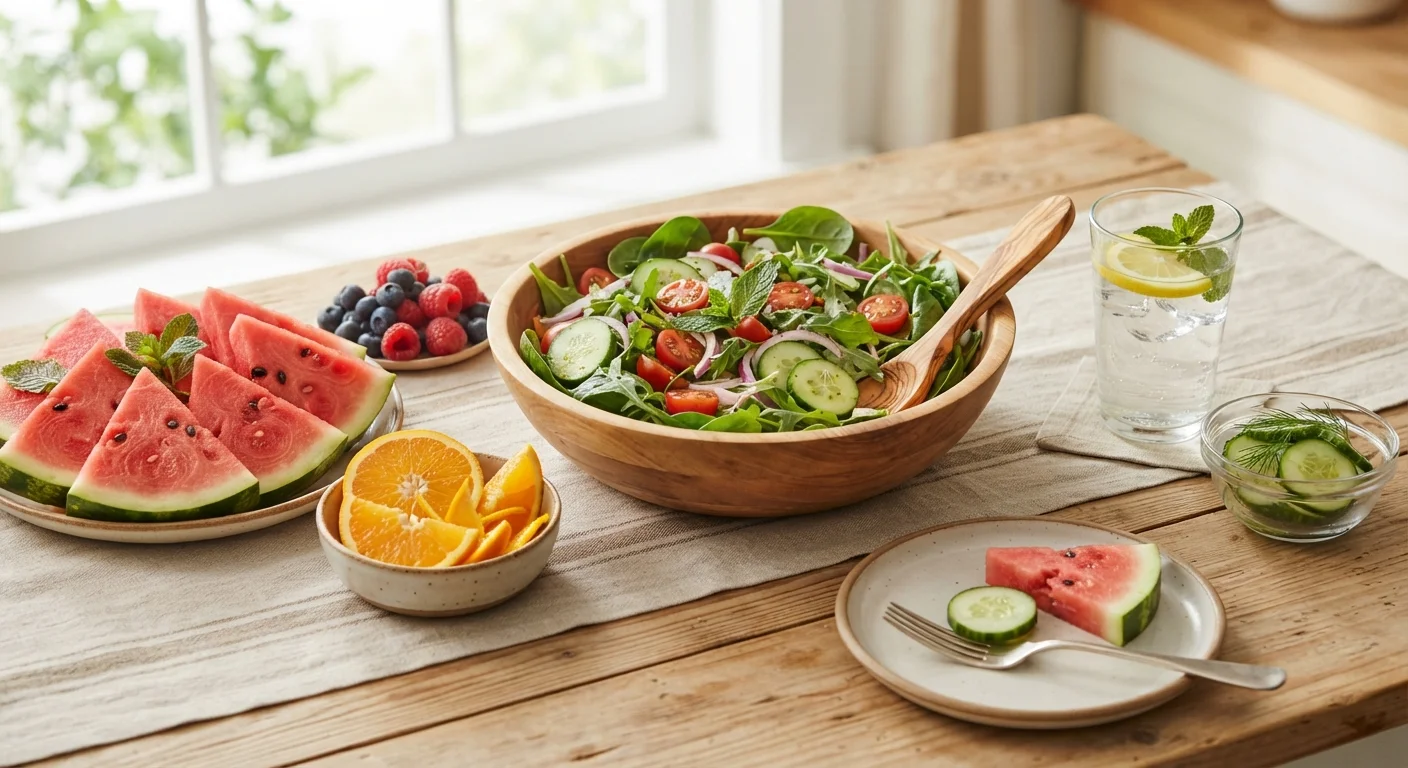
Photo: BridgeWish.com | Reliable Source Of Information editorial
Key Takeaways
- Food provides roughly 20–30% of most people's daily fluid intake.
- Fruits and vegetables with high water content are especially effective hydration contributors.
- Sodium, alcohol, and caffeine can all influence how much fluid your body retains or loses.
- Hydration needs shift based on activity level, climate, and individual health factors.
- Thirst is a useful but imperfect signal — paying attention to urine color can be more reliable.
Water Isn't Your Only Hydration Source
Most of us think about hydration purely in terms of how many glasses of water we drink. But your body draws fluid from everything you consume — including solid food. According to established nutritional science, food accounts for approximately 20–30% of total daily fluid intake for most adults. That's a meaningful contribution, not a rounding error.
This matters because it reframes hydration as a dietary pattern, not just a beverage habit. What you eat shapes your fluid balance just as much as what you drink. Understanding this connection gives you more tools to stay well-hydrated — especially on days when drinking enough water feels like a chore.
For a broader look at how water interacts with digestion and nutrient absorption, see our guide to hydration and diet.
20–30%
Daily fluid intake from food
Widely cited in nutritional science literature and referenced by health authorities including the Institute of Medicine.
85–95%
Water content of most fruits and vegetables
Values vary by specific food; cucumbers and lettuce rank among the highest water-content foods by weight.
~2 cups
Fluid from food in a typical day
Estimated contribution for adults eating a diet that includes ample fruits, vegetables, and cooked foods.
Foods That Contribute the Most Fluid
Not all foods are created equal when it comes to water content. Fruits and vegetables tend to lead the pack — many are composed of 85–95% water by weight. Some standouts include:
- Cucumbers and lettuce — among the highest water content of any solid food
- Watermelon, strawberries, and oranges — hydrating and nutrient-dense
- Tomatoes and zucchini — easy to incorporate into everyday meals
- Broth-based soups — a reliable fluid source, especially in colder months
- Oatmeal and cooked grains — absorb water during cooking, delivering fluid in every bite
On the other end of the spectrum, dry or highly processed foods — crackers, chips, cured meats — add little to no fluid and may even increase your hydration needs by contributing sodium.
Building meals around whole, minimally processed foods naturally supports fluid balance, which is one reason a varied diet rich in produce tends to align with better hydration. Our article on what a balanced diet actually means explores how food variety connects to broader health outcomes.
Dietary Factors That Affect How Your Body Uses Fluid
Some components of food don't just add water — they influence how your body retains or releases it.
Sodium
Sodium is the primary mineral regulating fluid balance outside your cells. When you eat a lot of salt, your kidneys hold onto more water to maintain the right concentration in your blood. This isn't inherently dangerous for healthy people, but it does mean high-sodium meals often increase thirst and can cause temporary fluid retention.
Potassium
Potassium works in partnership with sodium. Foods rich in potassium — bananas, sweet potatoes, beans, leafy greens — help your kidneys excrete excess sodium, which supports a healthier fluid balance overall.
Caffeine and Alcohol
Both have mild diuretic effects, meaning they encourage your kidneys to produce more urine. Moderate caffeine intake (from coffee or tea) still provides a net fluid gain because the water in the beverage more than offsets what's lost. Alcohol, however, is a stronger diuretic and can noticeably increase fluid losses — one reason why drinking water alongside alcoholic beverages is a practical habit.
A Simple Daily Habit That Helps
How to Read Your Own Hydration Signals
Thirst is useful but imperfect. By the time you feel thirsty, mild dehydration may already be underway. A more reliable daily check is urine color: pale yellow indicates good hydration, while dark yellow or amber suggests you need more fluids.
Hydration needs also vary significantly by individual. Factors that increase your requirements include:
- Physical activity and exercise intensity
- Hot or humid weather
- Fever, illness, or diarrhea
- Pregnancy or breastfeeding
- High-fiber diets (fiber absorbs water during digestion)
There's no universal daily water target that applies to everyone. General guidance from health authorities provides a starting range, but your actual needs depend on body size, activity, diet composition, and health status. If you have a medical condition or are managing a chronic illness, consult a healthcare professional about your specific fluid needs.
For more on how water supports nutrient absorption and metabolic function, see our overview of hydration and nutrition.
This article is for general informational purposes only and is not a substitute for personalized medical or dietary advice. Consult a qualified healthcare professional for guidance specific to your health situation.
“The body's fluid needs are met through a combination of beverages and food — and the proportion from food can be surprisingly large, especially in diets rich in fruits and vegetables.”
— National Academies of Sciences, Engineering, and Medicine, Dietary Reference Intakes: Water, Potassium, Sodium, Chloride, and Sulfate (2005 Report)
Frequently Asked Questions
The content on this site is for informational purposes only and is not a substitute for professional advice. Always consult a qualified professional for guidance specific to your situation.