
Vegetables You're Probably Undereating—and Simple Ways to Change That

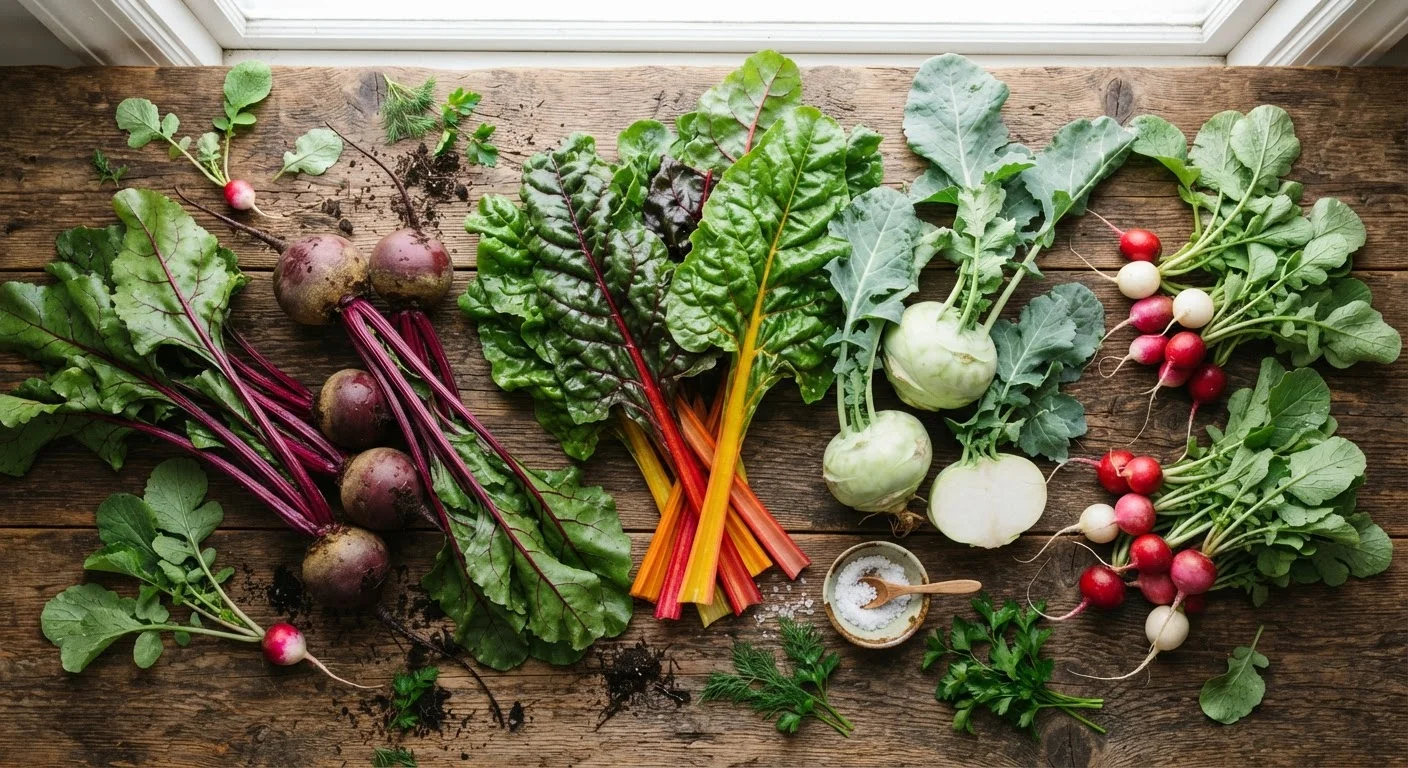
Photo: BridgeWish.com | Reliable Source Of Information editorial
Key Takeaways
- Most Americans fall short of recommended vegetable variety, not just quantity.
- Several nutrient-dense vegetables are widely available, affordable, and easy to prepare.
- Simple cooking techniques — roasting, sautéing, blending — can make unfamiliar vegetables approachable.
- Adding one new vegetable per week is a practical, low-pressure way to broaden your intake.
- Frozen and canned versions of many underused vegetables retain strong nutritional value.
Why Vegetable Variety Matters
Most people who try to eat healthier focus on quantity — eating more vegetables overall. That's a worthwhile goal. But nutritional research consistently points to another gap: the range of vegetables we actually eat tends to be surprisingly narrow. Many households cycle through the same three or four options — iceberg lettuce, broccoli, canned corn — week after week, missing out on a broader spectrum of vitamins, minerals, and dietary fiber.
Different vegetables bring genuinely different nutrients to the table. Leafy greens are strong in folate and vitamin K; root vegetables tend to provide more potassium and certain B vitamins; cruciferous vegetables like cabbage and Brussels sprouts contain compounds studied for their role in supporting cellular health. Relying on only a few types means certain nutrient gaps go quietly unfilled.
The good news is that expanding your vegetable variety doesn't require a complete kitchen overhaul. It mostly requires knowing which vegetables are worth adding — and having one or two simple techniques to make them work in everyday cooking. If you're newer to thinking about this, our introduction to nutrition fundamentals covers the broader context of food balance and dietary variety.
Start With Just One New Vegetable
Below are seven vegetables that consistently show up in nutrition guidance as valuable but underconsumed, along with practical ways to actually get them on your plate.
Seven Vegetables Worth Adding to Your Rotation
Beets
Beets are rich in folate, manganese, and naturally occurring nitrates, which the body converts to nitric oxide — a compound involved in supporting healthy blood vessel function. Despite this, beets remain largely absent from everyday meals outside of the occasional salad bar.
Simple way to use them: Roast cubed beets at 400°F with a drizzle of olive oil and a pinch of salt until tender (about 35–40 minutes). They're sweet, earthy, and hold up well in grain bowls or alongside roasted proteins. Pre-cooked beets in vacuum-sealed pouches are widely available and skip the prep entirely.
Roasting transforms beets into a naturally sweet, earthy side that pairs with almost anything.
Swiss Chard
Swiss chard is a leafy green that provides vitamin K, magnesium, and potassium in meaningful amounts. It's often overlooked in favor of spinach or kale, but it's milder than both and cooks down quickly, making it one of the more weeknight-friendly dark leafy greens.
Simple way to use it: Sauté chopped Swiss chard — stems and leaves together — in olive oil with garlic for about five minutes. Add a splash of lemon juice at the end to balance the earthiness. It works well alongside eggs, pasta, or beans.
Swiss chard cooks down in under five minutes, making it one of the easiest leafy greens to use on a weeknight.
Cabbage
Cabbage is inexpensive, widely available year-round, and one of the more nutritionally dense vegetables per dollar — a point worth noting if you're navigating nutrition on a budget. It contains vitamin C, vitamin K, and fiber, and is part of the cruciferous family, which also includes broccoli and Brussels sprouts.
Simple way to use it: Thinly slice green or red cabbage and toss with a simple vinaigrette for a quick slaw. It can also be sautéed with onion and caraway seeds as a simple side, or added to soups and stir-fries where it softens without losing all of its texture.
Cabbage is one of the most nutrient-dense vegetables available at the lowest price point.
Kohlrabi
Kohlrabi looks unusual — like a small alien spacecraft — which may explain why many shoppers walk past it. But it's mild, slightly sweet, and crisp. It provides vitamin C, potassium, and dietary fiber. Both the bulb and the leaves are edible.
Simple way to use it: Peel the bulb and slice it into thin sticks for dipping — it has a texture similar to apple or jicama when raw. It can also be roasted or added to soups. The leaves can be treated like any other cooking green.
Raw kohlrabi has the crisp, mild sweetness of an apple — it makes an easy, no-cook snack.
Turnip Greens
When people buy turnips, the greens often get discarded — but they're nutritionally distinct from the root and worth keeping. Turnip greens are high in calcium, folate, and vitamins A, C, and K. They're among the more calcium-rich plant foods available.
Simple way to use them: Chop and sauté with garlic and a small amount of oil until wilted. They're slightly bitter, so a splash of apple cider vinegar or a pinch of red pepper flakes helps balance the flavor. They work well with lentils or alongside cornbread.
Turnip greens are one of the more calcium-rich plant foods you can find in a standard grocery store.
Celeriac (Celery Root)
Celeriac — the bulbous root of a variety of celery — has a mellow, slightly nutty flavor and provides vitamin K, phosphorus, and dietary fiber. It's frequently overlooked because it looks gnarly and unfamiliar, but it's one of the more versatile root vegetables in a kitchen.
Simple way to use it: Peel, cube, and roast it like you would potatoes. It can also be blended into soups for creaminess without adding cream, or grated raw into a remoulade-style salad with mustard and lemon. Frozen versions are increasingly available at larger grocery stores.
Blended into soup, celeriac adds a creamy body and subtle flavor without dairy.
Radishes
Radishes are most commonly seen as a raw garnish, sliced thin and left on the side of a plate. But they're underused in cooked preparations, which significantly changes their flavor — the sharpness mellows into something mild and slightly sweet when roasted or braised. They provide vitamin C, folate, and some fiber.
Simple way to use them: Halve radishes and roast at 425°F with olive oil and salt for about 20 minutes. They caramelize gently and taste closer to a mild turnip than a sharp raw radish. Sliced thin, raw radishes also add crunch to tacos, sandwiches, and grain bowls — a small change that adds more nutritional value than many typical toppings.
Roasted radishes lose their sharpness entirely, becoming mild and slightly sweet — a revelation for skeptics.
Frozen and Canned Options Are Valid
If building new habits around vegetables feels daunting alongside a packed schedule, the practical strategies in building healthier eating habits when you have almost no time are worth a look. And when you're ready to shop more intentionally, grocery shopping with nutrition in mind offers a useful framework for navigating the produce section with more purpose.
This article is for general informational and educational purposes only and is not a substitute for professional medical or dietary advice. Consult a qualified healthcare provider or registered dietitian for guidance specific to your health needs.
The content on this site is for informational purposes only and is not a substitute for professional advice. Always consult a qualified professional for guidance specific to your situation.