
Whole Foods vs. Processed Foods: Understanding the Real Difference

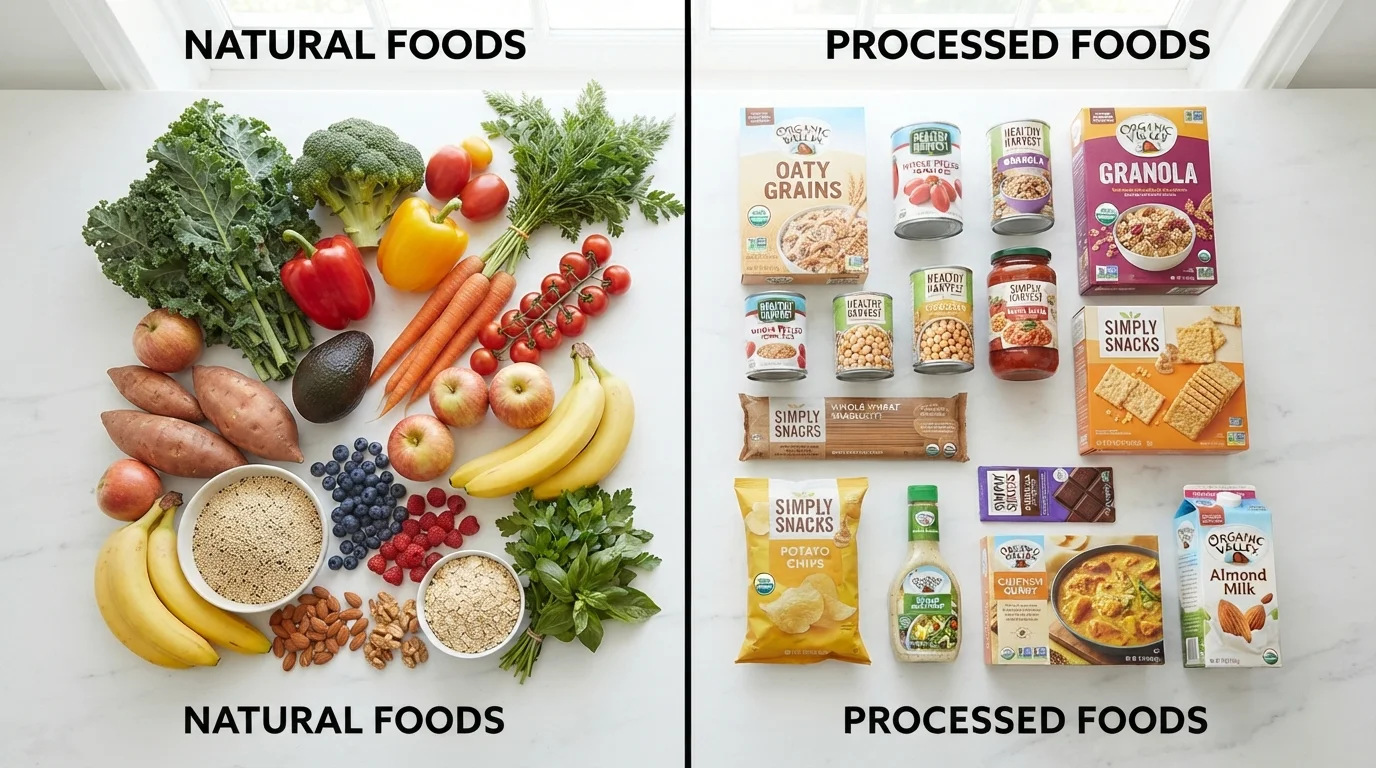
Photo: BridgeWish.com | Reliable Source Of Information editorial
Key Takeaways
- Whole foods are minimally altered from their natural state and tend to be richer in fiber, vitamins, and minerals.
- Processing exists on a spectrum — frozen vegetables and plain yogurt are processed but nutritionally sound.
- Ultra-processed foods, loaded with additives and refined ingredients, are most strongly linked to poor health outcomes.
- Reading ingredient lists, not just nutrition panels, is the most reliable way to gauge a food's processing level.
- No single food defines a healthy diet — overall eating patterns and food quality matter most.
What 'Whole Food' Actually Means
The term whole food refers to food that is as close to its natural form as possible — think fresh apples, raw nuts, dried lentils, or plain oats. These foods have undergone little or no industrial processing before reaching your kitchen. Their cellular structure largely intact, they retain the full profile of nutrients — fiber, vitamins, minerals, and phytonutrients — that nature packaged together.
It's worth noting that "whole" doesn't mean raw or uncooked. A roasted sweet potato or a hard-boiled egg is still a whole food. The meaningful distinction is about what hasn't been added or stripped away — not about preparation in your kitchen.
For a closer look at how grain processing specifically affects nutrient content, see our guide to whole grains vs. refined grains.
The Processing Spectrum: Not All Processing Is Equal
"Processed food" is an umbrella term that covers an enormous range — from lightly transformed foods like pasteurized milk and bagged salad greens to heavily engineered products designed primarily for palatability and shelf life. Nutrition researchers often use classification frameworks, such as the NOVA system, to distinguish between levels:
- Minimally processed: Cleaned, frozen, dried, or pasteurized — nutritional integrity mostly intact (e.g., frozen peas, plain canned tomatoes, rolled oats).
- Processed culinary ingredients: Extracted or refined from whole foods — oils, flours, sugars. Used in cooking but not typically eaten alone.
- Processed foods: Made by combining the above with salt, sugar, or preservatives (e.g., canned beans with added salt, cheese, cured meats).
- Ultra-processed foods (UPF): Formulated with multiple additives — emulsifiers, colorants, flavor enhancers, modified starches — that have no culinary equivalent (e.g., packaged snack cakes, carbonated soft drinks, many fast-food items).
| Criterion | Whole Foods | Processed Foods |
|---|---|---|
| Definition | Unaltered or minimally altered natural foods | Foods transformed by industrial methods |
| Nutrient density | Generally high; fiber and micronutrients intact | Varies widely; often reduced in UPFs |
| Additives | None | Range from none to many synthetic additives |
| Convenience | Requires more preparation time | Ready-to-eat or quick to prepare |
| Shelf life | Shorter; perishable | Often extended via preservatives or packaging |
| Added sugar & sodium | None added | Common, especially in ultra-processed products |
| Cost | Varies; fresh produce can be costly | Often affordable; some minimally processed items very economical |
The health research most consistently links ultra-processed foods — not all processed foods — to higher rates of obesity, cardiovascular disease, and type 2 diabetes. Understanding this distinction prevents the false conclusion that all packaged food is equally harmful.
For a deeper dive into how researchers draw this line, explore our article on what sets whole foods apart from ultra-processed ones.
Reading Labels to Place Foods on the Spectrum
The most practical skill for everyday grocery shopping is learning to use the ingredient list — not just the nutrition facts panel — to gauge processing level. A few reliable signals:
- Short ingredient lists with recognizable, whole-food ingredients generally indicate minimal processing.
- Long lists featuring chemical-sounding names (sodium stearoyl lactylate, carrageenan, acesulfame potassium) are a hallmark of ultra-processed products.
- Added sugars listed under multiple names (high-fructose corn syrup, dextrose, maltose) can obscure total sugar content. Our breakdown of added vs. natural sugars explains why this distinction matters.
Nutrition Panels Don't Tell the Whole Story
This doesn't mean every product with a complex label should be avoided entirely. Context — how often you eat it and what surrounds it in your overall diet — matters as much as any single ingredient.
Building a Diet That Works With Both
In practice, rigid avoidance of all processed foods isn't necessary and may not be realistic for most households. A more durable approach focuses on food quality and dietary patterns rather than binary rules. Prioritizing whole foods as the foundation of your meals — vegetables, fruits, legumes, whole grains, eggs, plain dairy — while treating minimally processed items as convenient supporting players is well aligned with mainstream dietary guidance from bodies like the USDA and the Dietary Guidelines for Americans.
Ultra-processed foods are worth limiting not because they're morally bad, but because they tend to crowd out more nutritious options, deliver excess sodium and added sugars, and are engineered to encourage overconsumption. The Diet & Food Choices hub has additional resources if you're evaluating different dietary approaches.
57%
Share of US calories from ultra-processed foods
A study published in BMJ Open estimated that ultra-processed foods account for roughly 57% of daily caloric intake among US adults.
4x
More fiber in whole grains vs. refined counterparts
Dietary fiber content drops substantially when whole grains are refined, according to USDA food composition data comparing whole and refined grain products.
This article is for general informational and educational purposes only. It is not a substitute for personalized advice from a registered dietitian or qualified healthcare professional.
The content on this site is for informational purposes only and is not a substitute for professional advice. Always consult a qualified professional for guidance specific to your situation.