
Building a Home Exercise Routine Without Any Equipment

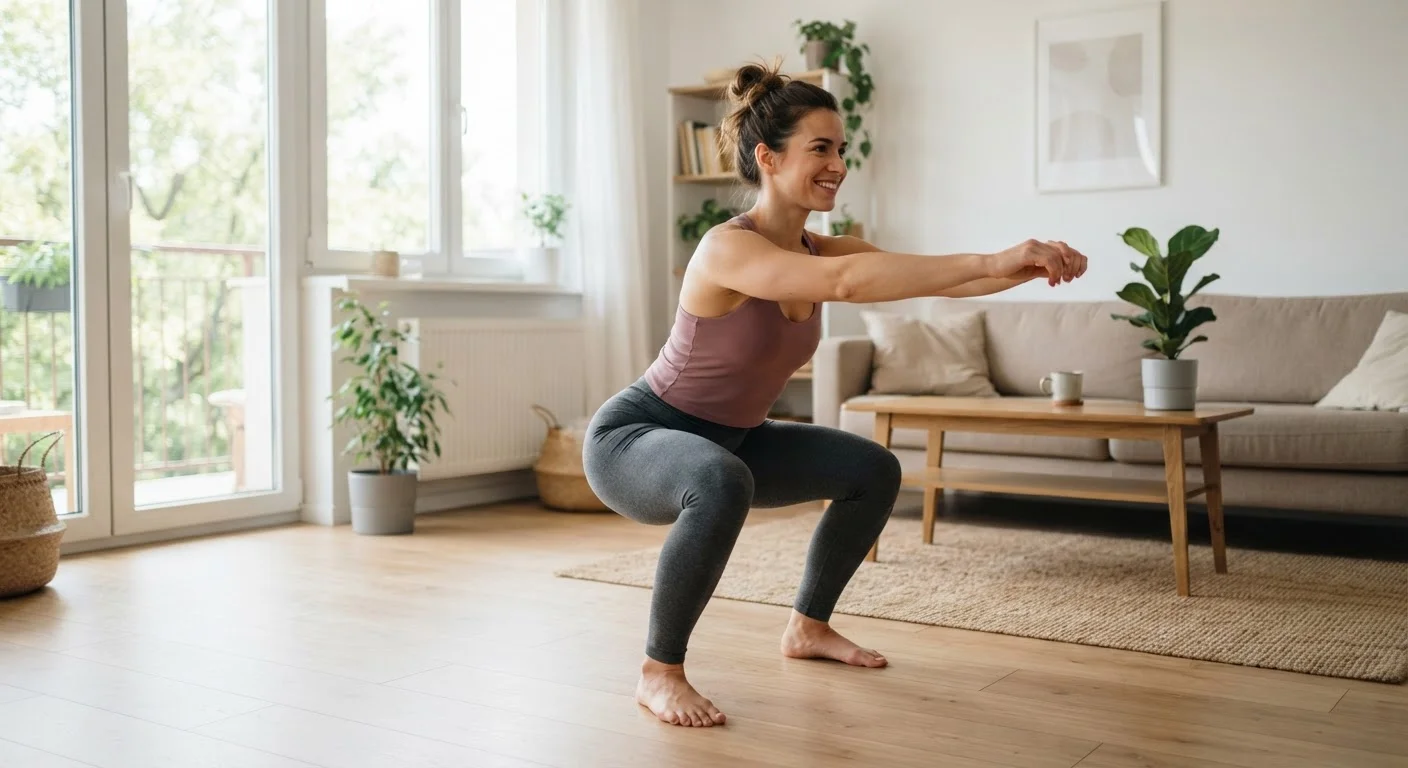
Photo: BridgeWish.com | Reliable Source Of Information editorial
Key Takeaways
- Effective exercise routines require no equipment — bodyweight movements build real strength and cardiovascular fitness.
- Consistency and progressive difficulty matter more than workout length or intensity.
- A balanced routine addresses multiple movement patterns: push, pull, hinge, squat, and core.
- Rest and recovery are as important as the workouts themselves.
- Even a modest amount of dedicated floor space is enough to get started.
Why Bodyweight Training Works
The idea that effective exercise requires expensive equipment or a gym membership is one of the most persistent barriers to getting started. The reality is that your own bodyweight provides substantial resistance — enough to build meaningful strength, improve cardiovascular fitness, and support healthy body composition when applied consistently and progressively.
Bodyweight training also removes the most common friction points: commute time, membership costs, and scheduling constraints. When your workout space is your living room, the barrier to showing up drops significantly. If you're curious about how bodyweight training compares to free weights over the long term, the article bodyweight training vs. free weights offers a clear side-by-side look. And if you're coming back to exercise after a significant break, the guide to restarting after a long break is a useful companion to the steps below.
Consult a Professional Before Starting
What You Need Before You Begin
One of the advantages of equipment-free training is that the setup requirements are minimal. You need a surface that won't have you slipping, a few square feet of clear space, and clothing that doesn't restrict movement. Everything else is optional.
What you will need
Exercise mat or folded blanket
Provides cushioning for floor-based exercises like planks, glute bridges, and stretching.
Timer or phone stopwatch
Used to track work intervals, rest periods, and overall session length.
Workout journal or notes app
Logs exercises, sets, and reps so you can measure progress and plan progressions.
If you'd like to think more intentionally about your home movement space — including how to make even a small apartment functional — see building a home workout space without overcomplicating it.
Don't Skip the Warm-Up
Step-by-Step: Building Your Routine
Follow the steps below to structure a routine from scratch. Each step addresses a specific decision or habit so the overall program is both effective and sustainable from week one.
Define your weekly availability
Before choosing exercises, be honest about how many days per week you can realistically commit. Research consistently shows that frequency and consistency outperform duration — three focused 20-minute sessions per week deliver better results than one long session you dread. Start with two to three days, leaving at least one rest day between sessions to allow muscle recovery.
Learn the five foundational movement patterns
A well-rounded routine covers five movement patterns that together engage every major muscle group:
- Push — e.g., push-ups (chest, shoulders, triceps)
- Pull — e.g., doorframe rows or resistance-band rows (back, biceps)
- Squat — e.g., bodyweight squats, wall sits (quads, glutes)
- Hinge — e.g., glute bridges, single-leg deadlifts (hamstrings, glutes, lower back)
- Core — e.g., planks, dead bugs (deep abdominal and stabilizer muscles)
Including at least one exercise from each category in your weekly program ensures balanced muscular development and reduces the risk of overuse injuries. For a deeper look at how these principles apply to strength training, see the strength training fundamentals guide.
Build your first workout template
Use a simple structure for each session: a 5-minute warm-up, a 15–20-minute main block, and a 3–5-minute cool-down with light stretching. A beginner-friendly main block might include:
- Bodyweight squats — 3 sets of 8–12 reps
- Push-ups (or incline push-ups against a counter) — 3 sets of 6–10 reps
- Glute bridges — 3 sets of 10–15 reps
- Plank hold — 3 sets of 20–40 seconds
Rest 60–90 seconds between sets. This template is deliberately short — finishing a manageable workout consistently builds the habit far more effectively than an ambitious session you abandon after two weeks.
Apply progressive overload over time
Your muscles adapt to repeated stress, which means the same workout will eventually stop producing results. Progressive overload — gradually increasing challenge over time — is the mechanism that drives continued improvement. You don't need heavier weights to apply it. Bodyweight progressions include: adding reps, slowing the lowering phase of each rep, reducing rest time, or moving to a harder exercise variation (e.g., from incline push-ups to floor push-ups to pike push-ups). Aim to increase difficulty in at least one way every one to two weeks once the current level feels manageable.
Incorporate rest and recovery days
Rest days are not optional extras — they are when your muscles actually repair and strengthen in response to exercise. On rest days, gentle activity like walking or light stretching supports circulation and reduces soreness without adding training stress. Aim for at least one full rest day between resistance-training sessions targeting the same muscle groups. Chronic under-recovery leads to fatigue, declining performance, and increased injury risk.
Track Progress Without a Gym App
Common Pitfalls and How to Avoid Them
Most home workout routines don't fail because of exercise selection — they fail because of expectation mismatches or missing habits around consistency. Watch for these common patterns:
- Doing too much too soon: Starting with a five-day-a-week program when your current baseline is zero days leads to burnout and soreness that makes it easy to quit. Two to three days is the right starting point for most people.
- No plan for "off" days: Without a defined rest-day activity, gaps in the schedule can quietly stretch. Light walking or stretching on rest days keeps momentum without adding stress.
- Ignoring how exercises feel: Discomfort from effort is normal; sharp, localized joint pain is not. If a particular movement consistently causes joint pain, stop that exercise and consult a healthcare professional before continuing.
- Skipping the cool-down: A few minutes of static stretching after your session — particularly for the hip flexors, hamstrings, and chest — supports flexibility and helps your heart rate return to baseline gradually.
This article is for general informational purposes only and does not constitute medical or professional exercise advice. Always consult a qualified healthcare provider before beginning a new fitness program, particularly if you have any underlying health conditions, injuries, or concerns.
The content on this site is for informational purposes only and is not a substitute for professional advice. Always consult a qualified professional for guidance specific to your situation.