
Building a Home Workout Space Without Overcomplicating It

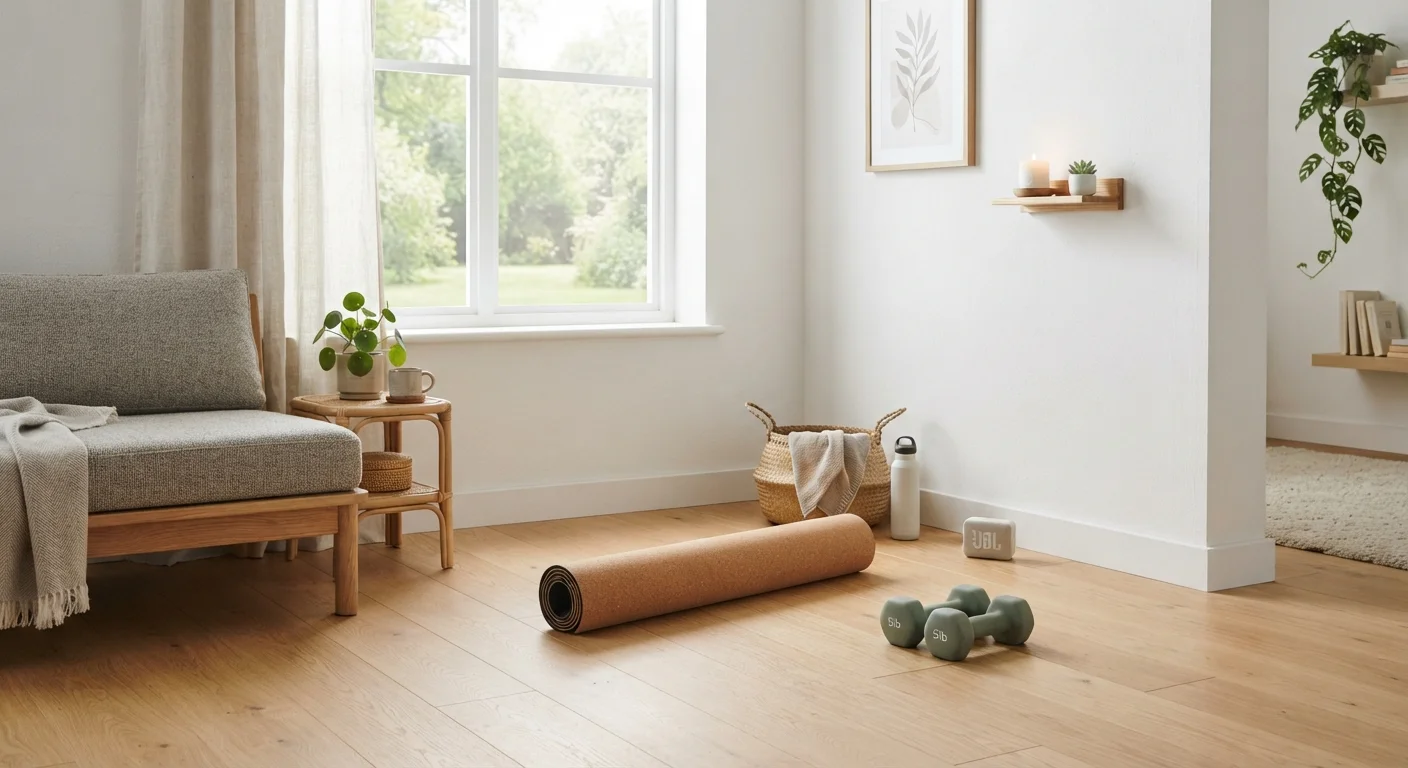
Photo: BridgeWish.com | Reliable Source Of Information editorial
Key Takeaways
- A 6-by-6-foot floor space is enough to complete most effective movement routines.
- You don't need expensive equipment to build a functional home workout area.
- Flooring, lighting, and clutter removal matter more than most people expect.
- Choosing equipment based on your actual goals prevents wasted spending.
- A consistent space — however small — significantly improves workout adherence.
Why Your Space Matters More Than Your Equipment
Most people stall at the planning stage because they imagine a home gym requires a spare bedroom, rubber flooring wall to wall, and a full rack of weights. In practice, the research on exercise adherence points to something simpler: having a designated space — even a cleared patch of living room — removes the friction that stops people from moving at all.
Before spending anything, take stock of what you actually have. A 6-by-6-foot area is sufficient for a mat-based routine, bodyweight circuits, and light resistance work. If you're building a routine around bodyweight movement, your floor space may be everything you need.
Treat Visibility as a Habit Tool
The goal at this stage is not to build the perfect gym. It's to remove every excuse your future self might use to skip a session. That means making the space easy to access, easy to use, and easy to return to.
What to Consider Before Buying Anything
Getting clear on your goals before purchasing anything saves money and prevents clutter. Ask yourself two questions: What type of movement do I actually want to do? And how much dedicated space can I realistically maintain?
What you will need
If your goals lean toward strength and muscle development, comparing bodyweight and free-weight training can help you decide whether a set of adjustable dumbbells or resistance bands suits your situation better than a barbell setup. If you're newer to structured exercise, review the fundamentals of strength training before committing to equipment choices.
Interlocking foam tiles or exercise mat
Provides a cushioned, non-slip surface that protects joints and defines the workout zone.
Resistance bands (set of varying tensions)
Enables a wide range of strength and mobility exercises in minimal space.
Adjustable dumbbells
Replaces a full rack of fixed weights, allowing progressive resistance without significant storage needs.
Door-frame pull-up bar
Adds upper-body pulling movements (rows, pull-ups) without permanent wall installation.
Foam roller
Supports post-workout recovery and muscle tissue maintenance.
Floor fan or portable ventilation
Maintains airflow and helps regulate body temperature during exercise.
One commonly overlooked factor is flooring. Hard floors are slippery and unforgiving on joints during high-impact movement. Carpet holds moisture and makes resistance training unstable. A single interlocking foam tile set — placed only where you train — addresses both concerns without permanent modification to your home.
Step-by-Step: Setting Up Your Space
Follow these steps in order. Skipping ahead to equipment selection before solving your space and environment often leads to unused gear gathering dust.
Clear and measure your available floor space
Move furniture temporarily and measure the open area you can reliably keep clear. Mark the perimeter with tape if it helps you visualize it. A 6-by-6-foot rectangle is a workable minimum; 8-by-8 feet allows for lateral movement and jumping exercises without restriction.
Address the floor surface
If you're on hardwood, tile, or concrete, place interlocking foam tiles or a thick exercise mat in your designated zone. This reduces joint impact, prevents slipping, and provides a tactile boundary that mentally separates your workout area from the rest of the room.
Optimize lighting and ventilation
Poor lighting contributes to poor form; stuffy air contributes to shorter sessions. If your space lacks natural light, add a floor lamp pointed upward for diffused brightness. Open a window or use a small fan to maintain airflow — body temperature regulation during exercise is directly tied to performance and comfort.
Choose equipment based on your actual goals
Start minimal. A pair of adjustable dumbbells or a set of resistance bands covers a wide range of strength and conditioning work without taking up significant space. A pull-up bar that mounts to a door frame adds pulling movements for upper-body development. Avoid purchasing large equipment before you've established a consistent routine — it's easy to overestimate the variety you'll use early on.
Store equipment where it stays visible and accessible
Wall hooks, a small shelf, or a dedicated basket keep resistance bands, jump ropes, and foam rollers organized without needing a closet. Equipment that is stored out of sight tends to stay out of use. Keeping gear in the workout zone signals that the space is active and ready.
Check Overhead Clearance Before Jumping or Pressing
If your workout space involves overhead pressing, jumping, or pull-up bars mounted to door frames, verify your ceiling height (a minimum of 7 feet is generally recommended for overhead work) and confirm that door-mounted equipment is rated for your body weight before use. Improperly installed equipment is a meaningful injury risk.
Staying Consistent Once the Space Is Set
The setup is only useful if you return to it. Behavioral research consistently shows that environment design — keeping your mat visible, leaving resistance bands on a hook rather than in a box — lowers the activation energy needed to start a session. Treat your space as a cue, not just a storage zone.
If you're rebuilding a movement habit after time away, the guide to returning to exercise after a long break offers practical pacing advice. For those who want variety beyond the home setup, lower-barrier fitness habits can complement what you build at home.
Keep the space uncluttered between sessions. A mat rolled up in a corner signals readiness; a space buried under laundry signals avoidance. Small environmental choices compound over time into durable habits.
This article is for general informational purposes only and does not constitute medical or fitness advice. Consult a qualified healthcare or fitness professional before beginning any new exercise program, particularly if you have existing health conditions or injuries.
The content on this site is for informational purposes only and is not a substitute for professional advice. Always consult a qualified professional for guidance specific to your situation.