
Micronutrients: The Vitamins and Minerals Your Body Can't Make on Its Own

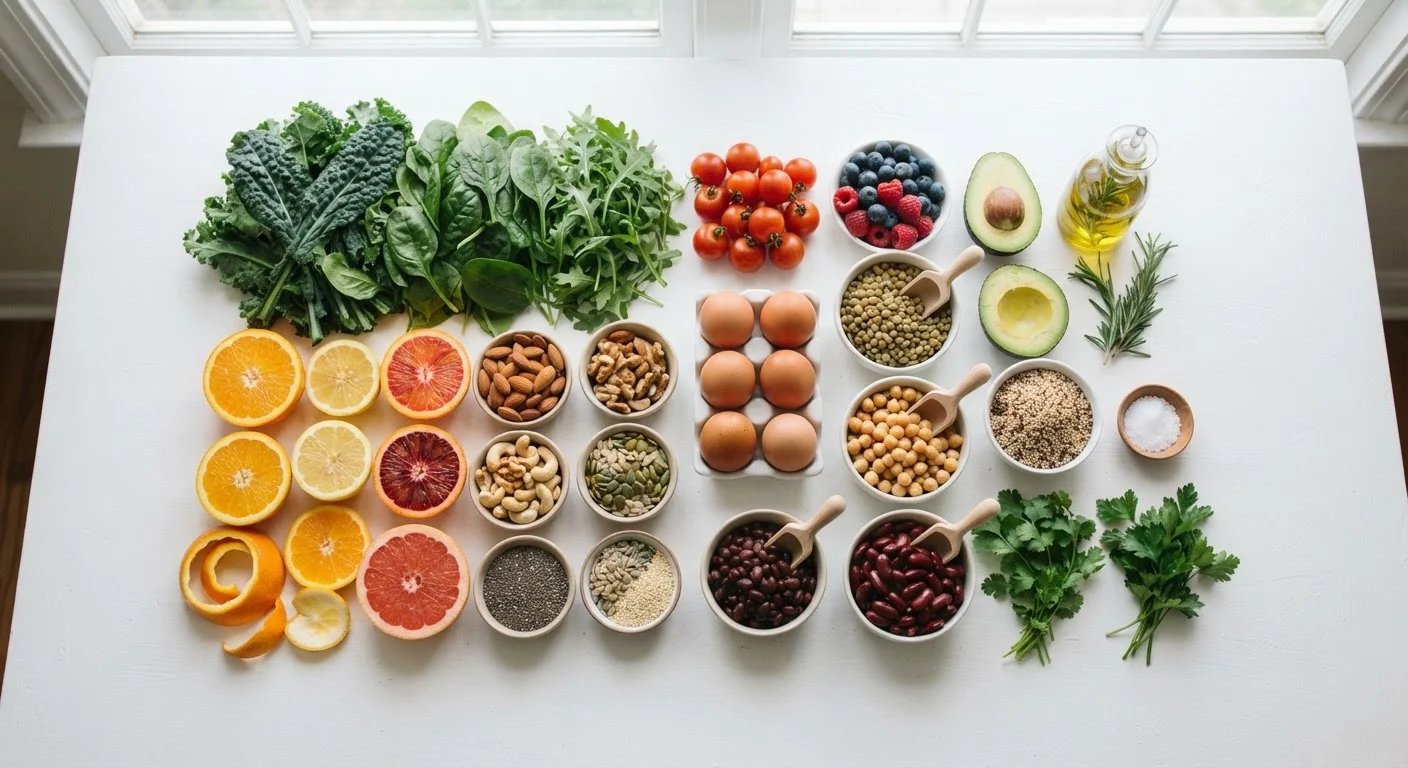
Photo: BridgeWish.com | Reliable Source Of Information editorial
What Are Micronutrients and Why Do They Matter?
Your body needs two broad categories of nutrients to function: macronutrients (carbohydrates, protein, and fat) and micronutrients. While macronutrients supply energy, micronutrients — vitamins and minerals — regulate the biological processes that keep every cell, tissue, and organ running. See our overview of macronutrients for context on how the two categories work together.
The defining characteristic of micronutrients is that your body either cannot synthesize them at all, or cannot make enough on its own. That makes diet the primary delivery mechanism. Unlike macronutrients, micronutrients are needed in relatively small amounts — milligrams or micrograms — but even minor shortfalls can impair immunity, energy metabolism, bone strength, and neurological function over time.
| Total essential vitamins | 13 (National Institutes of Health, Office of Dietary Supplements) |
| Total essential dietary minerals | ~16 (Established nutritional consensus) |
| Fat-soluble vitamins | A, D, E, K |
| Water-soluble vitamins | 8 B vitamins + Vitamin C |
| Vitamin D synthesis | Requires sunlight exposure on skin (NIH Office of Dietary Supplements) |
| Primary source of micronutrients | Whole foods through a varied diet (Dietary Guidelines for Americans) |
Micronutrients divide into two main groups:
- Vitamins — organic compounds that can be destroyed by heat, air, or light during food preparation.
- Minerals — inorganic elements that remain stable through cooking but must still be consumed regularly.
For a broader foundational reference, our Micronutrients 101 guide covers the major vitamins and minerals in one place.
Key Vitamins: Fat-Soluble vs. Water-Soluble
Vitamins are categorized by how the body stores and transports them — a distinction that affects how often you need to replenish them.
Micronutrients
Vitamins and minerals required by the body in small amounts to support essential functions. Unlike macronutrients, they provide no calories but are critical for health.
Fat-Soluble Vitamins
Vitamins (A, D, E, K) that dissolve in fat and are stored in body tissues. Because they accumulate, very high intakes over time can potentially cause problems.
Water-Soluble Vitamins
Vitamins (B complex and C) that dissolve in water and are not stored significantly in the body. They need to be replenished regularly through food.
Trace Minerals
Minerals the body needs in very small — but still essential — amounts. Examples include iron, zinc, iodine, and selenium.
Bioavailability
The proportion of a nutrient that the body actually absorbs and uses from food. Bioavailability varies by food source, preparation method, and individual digestive factors.
Macrominerals
Minerals required in relatively larger amounts, such as calcium, magnesium, potassium, and phosphorus. They play structural and regulatory roles throughout the body.
Fat-Soluble Vitamins (A, D, E, K)
These dissolve in fat and are stored in body tissues, meaning daily intake isn't strictly required if reserves are adequate — but accumulation at excessive levels is also possible. Key sources:
- Vitamin A: Liver, dairy, eggs; beta-carotene from orange and dark leafy vegetables converts to vitamin A in the body. Supports vision, immune defense, and cell growth.
- Vitamin D: Fatty fish, fortified dairy, egg yolks; skin also synthesizes it from sunlight exposure. Critical for calcium absorption and bone health.
- Vitamin E: Nuts, seeds, vegetable oils, spinach. Acts as an antioxidant protecting cells from oxidative damage.
- Vitamin K: Leafy greens (kale, spinach, broccoli). Essential for blood clotting and bone metabolism.
Water-Soluble Vitamins (B Complex and C)
These are not stored in large amounts, so regular intake through food is important. Excesses are typically excreted in urine rather than accumulating.
- B vitamins (B1, B2, B3, B5, B6, B7, B9/folate, B12): Found across whole grains, legumes, meat, dairy, eggs, and leafy greens. Collectively support energy metabolism and nervous system function. B12 is found almost exclusively in animal products, making it a nutrient of particular attention for those following plant-based diets.
- Vitamin C: Citrus fruits, bell peppers, strawberries, broccoli. Supports collagen synthesis, immune function, and iron absorption.
Key Minerals: Macro and Trace
Minerals are divided into macrominerals (needed in larger amounts) and trace minerals (needed in smaller quantities but no less important).
Macrominerals
- Calcium: Dairy, fortified plant milks, leafy greens, tofu. The primary structural mineral in bones and teeth; also involved in muscle contraction and nerve signaling.
- Magnesium: Nuts, seeds, whole grains, legumes, dark chocolate. Involved in over 300 enzymatic reactions, including energy production and muscle function.
- Potassium: Bananas, potatoes, beans, dairy. Helps regulate blood pressure and fluid balance.
- Phosphorus: Meat, fish, dairy, legumes. Works alongside calcium in bone structure and energy metabolism.
Trace Minerals
- Iron: Red meat, poultry, legumes, fortified cereals, spinach. Carries oxygen in red blood cells. Iron from plant sources is absorbed less efficiently than from animal sources; pairing with vitamin C helps.
- Zinc: Shellfish, beef, pumpkin seeds, legumes. Supports immune function, wound healing, and protein synthesis.
- Iodine: Iodized salt, seafood, dairy. Critical for thyroid hormone production, which governs metabolism.
- Selenium: Brazil nuts, fish, poultry, whole grains. An antioxidant mineral that supports thyroid function and immune defense.
Certain Groups Have Higher Micronutrient Needs
Many Americans fall short of several key micronutrients. Our article on nutrients that commonly fall short in American diets can help you identify gaps worth discussing with a healthcare provider.
Eating for Micronutrient Coverage
No single food covers all your micronutrient needs — variety is the foundational strategy. Diets built around a wide range of vegetables, fruits, whole grains, legumes, nuts, seeds, and lean protein sources tend to supply most essential vitamins and minerals without requiring supplements for the majority of healthy adults.
~90%
Americans not meeting vegetable intake recommendations
According to the Dietary Guidelines for Americans, the vast majority of US adults fall short of recommended vegetable consumption.
300+
Enzymatic reactions involving magnesium
Magnesium participates in over 300 enzyme-dependent reactions, according to the NIH Office of Dietary Supplements.
~40%
US adults with potential vitamin D insufficiency
Population surveys suggest a substantial proportion of American adults have vitamin D blood levels below optimal thresholds, though estimates vary by threshold used.
A few practical principles supported by nutrition research:
- Eat by color: Different pigments in plant foods signal different phytonutrients and micronutrients. A plate with multiple colors is a rough shorthand for nutrient diversity.
- Minimize processing where possible: Refining grains, for example, removes the bran and germ where B vitamins and minerals concentrate — a reason whole grains are generally more nutrient-dense than refined alternatives.
- Consider absorption, not just intake: Some nutrients compete for absorption (high calcium can reduce iron absorption), while others are synergistic (vitamin C boosts nonheme iron uptake). Meal composition matters.
Hydration also plays a supporting role: water is needed to transport water-soluble vitamins throughout the body. Our guide to hydration and nutrition explains how fluid intake fits into an overall healthy diet.
Supplements can address specific, confirmed deficiencies, but they are not a substitute for dietary variety. Consult a qualified healthcare professional before adding any supplement to your routine, particularly if you have a health condition, are pregnant, or take medication.
This article is for general informational and educational purposes only and is not a substitute for professional medical or dietary advice. Always consult a qualified healthcare provider about your individual nutritional needs.
The content on this site is for informational purposes only and is not a substitute for professional advice. Always consult a qualified professional for guidance specific to your situation.