
Macronutrients at a Glance: Carbs, Protein, and Fat Defined

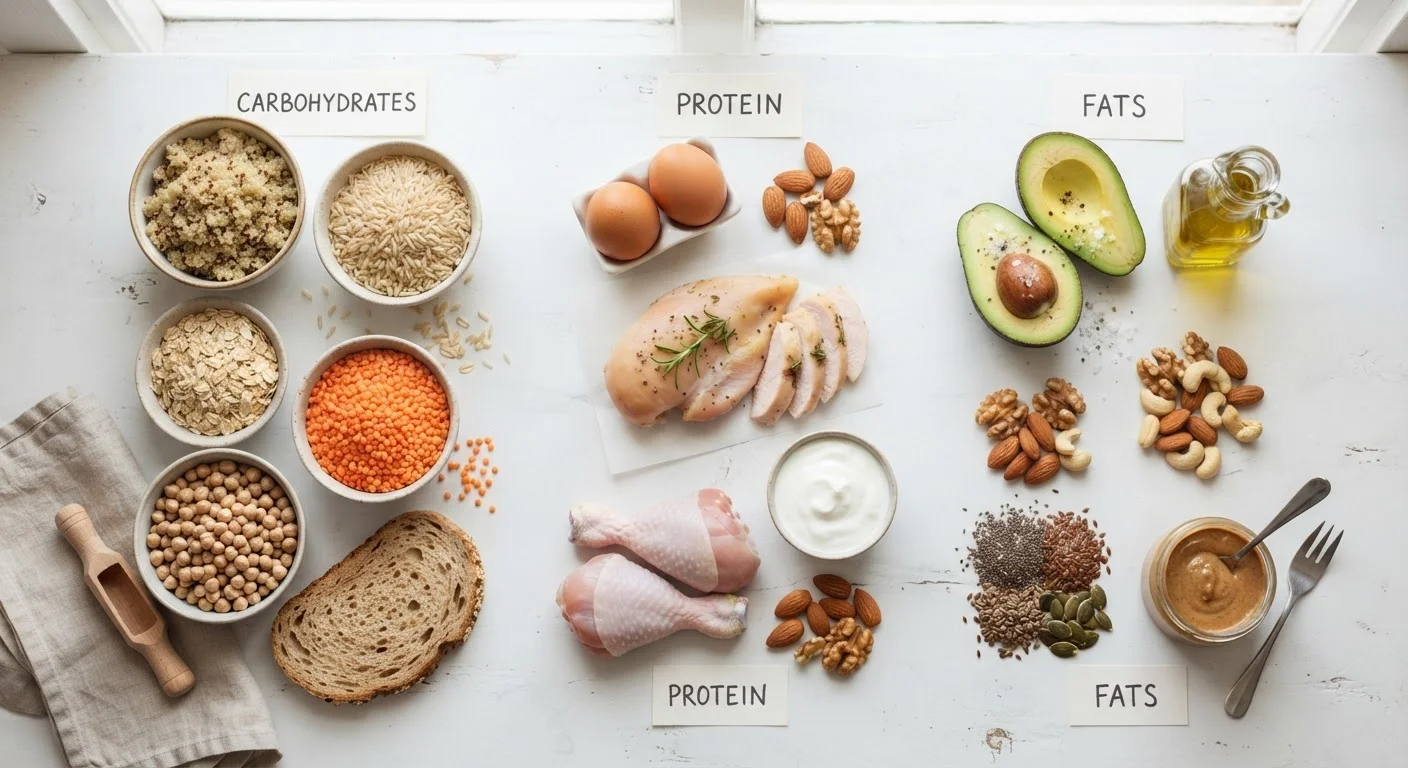
Photo: BridgeWish.com | Reliable Source Of Information editorial
What Are Macronutrients?
Macronutrients — often shortened to macros — are the three major classes of nutrients your body needs in relatively large amounts to produce energy and support its basic functions. Every calorie you consume comes from one or more of them: carbohydrates, protein, and fat. Unlike vitamins and minerals (called micronutrients because the body needs them in smaller quantities), macronutrients are the structural and fuel backbone of your diet.
Understanding what each macro does helps you read food labels with more confidence and make everyday choices that align with how you want to feel. For a deeper look at how all three work together, see our full macronutrient explainer. To pair this knowledge with vitamins and minerals, Micronutrients 101 is a useful companion read.
| Calories per gram — Carbohydrates | 4 kcal/g |
| Calories per gram — Protein | 4 kcal/g |
| Calories per gram — Fat | 9 kcal/g |
| Essential amino acids | 9 (must come from food) (National Academy of Medicine) |
| Fat-soluble vitamins requiring dietary fat for absorption | A, D, E, K |
| Primary function of carbohydrates | Energy (glucose for brain and muscles) |
Carbohydrates: Your Body's Primary Fuel
Carbohydrates provide 4 calories per gram and are the body's preferred, fastest-burning energy source. When you eat carbs, your digestive system breaks them down into glucose, which enters the bloodstream and powers cells — particularly in the brain and muscles during activity.
Carbs fall into two broad categories:
- Simple carbohydrates — sugars found naturally in fruit and dairy, or added to processed foods. They digest quickly, causing a faster rise in blood sugar.
- Complex carbohydrates — starches and fiber found in whole grains, legumes, and vegetables. They digest more slowly, providing steadier energy and supporting digestive health.
Fiber, a type of carbohydrate the body cannot fully digest, is worth highlighting separately. It supports gut health, helps regulate blood sugar response, and contributes to satiety. Most dietary guidelines suggest adults aim for adequate daily fiber, though individual needs vary — speak with a healthcare provider about what's right for you.
Practical sources: oats, brown rice, whole-wheat bread, beans, lentils, fruits, and starchy vegetables like sweet potatoes.
Macronutrient
Any of the three major nutrients — carbohydrates, protein, and fat — that the body requires in substantial amounts. Each provides calories and serves distinct physiological functions.
Amino acids
The building blocks of protein. Of the 20 amino acids, nine are 'essential,' meaning the body cannot synthesize them and they must be obtained through food.
Complete protein
A protein source that contains all nine essential amino acids in adequate amounts. Most animal-based foods qualify; some plant combinations can also provide a complete amino acid profile.
Dietary fiber
A type of complex carbohydrate that the body cannot fully digest. It supports digestive health, helps moderate blood sugar response after meals, and contributes to feelings of fullness.
Unsaturated fat
A category of dietary fat found primarily in plant oils, nuts, seeds, and fatty fish. Mono- and polyunsaturated fats are generally associated with favorable effects on cardiovascular health when consumed as part of a balanced diet.
Saturated fat
A type of fat found mainly in animal products and some tropical oils. Current dietary guidelines generally recommend moderate intake, though the science continues to be studied.
Protein: The Body's Builder
Protein also provides 4 calories per gram and serves a fundamentally different role than carbohydrates. Rather than acting primarily as fuel, protein supplies the raw materials — amino acids — that your body uses to build and repair tissues, produce enzymes and hormones, and support immune function.
Of the 20 amino acids, nine are classified as essential, meaning your body cannot make them and must obtain them from food. Animal-based proteins (meat, poultry, fish, eggs, dairy) typically contain all nine essential amino acids and are therefore called complete proteins. Most plant proteins are incomplete on their own, though combining foods — such as rice and beans — provides the full spectrum.
Protein needs vary depending on factors like age, activity level, and health status. General population guidance from organizations such as the NAM suggests a baseline, but anyone with specific health conditions or athletic goals should consult a registered dietitian for personalized guidance.
Practical sources: chicken, fish, eggs, Greek yogurt, tofu, tempeh, lentils, edamame, and cottage cheese.
Fat: Essential, Not Optional
Dietary fat provides 9 calories per gram — more than twice that of carbs or protein — making it the most energy-dense macronutrient. That density is useful: fat serves as the body's long-term energy reserve, insulates organs, and is required for absorbing fat-soluble vitamins (A, D, E, and K).
Fat also plays a structural role in every cell membrane and is needed to produce certain hormones. Not all fats behave the same way in the body, however. The main types are:
- Unsaturated fats (monounsaturated and polyunsaturated) — found in olive oil, avocados, nuts, seeds, and fatty fish. Widely considered supportive of heart health when they replace less favorable fat sources.
- Saturated fats — found in red meat, butter, full-fat dairy, and coconut oil. Most dietary guidelines recommend keeping intake moderate, though research on saturated fat continues to evolve.
- Trans fats — industrially produced (partially hydrogenated) trans fats have been largely removed from the US food supply due to documented health concerns. Small amounts occur naturally in some animal products.
For a thorough breakdown of fat types and their roles, see Everything You Need to Know About Dietary Fat.
4 kcal/g
Energy from carbs and protein per gram
Both carbohydrates and protein yield 4 calories per gram — compared to fat's 9 — according to standard Atwater energy conversion factors.
9
Essential amino acids humans must get from food
The National Academy of Medicine identifies nine amino acids as essential because the human body cannot synthesize them independently.
This article is for general informational and educational purposes only and is not a substitute for professional medical or dietary advice. Consult a qualified healthcare provider or registered dietitian for guidance tailored to your individual health needs.
The content on this site is for informational purposes only and is not a substitute for professional advice. Always consult a qualified professional for guidance specific to your situation.