
Plant-Based Protein vs. Animal Protein: Nutritional Trade-Offs Worth Knowing

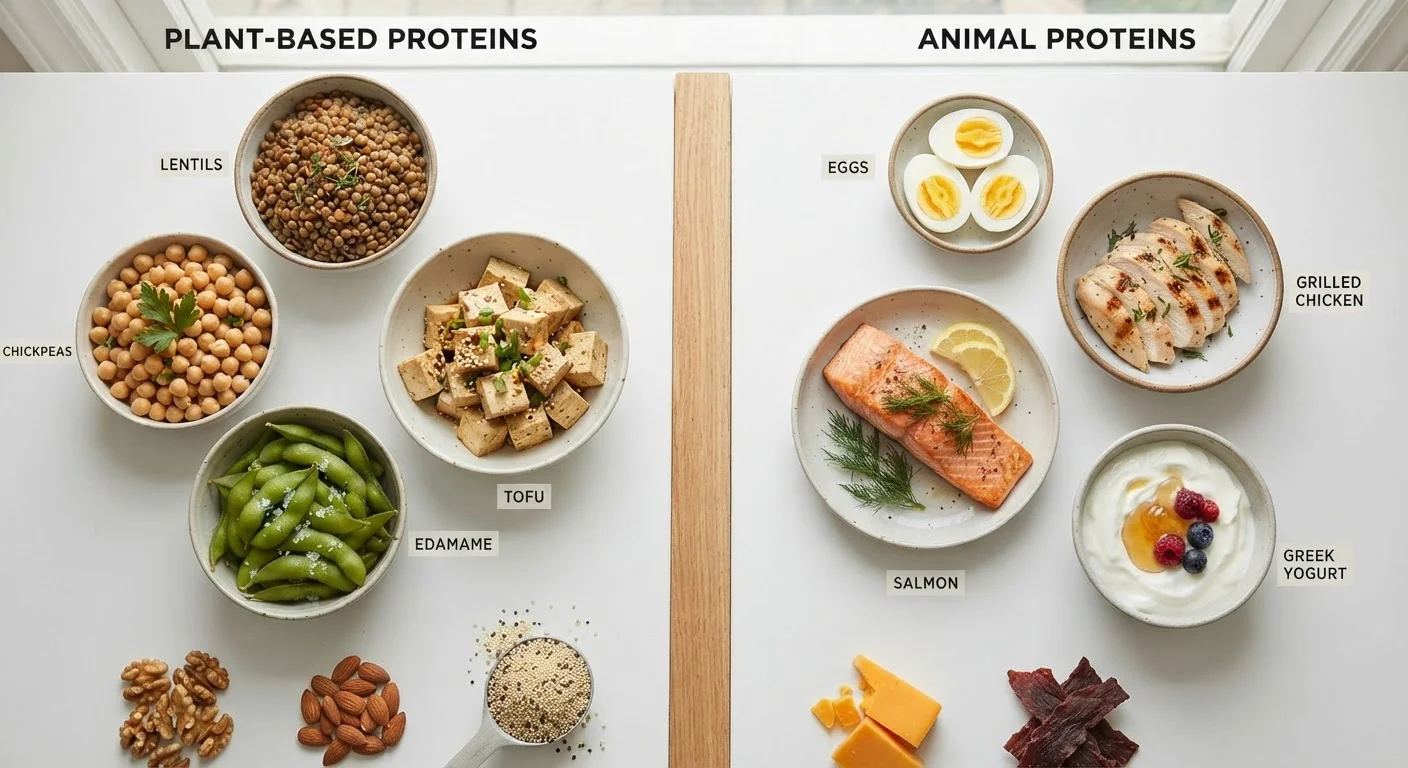
Photo: BridgeWish.com | Reliable Source Of Information editorial
Key Takeaways
- Animal proteins are generally complete proteins, supplying all nine essential amino acids in sufficient quantities.
- Most plant proteins are incomplete, but combining varied plant sources across meals can meet amino acid needs.
- Animal proteins tend to be more bioavailable, meaning the body absorbs and uses them more efficiently.
- Plant proteins come packaged with fiber and phytonutrients not found in animal sources.
- Neither protein type is universally superior — individual health goals, dietary pattern, and lifestyle all matter.
- Consulting a registered dietitian can help you build a protein strategy suited to your specific needs.
What Makes a Protein Source 'Complete'?
Protein is made up of building blocks called amino acids. Of the 20 amino acids the body uses, nine are classified as essential — meaning the body cannot produce them and must obtain them from food. A protein source that contains all nine in adequate amounts is called a complete protein.
Animal proteins — including meat, poultry, fish, eggs, and dairy — are almost universally complete proteins. Plant proteins tell a more varied story. Most individual plant foods are low in one or more essential amino acids. Grains, for instance, tend to be low in lysine, while legumes are often limited in methionine. This doesn't mean plant eaters are at a disadvantage, but it does mean intentional variety matters. Eating a range of plant protein foods across the day — beans and rice, hummus and whole-grain pita, tofu and edamame — can effectively supply the full spectrum of essential amino acids. For a broader look at protein quantity and quality considerations, see what current nutrition science says about protein intake.
| Criterion | Plant-Based Protein | Animal Protein |
|---|---|---|
| Amino acid completeness | Usually incomplete; combine sources | Complete in nearly all cases |
| Digestibility (DIAAS) | Generally lower; varies by source | Generally higher |
| Fiber content | High; supports gut health | None |
| Vitamin B12 | Absent; supplementation needed | Naturally abundant |
| Heme iron availability | Non-heme only; lower absorption | Heme iron; more readily absorbed |
| Saturated fat | Typically low | Variable; higher in red/processed meat |
| Omega-3 fatty acids | ALA form only (e.g., flaxseed) | EPA/DHA in fatty fish |
| Phytonutrients | Rich in antioxidants and phytochemicals | Minimal |
Digestibility and Bioavailability: How Much Protein Actually Gets Used?
Eating protein is only part of the equation — your body also has to be able to digest and absorb it. Nutritionists use a measure called DIAAS to assess how well a protein source is absorbed and how useful its amino acids are after digestion. Animal proteins such as eggs, dairy, and meat consistently score high on this scale. Plant proteins, particularly from whole-food sources with intact fiber and anti-nutritional compounds like phytates and tannins, tend to score lower.
Processing can improve plant protein digestibility — tofu and isolated soy protein, for example, are more bioavailable than whole soybeans. Cooking also helps by breaking down some of these natural inhibitors. Still, on a gram-for-gram basis, you typically absorb a greater proportion of protein from animal sources than from an equivalent serving of most plant foods. This is an important practical consideration, not a reason to avoid plant proteins entirely. It simply means plant-forward eaters may benefit from eating slightly more total protein to account for this difference. Always discuss specific dietary targets with a qualified registered dietitian rather than applying general figures as personal targets.
~74%
Digestibility of whole-food plant proteins
Research published in nutrition journals suggests whole-food plant proteins are digested at roughly 74–80%, compared to 90–99% for most animal proteins.
1 in 8
Americans meeting recommended fiber intake
According to the American Society for Nutrition, fewer than 1 in 8 Americans consume adequate dietary fiber — a gap that plant protein foods help close.
2–3x
Higher heme iron absorption vs. non-heme
The National Institutes of Health notes that heme iron from animal foods is absorbed at approximately 15–35%, compared to 2–20% for non-heme iron from plant sources.
Micronutrients, Fiber, and What Each Source Brings Along
Protein rarely travels alone — every food source carries a broader nutritional profile worth considering. Animal proteins are notably rich in several micronutrients that can be harder to obtain from plants: vitamin B12 (found almost exclusively in animal foods), heme iron (absorbed more readily than non-heme iron from plants), zinc, and long-chain omega-3 fatty acids from fatty fish. A diet built entirely around plant proteins requires careful attention to these nutrients and, in many cases, supplementation — particularly for B12.
Plant proteins, on the other hand, come packaged with benefits animal foods don't provide: dietary fiber, antioxidants, and a wide array of phytonutrients associated with reduced chronic disease risk. Many animal protein sources — especially processed meats and full-fat dairy — also carry saturated fat and cholesterol, which are considerations for people managing cardiovascular risk factors. Fatty fish is an important exception; it delivers protein alongside heart-supportive omega-3s. For anyone navigating these trade-offs while shifting toward more plants, a starter's overview of plant-based eating offers useful practical context.
A Note on Processed Plant Proteins
Practical Implications: Building a Balanced Protein Strategy
For most everyday consumers, the question isn't which protein type is categorically better — it's how to use what you know to build a diet that works for your health, preferences, and circumstances. Research on dietary patterns consistently shows that diets rich in a variety of protein sources, including both animal and plant foods, are associated with positive health outcomes. A rigid either-or framing rarely reflects how people actually eat.
If you eat animal products, emphasizing fish, eggs, poultry, and low-fat dairy over processed and red meats is generally consistent with mainstream dietary guidance. If you eat primarily or exclusively plant-based, prioritizing protein-dense foods like lentils, beans, tempeh, tofu, edamame, and whole grains — and staying aware of B12 and iron — helps ensure nutritional completeness. A side-by-side nutritional comparison of plant-based and omnivore eating patterns explores these trade-offs in more depth.
This article is for general informational and educational purposes only and does not constitute medical or nutritional advice. Individual nutritional needs vary. Consult a registered dietitian or qualified healthcare professional before making significant changes to your diet, particularly if you have an underlying health condition or specific health goals.
The content on this site is for informational purposes only and is not a substitute for professional advice. Always consult a qualified professional for guidance specific to your situation.