
Whole Foods vs. Processed Foods: Understanding the Real Difference

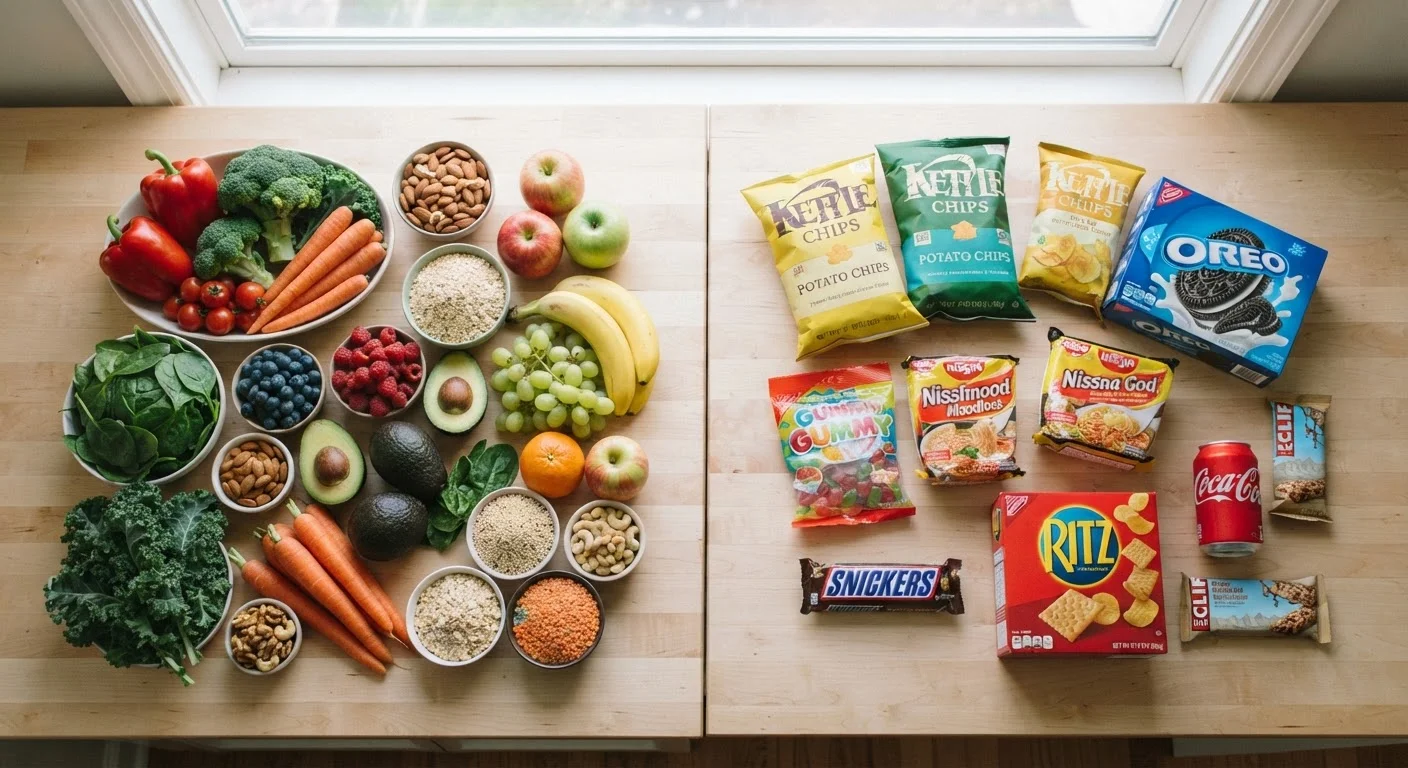
Photo: BridgeWish.com | Reliable Source Of Information editorial
Key Takeaways
- Whole foods are minimally altered from nature; processed foods span a wide spectrum of modification.
- Not all processing is harmful — freezing, cooking, and fermenting are forms of processing too.
- Ultra-processed foods, loaded with additives and refined ingredients, carry the strongest links to poor health outcomes.
- Reading ingredient lists is one of the most practical ways to gauge how processed a food is.
- A diet built mostly on whole foods can support overall health without requiring perfection.
What Defines a Whole Food?
A whole food is any food consumed in — or very close to — its natural form. Think fresh apples, raw almonds, plain oats, dried lentils, or a chicken breast with nothing added. The defining characteristic is minimal alteration: the food hasn't had key nutrients removed or artificial substances added.
Whole foods are naturally rich in fiber, vitamins, minerals, and phytonutrients (plant-based compounds that support health). Because they haven't been stripped of their natural structure, they tend to digest more slowly, support more stable blood sugar levels, and provide a broader nutritional profile than their processed counterparts. For a closer look at one important category, see how grain processing changes nutrition.
What Counts as Processed — and How Much Does It Matter?
"Processed" covers a far wider range than most people expect. Strictly speaking, any food that has been altered from its raw state has been processed — that includes frozen peas, pasteurized milk, canned tomatoes, and sourdough bread. Most nutrition researchers use a spectrum rather than a simple two-category split.
The NOVA classification system, developed by researchers at the University of São Paulo, organizes foods into four groups based on the extent and purpose of processing — from unprocessed or minimally processed foods (Group 1) to ultra-processed formulations (Group 4). Ultra-processed foods are those manufactured with industrial ingredients — hydrogenated oils, modified starches, artificial flavors, emulsifiers — that you would not find in a home kitchen. Packaged snack foods, flavored chips, sugary cereals, and many fast-food items fall into this category.
| Criterion | Whole Foods | Processed Foods |
|---|---|---|
| Alteration from natural state | Minimal to none | Moderate to extensive |
| Ingredient list length | One or very few ingredients | Often many, including additives |
| Fiber retention | Naturally preserved | Often reduced or removed |
| Added sugar or salt | None | Common, especially in ultra-processed |
| Shelf life | Shorter; often perishable | Longer; often preserved |
| Convenience | Requires more preparation | Often ready to eat |
| Nutrient density | Generally higher | Varies; often lower in ultra-processed |
The research concern centers primarily on ultra-processed foods, not all processed foods. Studies published in journals such as The BMJ and JAMA Internal Medicine have associated high ultra-processed food intake with increased risk of obesity, cardiovascular disease, and type 2 diabetes — though these are observational findings and do not establish direct causation. For a deeper exploration of where researchers draw the line, see what sets whole foods apart from ultra-processed ones.
Practical Ways to Tell the Difference
You don't need a nutrition degree to evaluate how processed a food is. A few straightforward checks go a long way:
- Read the ingredient list. A shorter list dominated by recognizable whole ingredients is generally a sign of less processing. If the first few ingredients are refined flour, sugar, or hydrogenated oil, the food is likely heavily processed.
- Consider what was added or removed. Has fiber been stripped out? Has sugar, salt, or fat been added far beyond what the original ingredient would contain?
- Look at the food's physical form. Whole or minimally processed foods tend to resemble their original ingredients. A plain oat looks like an oat; an oat-flavored snack bar may share very little with one.
Not All Packaged Food Is Ultra-Processed
Understanding the difference between added and natural sugars is another useful lens when evaluating processed foods, since added sugars are one of the most common markers of heavy processing.
The goal for most people isn't to eliminate all processed foods — it's to anchor the diet in whole and minimally processed options while being more selective about ultra-processed choices. For a broader look at how food categories fit into everyday eating, explore the Diet & Food Choices hub.
This article is for general informational and educational purposes only and does not constitute medical or nutritional advice. Consult a qualified healthcare professional or registered dietitian for guidance tailored to your individual health needs.
The content on this site is for informational purposes only and is not a substitute for professional advice. Always consult a qualified professional for guidance specific to your situation.