
Mortgage Pre-Qualification vs. Pre-Approval: What Each Actually Means

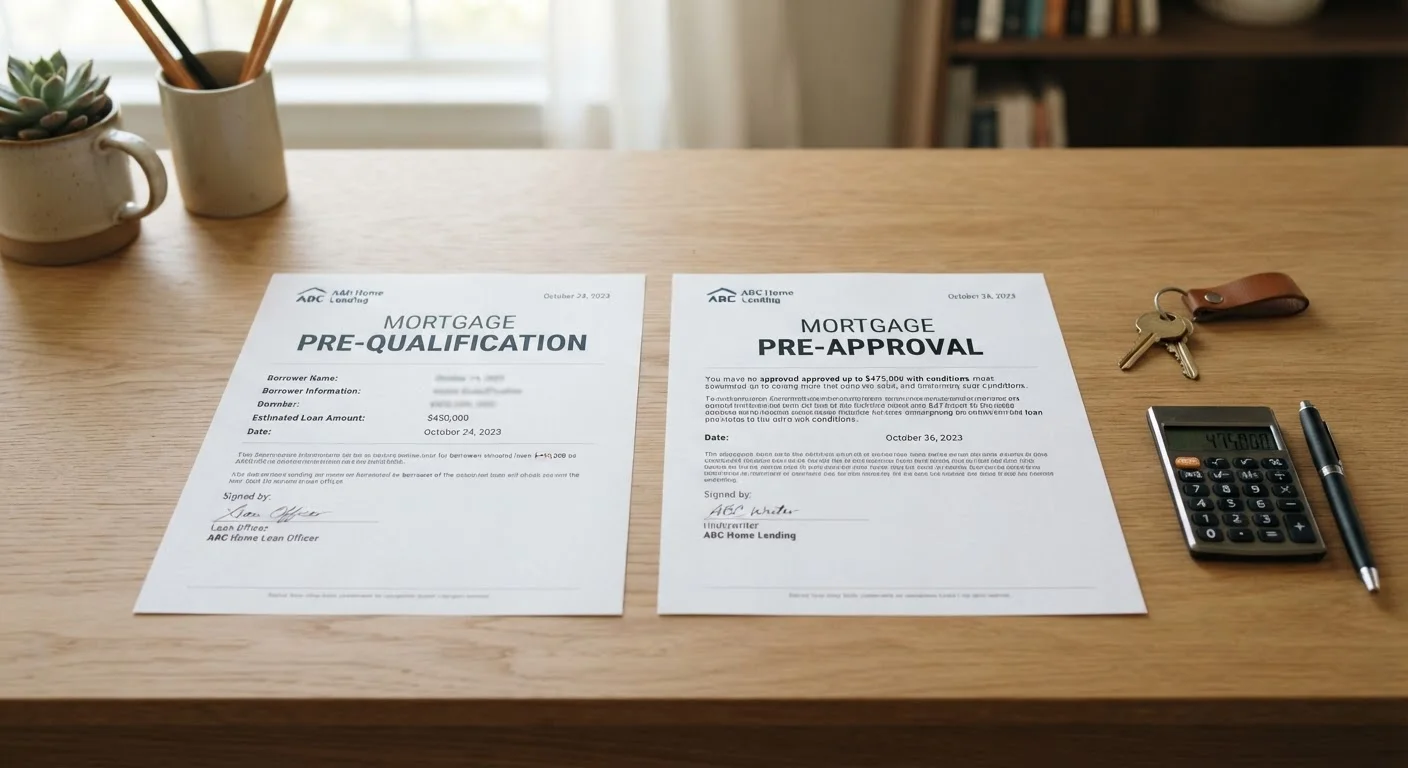
Photo: BridgeWish.com | Reliable Source Of Information editorial
Key Takeaways
- Pre-qualification is based on self-reported information and carries no lender verification.
- Pre-approval requires a hard credit pull and review of financial documents, making it far more credible.
- Sellers and their agents frequently expect a pre-approval letter before taking an offer seriously.
- Neither pre-qualification nor pre-approval guarantees final loan approval — underwriting still follows.
- Getting pre-approved before house hunting helps you set a realistic budget and act quickly.
What Pre-Qualification Actually Involves
Mortgage pre-qualification is an informal estimate of how much a lender might be willing to loan you, based entirely on information you provide — typically your income, assets, debts, and a rough credit range. No documents are verified. No hard credit inquiry is run. The lender simply takes your word for it and runs the numbers through general guidelines.
The result is a ballpark figure that can help you start thinking about budget and neighborhood. That's genuinely useful in the early stages of planning. But because nothing has been checked, a pre-qualification letter carries very little weight with sellers and their agents. It signals interest, not readiness.
Think of pre-qualification as a self-assessment with a lender's letterhead. It's a useful internal compass, but it's not a credential you bring to a competitive offer table. If you're still deciding whether to buy at all — or trying to understand which price ranges to explore — pre-qualification is a reasonable first step that won't impact your credit score.
What Pre-Approval Actually Involves
Mortgage pre-approval is a materially different process. The lender pulls your credit report (a hard inquiry), reviews pay stubs, W-2s or tax returns, bank statements, and employment records. An underwriter or automated system evaluates your debt-to-income ratio, credit history, and asset documentation against the lender's actual lending criteria.
If you pass, you receive a pre-approval letter stating a specific loan amount the lender is conditionally prepared to offer. That letter typically includes an expiration date — commonly 60 to 90 days — because your financial picture and interest rates can shift.
For a deeper look at what lenders evaluate during this stage, see what mortgage pre-approval actually means. Keep in mind that pre-approval is conditional: the final loan is still subject to a full underwriting review, an appraisal of the property, and any changes in your financial situation before closing.
| Criterion | Pre-Qualification | Pre-Approval |
|---|---|---|
| Information source | Self-reported by borrower | Verified documents and records |
| Credit check | Soft inquiry or none | Hard inquiry required |
| Documents required | None typically | Pay stubs, tax returns, bank statements |
| Lender commitment level | Informal estimate only | Conditional loan commitment |
| Seller credibility | Low — rarely sufficient alone | High — expected in most markets |
| Time to obtain | Minutes to a few hours | Several days to a week |
| Validity period | Varies; not standardized | Typically 60–90 days |
Why the Distinction Matters When You're Ready to Buy
Sellers receive offers from multiple buyers and must evaluate which are most likely to close. A pre-approval letter tells them a lender has already scrutinized the buyer's finances; a pre-qualification letter does not. In many markets, listing agents will advise sellers to discount or decline offers without pre-approval — especially when multiple offers are on the table.
74%
Buyers who obtained pre-approval before house hunting
According to the National Association of Realtors' 2023 Profile of Home Buyers and Sellers, nearly three in four buyers secured financing pre-approval before seriously searching.
60–90 days
Typical pre-approval letter validity window
Most lenders issue pre-approval letters valid for 60 to 90 days, after which updated documentation is generally required.
Beyond seller perception, pre-approval gives you a more accurate budget ceiling. Because it's based on verified documents rather than estimates, it prevents the disappointment of falling in love with a home you later discover you can't actually finance. It also speeds up the formal loan application process once your offer is accepted, since much of the documentation has already been gathered.
For a full picture of where these steps fit in the broader journey, see the homebuying process from start to finish. When you're closer to submitting an offer, the pre-offer checklist can help you verify you've covered every step before signing. You'll also want to understand your loan options — fixed-rate vs. adjustable-rate mortgages is a natural next read once pre-approval is in hand.
This article is for general informational purposes only and does not constitute financial, legal, or mortgage advice. Lending requirements vary by lender and loan type. Consult a licensed mortgage professional or financial adviser for guidance specific to your situation.
The content on this site is for informational purposes only and is not a substitute for professional advice. Always consult a qualified professional for guidance specific to your situation.