
Month-to-Month Lease vs. Fixed-Term Lease

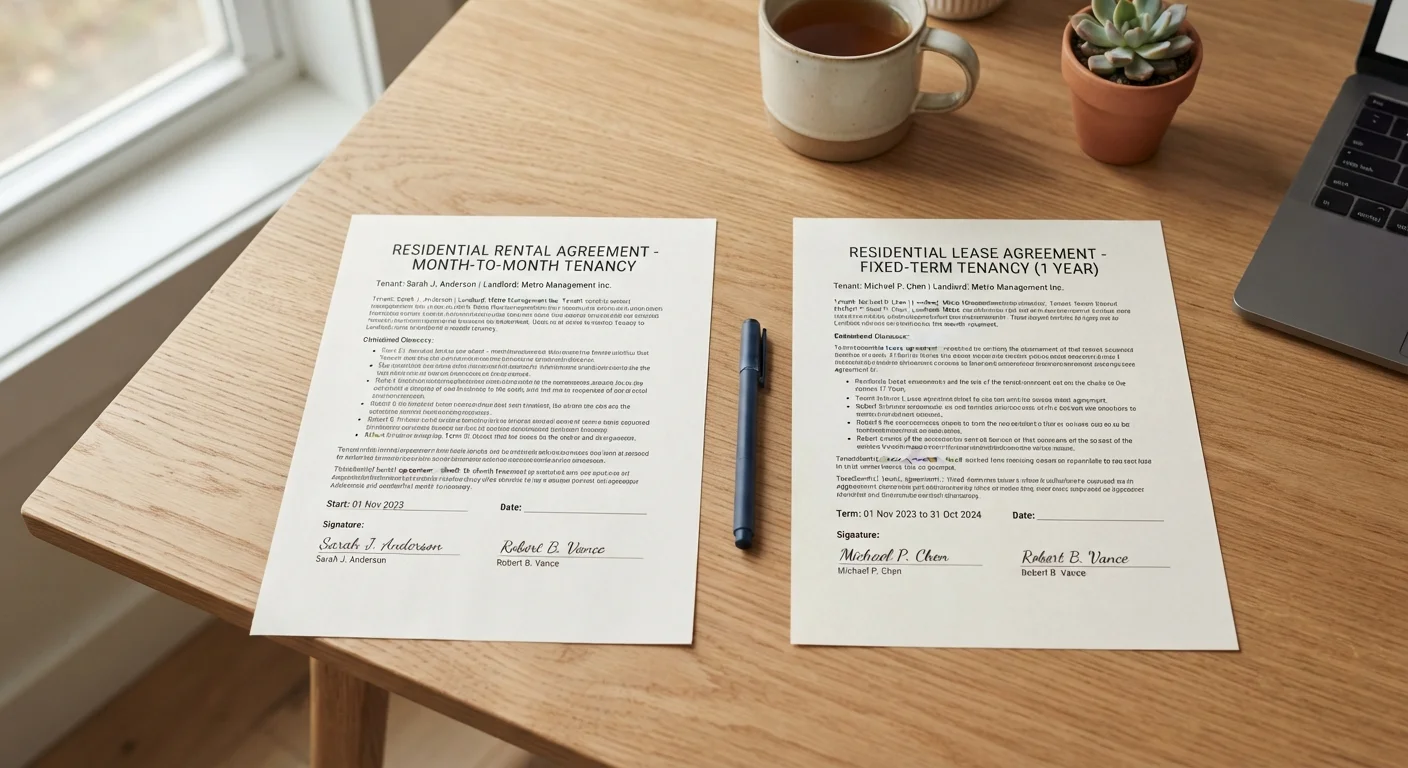
Photo: BridgeWish.com | Reliable Source Of Information editorial
Key Takeaways
- Month-to-month leases renew automatically each month but can be ended with short notice by either party.
- Fixed-term leases lock in rent and occupancy rights for a set period, usually 6 to 12 months.
- Month-to-month tenants often pay a premium — landlords may charge higher monthly rent for that flexibility.
- Breaking a fixed-term lease early can result in significant financial penalties.
- Your life circumstances — job stability, relocation plans, family needs — should drive which lease type you choose.
How Each Lease Type Actually Works
A month-to-month lease is a rental agreement that automatically renews each month unless either the tenant or landlord gives written notice to end it. Most states require 30 days' notice, though some require more — always check your local landlord-tenant law. Because there's no fixed end date, either party can exit the arrangement relatively quickly.
A fixed-term lease — most commonly 12 months — establishes a specific start and end date. During that period, the landlord generally cannot raise the rent or ask you to leave without cause, and you're expected to fulfill the full term. At expiration, the lease may convert to month-to-month, renew for another term, or simply end, depending on what the agreement specifies.
Before signing either type, it's worth reviewing the key renting terms every tenant should recognize so you're clear on what terms like notice period, holdover tenant, and automatic renewal actually mean in practice.
| Criterion | Month-to-Month Lease | Fixed-Term Lease |
|---|---|---|
| Lease length | Renews monthly, no set end date | Fixed period, typically 6–12 months |
| Rent stability | Rent can change with proper notice | Rent locked in for the full term |
| Monthly cost | Often 10–20% higher than fixed-term | Generally lower monthly rate |
| Exit flexibility | Exit with 30 days' notice (varies by state) | Early exit may trigger fees or liability |
| Landlord rights to end tenancy | Can give notice any month | Cannot end lease without cause before term ends |
| Best for | Uncertain timelines, short-term needs | Stable situations, long-term planning |
The Real Cost of Flexibility
Month-to-month arrangements are genuinely convenient — but that convenience carries a price. Landlords routinely charge 10–20% more per month compared to an equivalent fixed-term unit, reflecting the uncertainty they absorb by not locking in a longer-term tenant. Over six months, that premium can easily outpace any moving savings.
Fixed-term leases, by contrast, tend to offer more predictable budgeting. Your rent is set at signing. However, if your circumstances change and you need to leave early, you may face an early termination fee — often one to two months' rent — or remain liable for rent until a replacement tenant is found. Some leases include lease-breaking clauses; many do not.
30 days
Typical notice required to end month-to-month tenancy
Most US states set a 30-day minimum notice period, though some require 60 days — always verify your state's landlord-tenant statute.
1–2 months
Common early termination fee range
Early termination clauses in fixed-term leases frequently require tenants to pay one to two months' additional rent to exit before the end date.
For a deeper look at the clauses that can create unexpected costs in either lease type, see our guide on common lease clauses that catch renters off guard.
Landlord Perspectives and Market Realities
Landlords have their own risk calculus when offering lease types. A month-to-month arrangement gives a landlord flexibility too — they can reclaim the unit with proper notice if they want to renovate, sell, or adjust rents in a rising market. This is worth understanding: the same flexibility you value as a tenant also works in the landlord's favor.
In competitive rental markets, fixed-term leases are often the only option landlords will accept. In slower markets or for landlords with long-term vacancies, month-to-month may be easier to negotiate. Knowing the local rental climate before you negotiate can strengthen your position either way.
Month-to-Month Flexibility Cuts Both Ways
If you're weighing a longer housing commitment entirely, the comparison between renting and buying also involves trade-offs worth understanding — much like the decision between fixed-rate vs. adjustable-rate mortgages for buyers.
Making the Right Choice for Your Situation
Neither lease type is universally better. The right choice comes down to where you are in life and what you need most from your housing right now.
- Choose month-to-month if you're between jobs, waiting on a relocation package, unsure of your next city, or need a temporary housing bridge.
- Choose fixed-term if you have a stable income, want protection from rent increases, and plan to stay in the same area for at least a year.
If you're signing your first lease ever, the first rental guide walks through deposits, applications, and what to look for before you commit. Once you've narrowed down your lease type, also review costly lease clauses renters routinely overlook so no detail surprises you after move-in.
The content on this site is for informational purposes only and is not a substitute for professional advice. Always consult a qualified professional for guidance specific to your situation.