
Clicker Training vs. Verbal Markers: Which Communication Style Works Better?

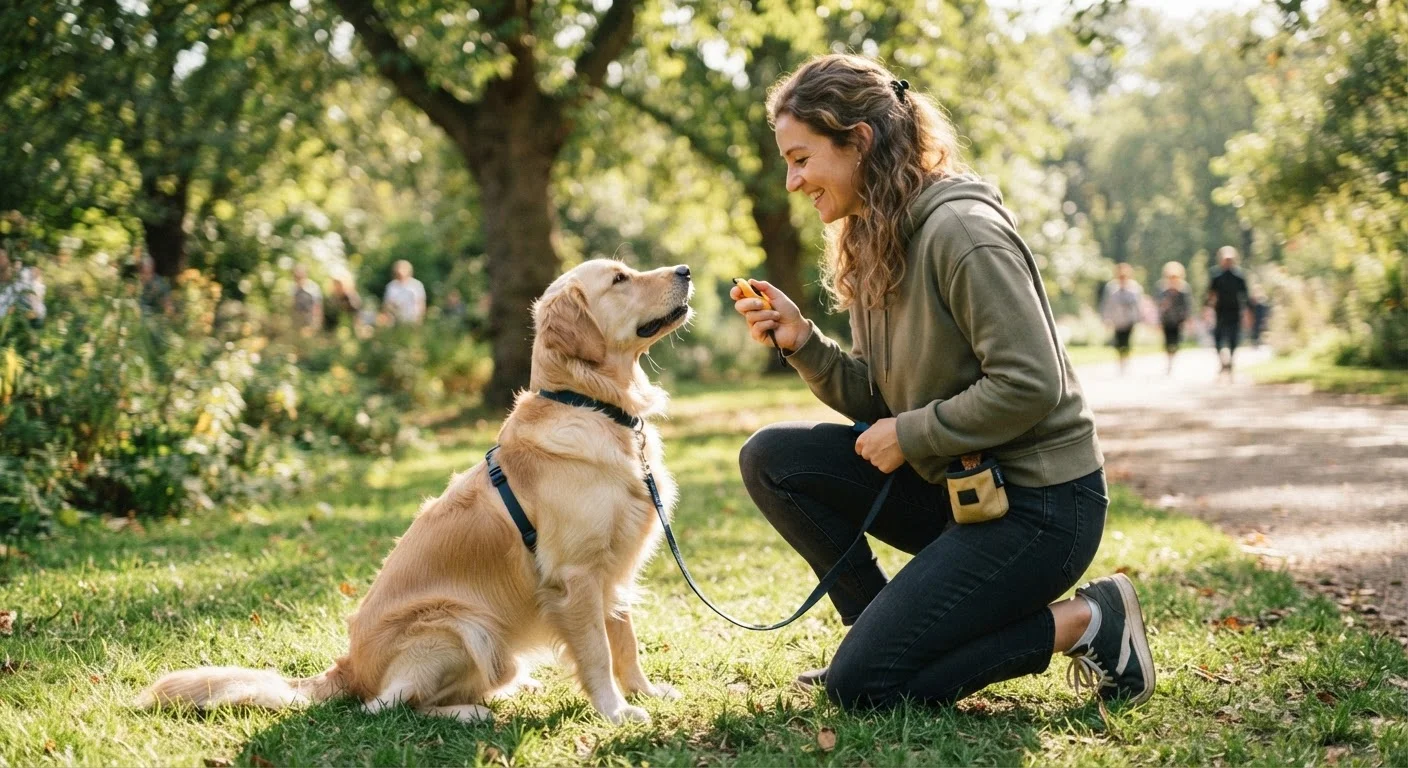
Photo: BridgeWish.com | Reliable Source Of Information editorial
Key Takeaways
- Clickers provide a precise, consistent sound that many animals learn to associate with rewards faster than words.
- Verbal markers are hands-free and always available, making them practical in everyday situations.
- Timing is the most critical factor in either method — a late mark means a missed learning opportunity.
- Both approaches are rooted in positive reinforcement and work well when paired with consistent rewards.
- Some owners and pets do best combining both tools depending on context.
How Marker Training Works
Both clicker training and verbal markers operate on the same foundational principle: you mark the exact moment your pet performs a desired behavior, then immediately follow with a reward. This concept, rooted in operant conditioning, helps animals connect their action to the positive outcome. The mark acts as a bridge, capturing the precise behavior rather than relying on the reward arriving in perfect time.
To understand the deeper science behind this, see our guide to how clicker training works. The key takeaway is that the marker — whether a click or a word — must come within roughly a second of the behavior to be meaningful. Anything slower creates confusion about what earned the reward.
Both methods belong firmly in the positive reinforcement family. For a broader look at why reward-based approaches outperform correction-based ones, the research on positive reinforcement training is worth reviewing.
The Case for Clicker Training
A clicker produces a short, sharp, entirely consistent sound. It never sounds tired, frustrated, or excited — qualities that make human voices variable in ways animals notice. Research in animal learning suggests that a neutral, distinct auditory signal is processed by the brain as highly salient, meaning pets learn to pay attention to it quickly.
Clickers are especially effective in early stages of shaping new behaviors, when precision matters most. Because the click is always identical, the communication is unambiguous. Many trainers find that dogs, cats, rabbits, and even birds pick up new behaviors noticeably faster when introduced with a clicker.
Bridge the Gap With a Transition Plan
The main limitation is practicality: a clicker requires you to hold it, and it can be misplaced or forgotten. In high-distraction environments, fumbling for a clicker can cost you that critical one-second window.
The Case for Verbal Markers
A verbal marker — commonly a short word like "Yes!" or "Good" — is always with you. You cannot forget it at home, and it works whether your hands are full, your pet is across the yard, or you are mid-walk. This accessibility makes verbal markers the natural long-term companion to clicker work, and many trainers transition to them once foundational behaviors are established.
The challenge is consistency. Human voices carry emotion, and the same word delivered in a tired or distracted tone may not register the same way it did during an energized training session. Keeping your marker word short, upbeat, and distinct from everyday conversation helps reduce this variability.
| Clicker Training | Verbal Markers | |
|---|---|---|
| Consistency | Always identical sound | Can vary with tone and mood |
| Accessibility | Requires carrying a device | Always available, hands-free |
| Learning speed (initial) | Often faster for new behaviors | Slightly slower initially |
| Long-term practicality | Can be phased out over time | Works well for ongoing reinforcement |
| Best environment | Structured training sessions | Everyday situations and public spaces |
| Noise-sensitive pets | May startle some animals | Gentler option for sensitive pets |
Building a reliable routine around either marker style makes a significant difference. Our article on building a training routine that sticks offers practical guidance on structuring sessions your pet will respond to over time.
Choosing What Works for You and Your Pet
Neither tool is universally superior — the right choice depends on your pet's learning history, your daily routine, and your own consistency as a trainer. A few practical considerations can help guide your decision:
- Start with a clicker if you are teaching complex new behaviors, working with a young or newly adopted animal, or want the fastest initial learning curve.
- Lean on verbal markers for maintenance training, public situations, or any time carrying a device is impractical.
- Consider your pet's sensory profile. Some animals are startled by the clicker's sound, while others find verbal praise overly stimulating. Observe your pet's response and adjust.
- Hearing-impaired pets may benefit from a visual marker — a hand signal or thumbs-up — instead of either auditory option.
Whichever method you choose, the fundamentals remain the same: mark clearly, reward promptly, and keep sessions short and positive. Consistency over time matters far more than which tool is in your hand.
The content on this site is for informational purposes only and is not a substitute for professional advice. Always consult a qualified professional for guidance specific to your situation.