
Dry Kibble vs. Wet Food: Nutritional Differences Every Pet Owner Should Understand

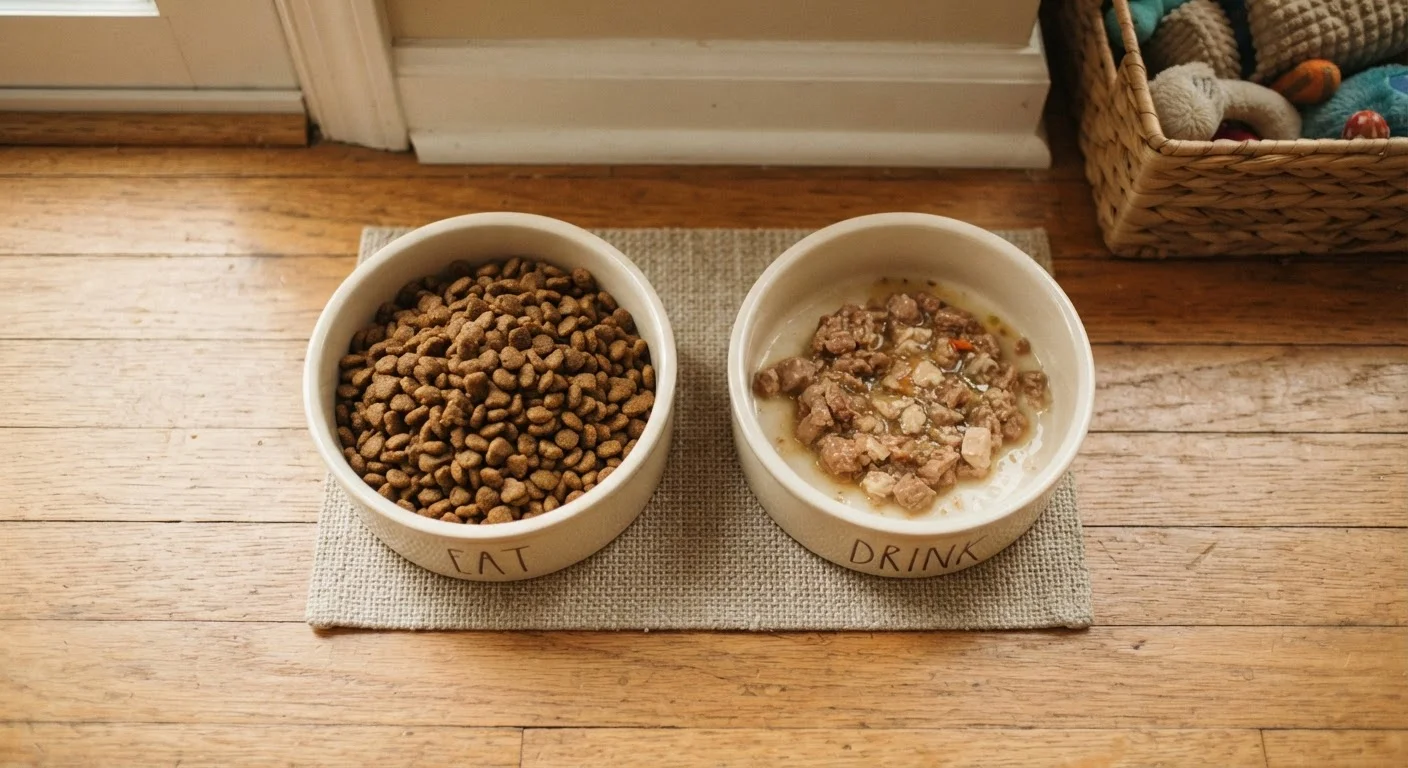
Photo: BridgeWish.com | Reliable Source Of Information editorial
Key Takeaways
- Wet food contains roughly 70–80% moisture; dry kibble typically contains only 8–12%, making hydration a key differentiator.
- Dry kibble's texture may help reduce plaque buildup, but it is not a substitute for dedicated dental care.
- Calorie density differs significantly — wet food is lower in calories per ounce, which matters for weight management.
- Neither format is universally superior; the best choice depends on your pet's health, life stage, and individual needs.
- Mixing both food types can be a practical middle ground, provided total daily calorie intake is managed carefully.
- Always consult your veterinarian before making major changes to your pet's diet, especially for animals with health conditions.
What Sets These Two Formats Apart
At their core, dry kibble and wet food deliver the same essential nutrients — protein, fat, carbohydrates, vitamins, and minerals — but the way they're formulated and processed creates meaningful differences in how your pet experiences and benefits from each meal.
Dry kibble is made by combining ingredients into a dough, extruding it under heat and pressure into small shapes, and then drying it to remove most moisture. The result is a shelf-stable product with roughly 8–12% water content. Wet food, by contrast, is cooked at lower temperatures and sealed in cans or pouches with added water or broth, retaining a moisture content of 70–80%.
This moisture gap is the most consequential nutritional difference between the two. It affects calorie density, digestibility, satiety, and how much the food contributes to your pet's overall fluid intake. For more on how to interpret what's actually inside either format, see our guide on reading pet food labels.
| Criterion | Dry Kibble | Wet Food |
|---|---|---|
| Moisture content | 8–12% | 70–80% |
| Calories per ounce | Higher (approx. 90–110 kcal/oz) | Lower (approx. 25–30 kcal/oz) |
| Shelf life (unopened) | 12–18+ months | 1–5 years (canned) |
| Shelf life (after opening) | Weeks (sealed bag) | 2–3 days (refrigerated) |
| Dental abrasion benefit | Mild mechanical scraping | Minimal |
| Palatability for picky eaters | Variable | Generally higher |
| Cost per daily serving | Typically lower | Typically higher |
| Suitable for dental pain | Limited | Well-suited |
Hydration, Calories, and Digestibility
Cats, in particular, evolved to obtain much of their water from prey rather than a bowl — making wet food a useful tool for supporting healthy urinary tract function. Dry-food-only diets have been associated in some veterinary literature with increased risk of lower urinary tract issues in cats, though genetics and overall diet quality also play important roles.
Dogs generally drink more freely than cats, so the hydration gap matters less for them — but it's still worth considering for dogs prone to kidney concerns or those living in hot climates.
On the calorie front, wet food contains fewer calories per ounce because so much of its weight is water. A 3-oz portion of wet food might deliver 70–90 calories, while the same weight in kibble could deliver 300 or more. This means accurate portion measurement is essential with both formats, but especially with calorie-dense dry food.
~75%
Average moisture in canned wet pet food
According to AAFCO guidelines, wet pet foods typically contain between 70% and 82% moisture, compared to around 10% in most dry kibble formulations.
80%+
Cats with dental disease by age 3
The American Veterinary Dental College estimates that the majority of cats and dogs show signs of periodontal disease by age three, underscoring that food format alone is insufficient for dental care.
~3x
More calories per ounce in dry vs. wet food
Calorie density differences between formats mean portion sizes must be adjusted carefully — an equal volume of kibble contains significantly more energy than wet food.
Digestibility — how efficiently a pet's body absorbs nutrients — can be slightly higher in wet food for some ingredients, though high-quality kibble formulations can also achieve excellent digestibility. Life stage and individual health matter far more than format alone.
Dental Health: What the Evidence Actually Says
One of the most repeated claims in pet nutrition is that dry kibble cleans teeth. The reality is more nuanced. The gentle mechanical action of crunching kibble can help scrape some plaque from tooth surfaces — but most pets don't fully chew each piece, and softer inner layers of kibble provide little abrasive benefit at all.
Veterinary dental organizations generally agree that kibble alone is not sufficient dental care. Daily tooth brushing with pet-safe toothpaste remains the gold standard for preventing periodontal disease. For a deeper look at what good oral hygiene for pets actually involves, our article on dental health in dogs and cats covers signs, prevention habits, and what to watch for.
VOHC-Accepted Products for Dental Support
Wet food, meanwhile, does not inherently cause worse dental outcomes if owners maintain an active oral care routine. Pets eating wet food can still have excellent dental health with regular brushing and professional cleanings.
Choosing What Works for Your Pet
No single format suits every pet. Puppies and kittens, senior animals, those recovering from illness, and pets with conditions like kidney disease or diabetes may have specific dietary needs that make one format more appropriate than the other — your veterinarian is the right person to guide those decisions. You can explore broader context around pet health and veterinary care in our dedicated hub.
Many owners find that a mixed feeding approach — combining a base of dry kibble with a portion of wet food — offers a reasonable balance of convenience, hydration support, and palatability. If you pursue this route, be careful to calculate total daily calories across both foods to avoid unintentional overfeeding.
Common nutrition myths — like the idea that grain-free diets are automatically healthier, or that wet food is always more "natural" — can cloud these decisions. Our article on common pet nutrition myths addresses many of these misconceptions with evidence-based context.
Ultimately, the best food is the one your pet will eat consistently, that meets AAFCO nutritional standards for their life stage, and that your veterinarian supports given their individual health profile.
This article is for general informational purposes only and is not a substitute for professional veterinary advice. Always consult a licensed veterinarian before making significant changes to your pet's diet.
The content on this site is for informational purposes only and is not a substitute for professional advice. Always consult a qualified professional for guidance specific to your situation.