
Everything Travelers Get Wrong About TSA Liquid Rules

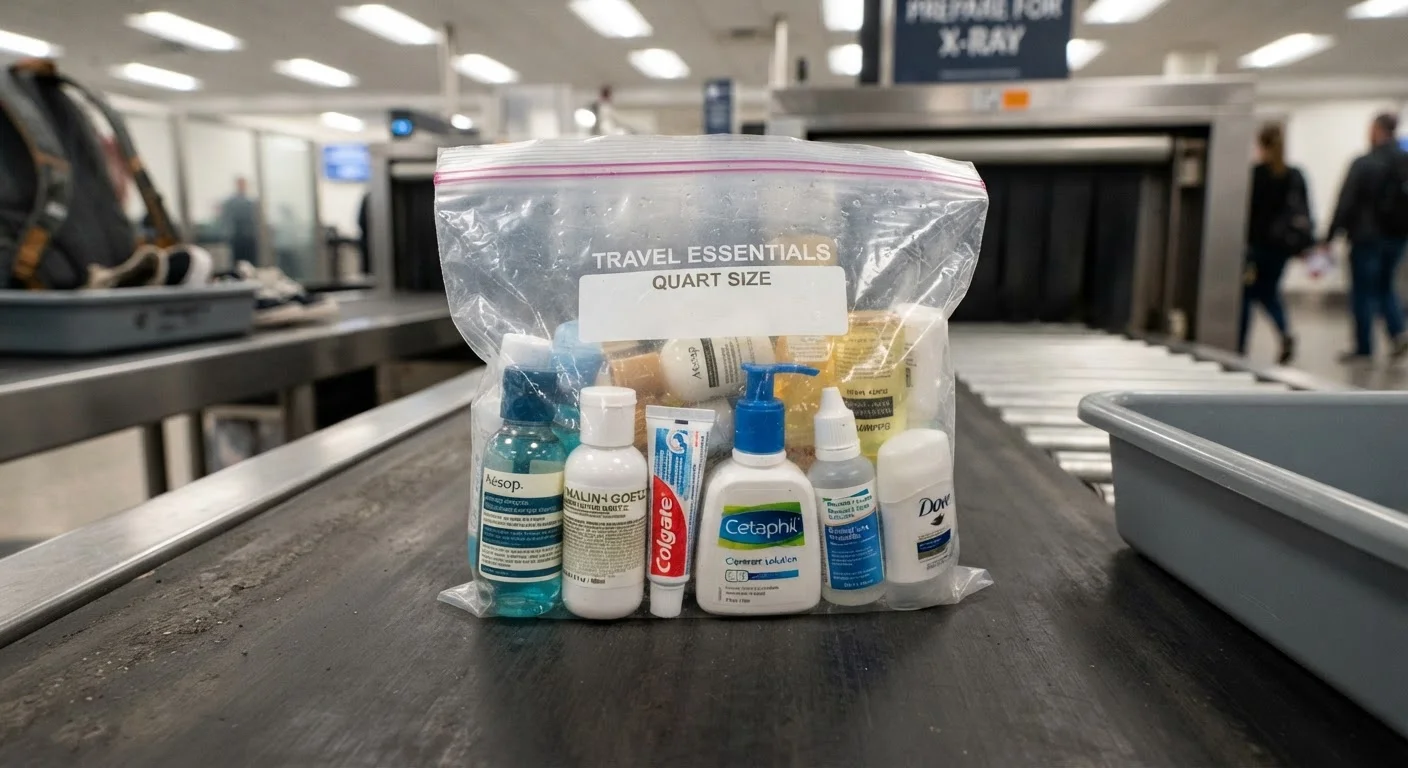
Photo: BridgeWish.com | Reliable Source Of Information editorial
Key Takeaways
- The 3-1-1 rule applies to containers, not total liquid volume — the size of each bottle matters most.
- Many liquids have exceptions, including medically necessary items and breast milk.
- TSA officers have discretion, but knowing the rules reduces surprises at the checkpoint.
- Gel-based products, aerosols, and creams all count as liquids under TSA guidelines.
- You are allowed only one quart-sized bag per person, regardless of bag type or airline.
Why So Many Travelers Get This Wrong
The TSA's 3-1-1 liquid rule has been in place since 2006, yet it remains one of the most consistently misunderstood travel regulations in the United States. Thousands of toiletry items are confiscated at security checkpoints every single day — most of them surrendered not out of ignorance, but because of persistent half-truths that circulate among travelers.
Understanding the actual rules isn't just about avoiding confiscation. It's about packing more confidently, moving through security faster, and making smarter decisions about what you carry on versus what you check. If you've ever wondered why your favorite face cream got flagged or whether your prescription eye drops really need to go in the bag, you're in the right place. We've rounded up the most common myths — and set the record straight on every one.
For a broader look at how liquid rules factor into your overall luggage strategy, see our guide to choosing between a checked bag and carry-on.
Myth
I can bring any liquid as long as the total amount fits in my quart bag.
Fact
Each individual container must be 3.4 ounces (100ml) or smaller — even if a larger bottle is only half full.
This is the single most common misunderstanding of the 3-1-1 rule. A 6-ounce bottle that's only one-third full still violates the rule because the container size, not the fill level, is what TSA officers evaluate. Always transfer liquids into travel-sized containers that hold 3.4 ounces or less.
Myth
The quart-sized bag is just a suggestion — any clear bag will do.
Fact
TSA requires a single, clear, plastic, zip-top bag that is quart-sized. Oversized bags are not compliant.
The bag itself must be quart-sized (roughly 7 × 8 inches), transparent, and resealable. Each traveler is limited to one such bag. Using a larger freezer bag or stuffing a second bag into your carry-on won't pass muster. Keep it simple: one standard quart zip-lock bag per person, presented separately at the checkpoint.
Myth
Prescription medications have to follow the 3-1-1 rule just like everything else.
Fact
Medically necessary liquids, including prescription medications, are exempt from the 3.4-ounce limit when declared to a TSA officer.
TSA explicitly allows prescription and over-the-counter liquid medications in quantities exceeding 3.4 ounces. You should remove these from your carry-on and inform the officer at the start of screening. The same exemption applies to insulin, eye drops prescribed for a medical condition, and similar items. Keep medications in their original, labeled containers where possible to simplify the process. Always check the TSA website or contact your airline for current guidance before your trip.
Myth
Gel products aren't really liquids, so they don't count.
Fact
Gels, creams, pastes, and aerosols are all treated as liquids under TSA guidelines.
Hair gel, toothpaste, moisturizer, shaving cream, lip gloss, and spray sunscreen all fall under the liquid rule. The determining factor is whether the substance flows or can be squeezed — not whether it pours freely. If it spreads, oozes, or sprays, it's a liquid in TSA's definition. Solid alternatives (shampoo bars, solid deodorant, solid sunscreen sticks) can be a practical workaround for travelers looking to streamline their bag.
Myth
You only need to worry about liquids in your carry-on bag.
Fact
Liquid restrictions apply specifically to items in your carry-on and personal item — checked bags have no such restrictions.
There are no TSA liquid limits for checked baggage. Full-sized bottles of shampoo, large containers of sunscreen, and oversized perfume bottles are all fine to pack in a checked bag. This distinction matters for trip planning: if you're committed to carry-on-only travel, liquids become a genuine packing constraint, while checking a bag gives you full flexibility. See our carry-on vs. checked bag framework for help weighing that trade-off.
Myth
Duty-free liquids purchased after security can be freely carried onto the plane.
Fact
Duty-free liquids are generally permitted, but specific rules apply — especially for connecting international flights.
Liquids purchased at duty-free shops after clearing security in a U.S. airport can typically be carried aboard your direct flight. However, if you're connecting through another country, the rules of that country's security authority apply at the connecting airport, and your sealed duty-free bag may be subject to additional screening or confiscation. Always check the transit rules for your specific route and confirm with your airline before assuming duty-free purchases are safe for your entire journey.
What the Rules Actually Cover — and What They Don't
Even travelers who know the basics often misapply them in practice. The word "liquid" under TSA guidelines is broader than most people expect. It encompasses gels, aerosols, creams, pastes, and anything with a flow — think peanut butter, yogurt, and even snow globes. Solids, powders, and dry items are generally not subject to the 3-1-1 restriction, though powders over 12 ounces may require additional screening.
~4,500
Items confiscated daily at U.S. checkpoints
TSA has reported confiscating millions of prohibited items annually, with liquids among the most common categories flagged at checkpoints.
3.4 oz
Maximum container size allowed
The 3.4-ounce (100ml) per-container limit has been the TSA standard since the liquids rule was introduced in 2006.
There are meaningful exemptions worth knowing. Medications — both prescription and over-the-counter — are allowed in quantities exceeding 3.4 ounces if they are declared at the checkpoint and are reasonably necessary for the trip. Breast milk, infant formula, and toddler drinks are similarly exempt. These items should be removed from your bag and declared separately during screening.
It's also worth noting that TSA rules apply specifically to U.S. domestic and outbound international flights screened by TSA. If you're flying internationally and connecting through a foreign airport, that country's security authority sets its own rules, which may differ. Always verify requirements with your airline and the relevant official government sources before you travel.
Packing thoughtfully around these rules opens the door to lighter, more flexible travel. Our editorial team's look at one-bag travel pros and cons explores how liquid rules shape that minimalist approach in practice.
Rules Can Change — Always Verify Before You Fly
The content on this site is for informational purposes only and is not a substitute for professional advice. Always consult a qualified professional for guidance specific to your situation.