
Tire Pressure, Tread Depth, and the Numbers on Your Sidewall

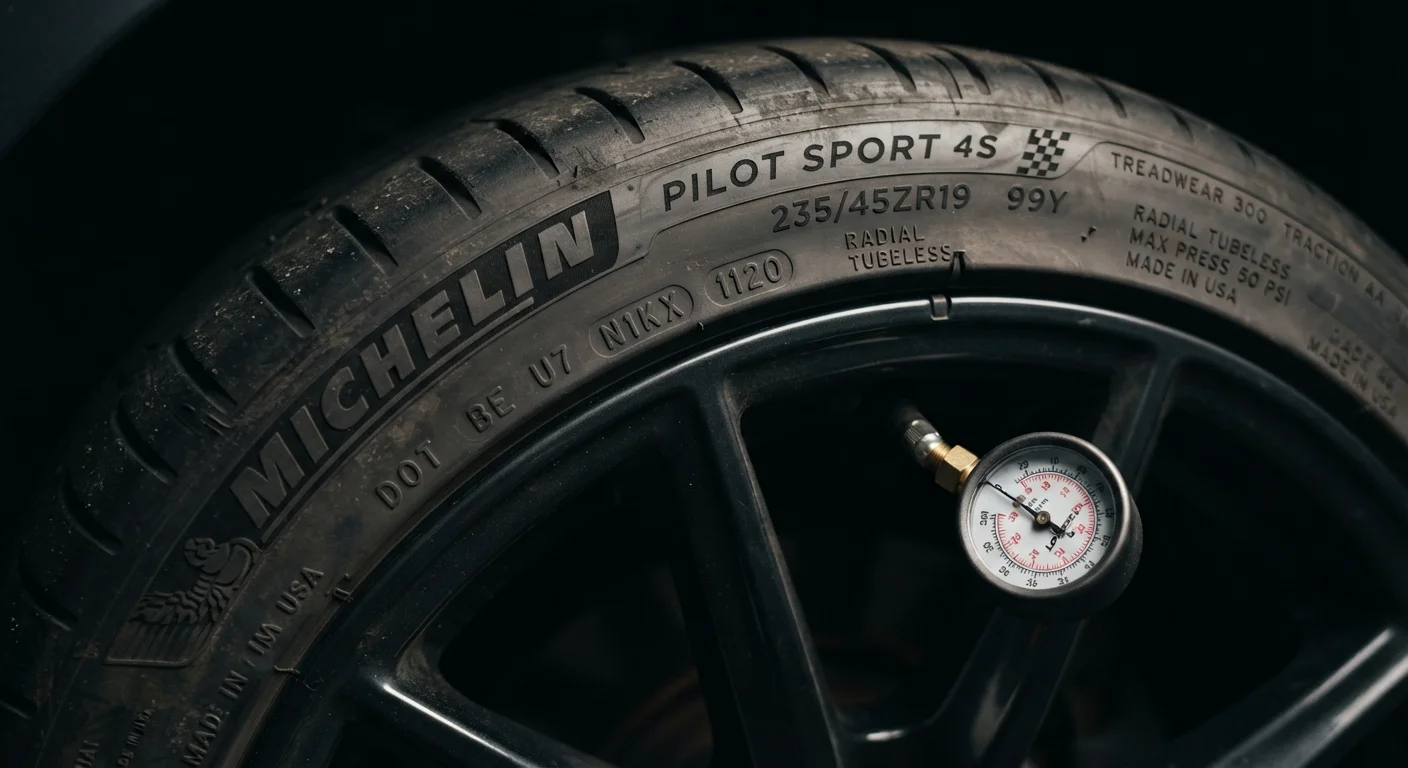
Photo: BridgeWish.com | Reliable Source Of Information editorial
Decoding the Sidewall: What Every Marking Means
That string of letters and numbers stamped into your tire - something like P215/65R16 98H - isn't random. Each segment tells you exactly what the tire is designed to do, and matching it to your vehicle's specifications is a basic safety requirement.
- P (or LT)
- Indicates the tire's service type. "P" stands for passenger vehicle; "LT" means light truck. These designations affect load capacity and recommended inflation.
- 215
- Section width in millimeters - the distance across the tire's widest point from sidewall to sidewall.
- 65
- Aspect ratio - the sidewall height expressed as a percentage of the section width. Lower numbers mean a shorter, stiffer sidewall.
- R
- Radial construction, which is standard on virtually all modern passenger tires.
- 16
- Wheel diameter in inches - the rim size the tire is designed to fit.
- 98H
- Load index (98 = approximately 1,653 lbs per tire) and speed rating (H = up to 130 mph). Never install a tire with a lower load index or speed rating than your vehicle manufacturer requires.
Your vehicle's correct tire size and load rating are listed on the tire placard - typically found on the driver's door jamb - and in the owner's manual. Always defer to those specifications when replacing tires. For a broader look at pre-drive safety checks, see our Pre-Trip Vehicle Safety Walkthrough.
Tire Pressure: Why PSI Matters and How to Check It
Tire pressure is measured in PSI (pounds per square inch). Driving on underinflated or overinflated tires affects fuel economy, handling, braking distance, and tire longevity - sometimes dramatically.
~1 PSI
Pressure lost per month naturally
Tires lose roughly 1 PSI per month under normal conditions, making monthly checks an important maintenance habit.
1 PSI
Pressure drop per 10°F temperature fall
Cold weather causes air to contract, which can push borderline tires below safe operating pressure overnight.
2/32"
Legal minimum tread depth in most U.S. states
At this depth, wet-weather braking distance increases significantly; many safety experts recommend replacing at 4/32".
Important distinction: The PSI number molded into the tire sidewall is the maximum pressure the tire can safely hold - not your target inflation level. Your target is on the door jamb placard, and it's typically lower than the sidewall maximum.
How to Check Tire Pressure Correctly
- Check tires when they're cold - meaning the vehicle has been parked for at least three hours or driven fewer than one mile. Heat from driving expands air and raises readings artificially.
- Remove the valve cap, press a calibrated gauge firmly onto the valve stem, and read the PSI.
- Compare to the placard specification. Add air if low; release air gently if over the target.
- Replace the valve cap securely.
Check all four tires - and the spare - at least once a month. Tires naturally lose approximately 1 PSI per month and can lose additional pressure as ambient temperatures drop (roughly 1 PSI for every 10°F decrease in temperature). A persistent low-pressure warning may indicate a slow leak that requires professional attention. If your TPMS (Tire Pressure Monitoring System) light illuminates, check pressure promptly - don't simply reset the light without addressing the cause. See our dashboard warning lights guide for more on TPMS alerts.
Tread Depth: Reading Wear Before It Becomes a Risk
Tread channels water away from the contact patch between your tire and the road. As tread wears down, wet-weather grip deteriorates sharply and stopping distances increase. The legal minimum tread depth in most U.S. states is 2/32 of an inch, but many safety organizations recommend replacing tires at 4/32 inch - particularly in wet or winter conditions.
PSI
Pounds per square inch - the unit used to measure tire air pressure. Your vehicle's recommended PSI is found on the door jamb placard, not the tire sidewall.
Aspect Ratio
The ratio of a tire's sidewall height to its section width, expressed as a percentage. A lower aspect ratio means a shorter, stiffer sidewall and typically sharper handling.
Load Index
A numeric code on the tire sidewall indicating the maximum weight each tire can safely support. Always meet or exceed your vehicle manufacturer's required load index.
Tread Wear Indicator
Raised horizontal bars molded into tire tread grooves at the 2/32-inch depth. When flush with the surrounding tread surface, the tire has reached its legal minimum and must be replaced.
TPMS
Tire Pressure Monitoring System - a federally mandated electronic system on vehicles sold in the U.S. since 2008 that alerts the driver when one or more tires drop significantly below recommended pressure.
Speed Rating
A letter code indicating the maximum sustained speed a tire is designed to handle safely. Common ratings include H (130 mph) and V (149 mph); always match or exceed the manufacturer's requirement.
Three Ways to Assess Tread Depth
- Penny test: Insert a penny into the tread groove with Lincoln's head pointing down. If you can see the top of Lincoln's head, tread is at or below 2/32" - replace immediately.
- Quarter test: Insert a quarter the same way. If you can see the top of Washington's head, tread is at or below 4/32" - start planning a replacement.
- Tread wear indicators: Molded horizontal bars built into the tread grooves at 2/32". When these bars are flush with the surrounding tread surface, the tire has reached its legal minimum.
Wear Patterns That Signal Other Problems
Uneven wear often points to a maintenance issue beyond the tire itself:
- Center wear: Chronic overinflation
- Edge wear (both sides): Chronic underinflation
- One-sided edge wear: Alignment problem
- Cupping or scalloping: Worn shocks or struts
If you notice uneven patterns, have a qualified mechanic inspect the suspension and alignment - replacing tires without correcting the root cause wastes money and can compromise safety. This topic is covered in greater depth in our car ownership and maintenance guide.
The content on this site is for informational purposes only and is not a substitute for professional advice. Always consult a qualified professional for guidance specific to your situation.