
Before You Start a Recipe: A Prep Checklist That Prevents Most Mistakes

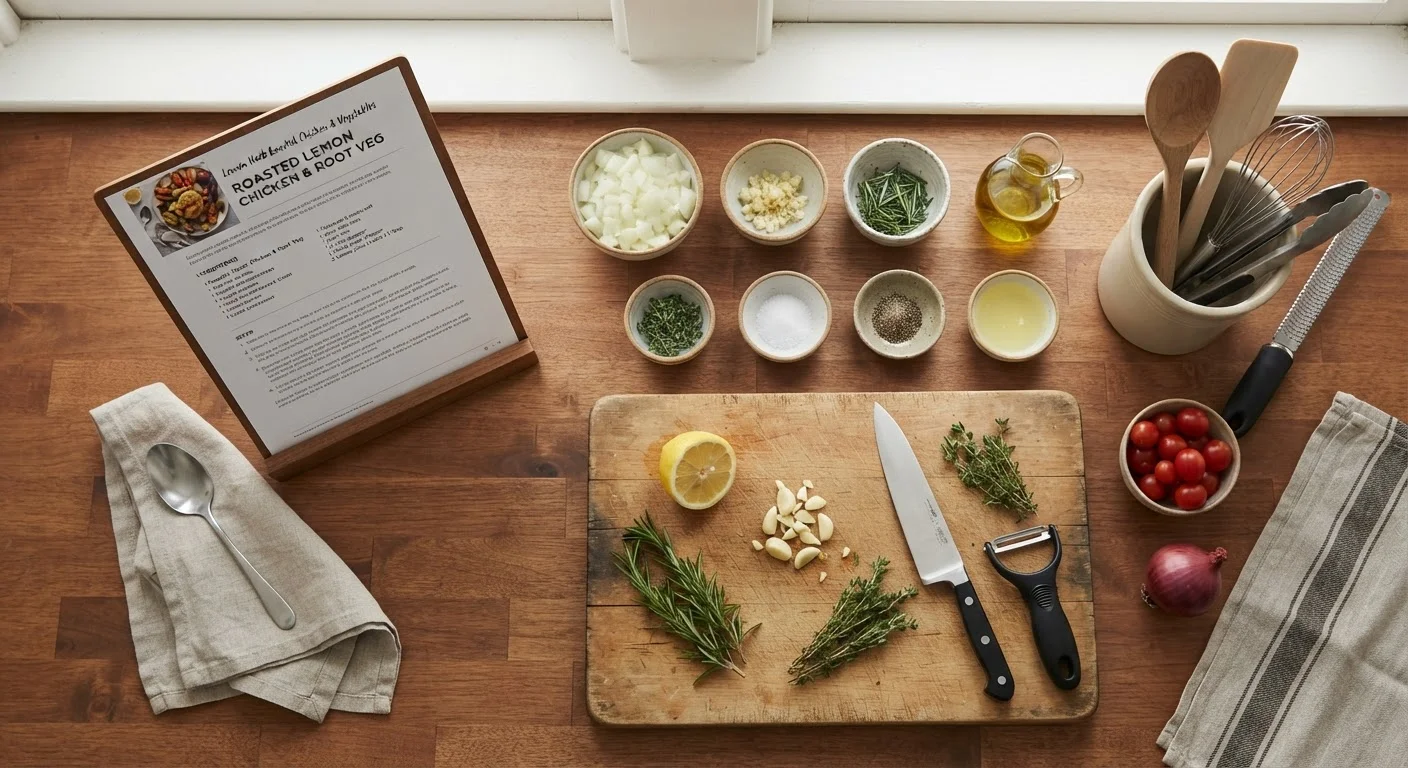
Photo: BridgeWish.com | Reliable Source Of Information editorial
Key Takeaways
- Reading a recipe all the way through before touching any ingredient prevents mid-cook surprises.
- Confirming you have every ingredient and piece of equipment avoids last-minute scrambles.
- Prepping and measuring ingredients before cooking mirrors professional kitchen habits that reduce mistakes.
- Checking oven temperature and timing details upfront keeps the cooking process on track.
- A consistent pre-cook routine builds kitchen confidence over time.
Why a Pre-Recipe Checklist Matters
Most kitchen mistakes don't happen during cooking — they happen in the two minutes before it starts. A forgotten ingredient, an unpreheated oven, or a missing pan can derail an otherwise straightforward recipe. Running through a short checklist before you begin costs almost no time but fixes the most predictable problems before they occur.
This approach has a name in professional kitchens: mise en place (pronounced meez-ahn-plahs), a French phrase meaning "everything in its place." Learn how mise en place changes how you cook — the habit applies just as powerfully at home as it does in a restaurant. The checklist below walks you through each phase of pre-cook preparation so you can start any recipe with confidence.
Printed or device-displayed recipe
Having the recipe visible and readable throughout keeps you from losing your place or misreading a step.
Kitchen scale
Measuring by weight rather than volume improves accuracy, especially for baking.
Dry and liquid measuring cups and spoons
Essential for accurately measuring the ingredient quantities the recipe calls for.
Small prep bowls or ramekins
Holding pre-measured ingredients separately so they are ready to add at exactly the right moment.
Kitchen timer
Tracking cooking stages precisely prevents over- or under-cooking.
Instant-read thermometer
Verifying internal temperatures for meat and baked goods prevents guesswork and food safety errors.
The Prep Checklist: Work Through It in Order
These steps are sequenced deliberately. Reading comes first because every other decision depends on understanding the full recipe. Equipment and ingredient checks follow so you can catch substitution needs early. Prepping ingredients last means everything is ready the moment heat meets pan.
Read the Recipe
Check Equipment
Verify Ingredients
Prep and Measure Ingredients
Don't Skip the Full Read-Through
If sharp knife work is part of your recipe, it's worth reviewing foundational technique before you begin. Knife skills every home cook should know covers the core cuts and grips that make prep safer and faster.
For more on building a kitchen environment that's always ready to go, see the kitchen readiness checklist which covers clean surfaces, preheated pans, and tool sharpness as a broader session habit.
This article is for general informational purposes only and does not constitute professional culinary or nutritional advice.
The content on this site is for informational purposes only and is not a substitute for professional advice. Always consult a qualified professional for guidance specific to your situation.