
Knife Skills Every Home Cook Should Know Before Anything Else

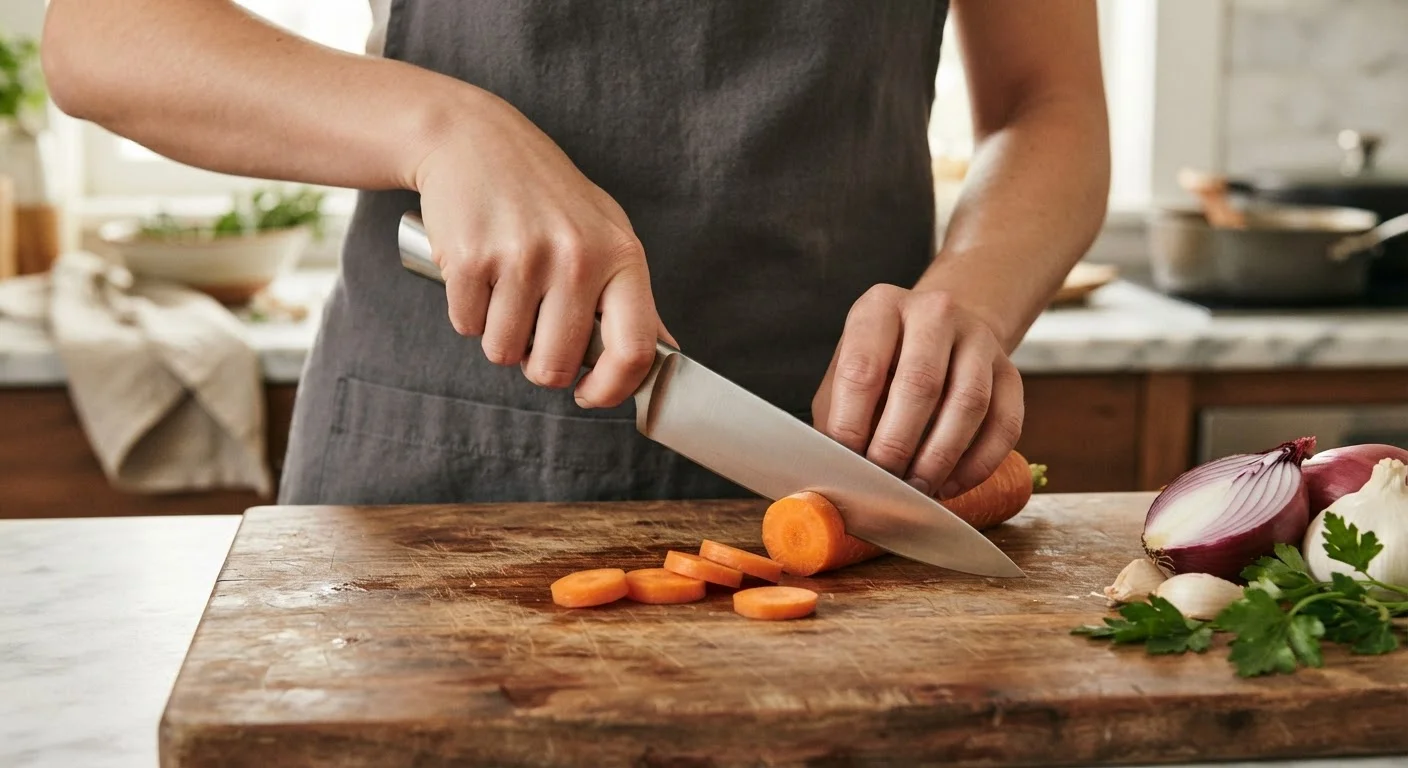
Photo: BridgeWish.com | Reliable Source Of Information editorial
Key Takeaways
- The pinch grip gives you far more control than gripping the handle alone.
- The claw hand technique keeps your fingertips out of the blade's path on every cut.
- A sharp knife is safer than a dull one — it requires less force and is more predictable.
- Most kitchen prep only requires three cuts: slice, dice, and mince.
- A stable cutting board and a flat food surface prevent the majority of slipping accidents.
Why Knife Skills Come First
Before you learn to sauté, roast, or braise, there is one skill that underpins every other cooking task: knowing how to handle a knife safely and efficiently. Poor knife technique slows your prep down, produces uneven results, and — most importantly — creates unnecessary risk in the kitchen.
Good knife skills, by contrast, make cooking feel calm and orderly. Ingredients are ready when you need them. Pieces cook evenly because they're uniform. And you're not white-knuckling a handle hoping nothing slips. This guide focuses on exactly what a beginner needs before anything else — grip, hand position, and the handful of cuts that appear in almost every recipe. For a broader look at setting yourself up for success, see our kitchen readiness checklist.
Pinch grip
A knife-holding technique where the thumb and index finger pinch the blade just above the handle, placing control closer to the cutting edge for greater accuracy.
Claw hand
A protective hand position where fingertips curl inward and knuckles face the blade, preventing the knife from reaching the fingers during cuts.
Rock chop
A cutting motion where the knife tip stays near the board while the heel rocks up and forward through the food — efficient and consistent for most chopping tasks.
Dice
A knife cut that produces small, uniform cubes of food, ensuring even cooking because all pieces are the same size.
Mince
Very fine, irregular chopping typically used for aromatics like garlic and ginger to distribute their flavor evenly throughout a dish.
Mise en place
A French culinary term meaning 'everything in its place' — the practice of prepping and organizing all ingredients before cooking begins.
The Two Grips That Change Everything
Most beginners grip the knife handle the same way they'd hold a hammer — all fingers wrapped around the back of the handle. This works, but it gives you little precision and less control over the blade's angle.
The pinch grip is the standard among professional cooks for good reason. To use it, pinch the blade itself — not the handle — between your thumb and the side of your bent index finger, right where the blade meets the handle. Your remaining three fingers then curl around the handle. This lowers your center of control to the blade itself, which is where the cutting actually happens. The result is steadier, more accurate cuts with noticeably less effort.
The handle grip (all fingers on the handle) is acceptable for large, straight cuts on firm ingredients, but the pinch grip should become your default for everyday prep. Spend a few minutes practicing with a carrot or zucchini — most cooks notice the difference within the first session.
Practice on a forgiving ingredient first
The Claw: Your Built-In Guard Rail
The claw hand is the single most important safety habit you can build in the kitchen. It protects your fingertips on every cut, with no special equipment required.
Here's how it works: place your non-dominant hand flat on the food. Now curl your fingertips inward so they tuck underneath, leaving your knuckles as the highest point. When you bring the knife down, the flat side of the blade rests against your knuckles and guides each cut. Your fingertips are physically behind the blade's path.
At first this hand position will feel awkward, especially on round foods. This is normal. The solution for round ingredients — onions, potatoes, citrus — is to create a flat surface first by slicing off one side, then setting the flat face down. Now the food is stable, and the claw hand can do its job without fighting you.
Core Cuts Every Beginner Should Practice
You don't need to master every culinary cut before you start cooking real meals. These three cover the vast majority of what recipes ask for:
- Slice: A single straight or slightly curved cut through an ingredient. Used for onion rings, cucumber rounds, meat portions. Keep the tip of the knife on the board and use a rocking forward motion.
- Dice: Producing small, uniform cubes. The classic technique involves slicing the ingredient into planks, stacking and cutting into strips, then turning 90 degrees to cut across into cubes. Uniformity matters here because evenly sized pieces cook at the same rate.
- Mince: Very fine, irregular chopping — used most often for garlic, ginger, shallots, and fresh herbs. After rough chopping, place one hand on the spine of the blade and use a rocking motion over the pile, periodically gathering and repeating.
The rock chop motion appears across all three: keep the tip of the knife anchored near the board and rock the heel up and forward through the ingredient. This keeps the blade moving efficiently without lifting and slamming.
Once these feel natural, you'll be well placed to build toward more specialized cuts. See our deeper knife skills guide for julienne, chiffonade, and more.
Setup Habits That Make Cutting Safer
Technique matters, but so does your environment. A few quick setup habits eliminate most of the common slip-and-cut scenarios before they happen.
- Anchor your cutting board. Place a damp paper towel or thin rubber mat underneath it. A board that moves mid-cut is a genuine hazard.
- Use a sharp knife. A dull blade requires more pressure, which means more force behind any slip. Keeping your knife sharp is one of the highest-return maintenance habits in the kitchen.
- Create flat surfaces. Before cutting anything round or irregularly shaped, slice off one side to create a stable base. Never cut a rolling ingredient.
- Clear the area. Remove anything from the cutting board that isn't actively being cut. Clutter leads to rushed adjustments.
With good grip, a reliable claw hand, and a stable workspace, you've addressed the root causes of most kitchen injuries. Pair those habits with a mise en place routine — prepping and organizing ingredients before you start — and your entire cooking process becomes calmer and more controlled.
Never leave a knife at the edge of a counter
Frequently Asked Questions
The content on this site is for informational purposes only and is not a substitute for professional advice. Always consult a qualified professional for guidance specific to your situation.