
Mise en Place: The Prep Habit That Changes How You Cook

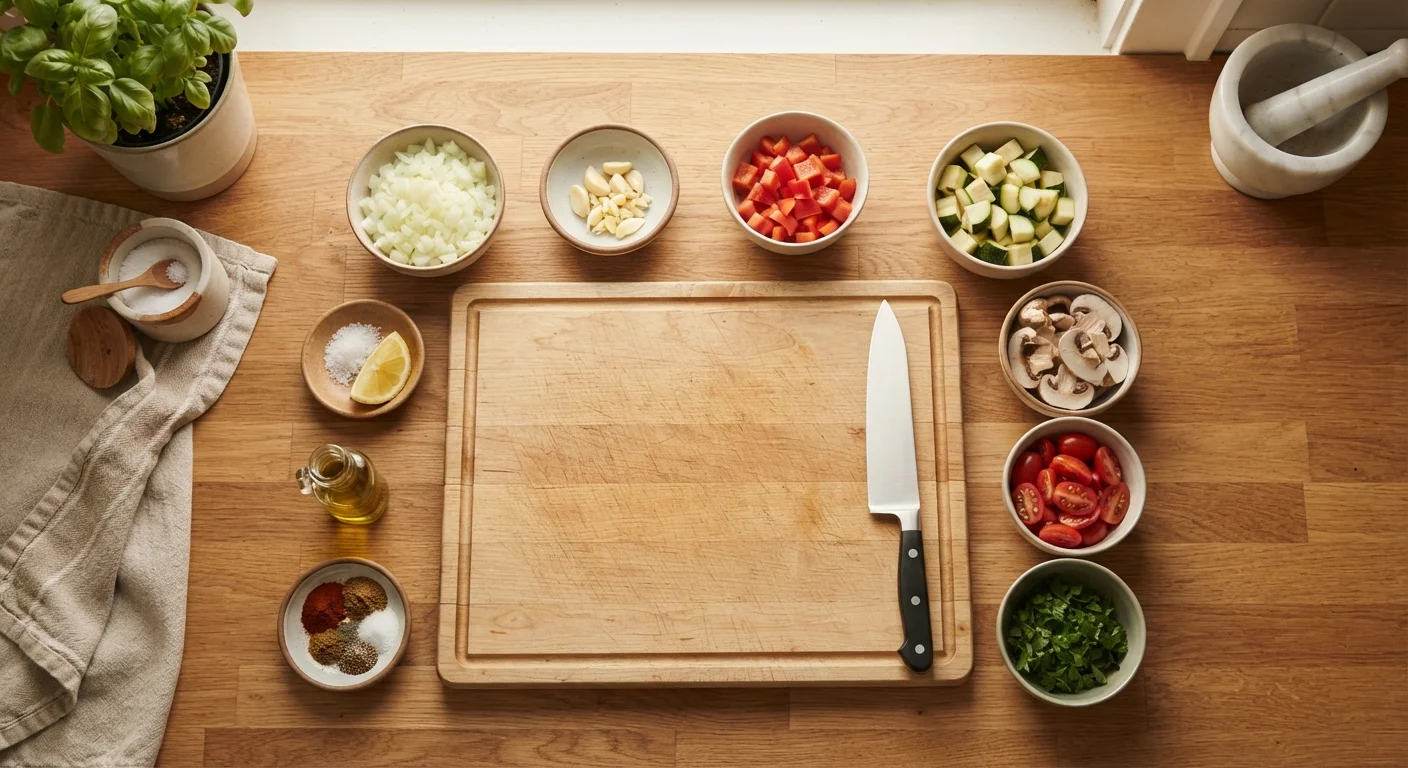
Photo: BridgeWish.com | Reliable Source Of Information editorial
Key Takeaways
- Mise en place means measuring, chopping, and organizing all ingredients before heat touches anything.
- Prepping ahead prevents the most common home-cooking mistakes — burning, skipping steps, and mismeasuring.
- The habit works for any skill level and any recipe, from weeknight pasta to weekend roasts.
- Small prep bowls and a clear workspace make the habit easy to build and maintain consistently.
What Mise en Place Actually Means
Mise en place (pronounced meez ahn plahs) is a French culinary term that translates literally to "everything in its place." In professional kitchens, it describes the practice of fully prepping every ingredient — measured, chopped, portioned, and organized — before any cooking begins.
For home cooks, the concept is equally powerful. Instead of reading the recipe mid-cook and frantically mincing garlic while onions burn, you front-load all the mental and physical work so that the actual cooking becomes a calm, sequential process. Think of it as separating the thinking from the doing.
To go deeper on the philosophy behind this approach, see what mise en place really means and why it matters.
Best Practices for Building the Habit
The following practices take the concept from abstract idea to something you can apply tonight. None require professional training — just a few minutes of intentional prep before you turn on the stove.
Read the entire recipe before touching a single ingredient.
Measure and portion every ingredient into individual bowls or ramekins before heating the pan.
Group ingredients in the order they'll be used.
Clear and clean your workspace before you begin.
Don't skip prep even for "simple" or familiar recipes.
Quick Wins to Start Using Today
Even if you don't overhaul your entire cooking routine, these small changes will make an immediate difference in how smoothly your meals come together.
Build Your Prep Station Once, Use It Every Time
Why It Makes a Measurable Difference
~30%
Reduction in active cooking errors
Culinary educators broadly report that structured prep habits like mise en place significantly reduce mid-cook mistakes, though controlled studies in home kitchens are limited.
2–5 min
Typical prep-organization time
For most weeknight recipes, fully prepping and organizing ingredients adds only a few minutes before cooking begins — and typically saves more time overall.
Disorganized cooking is one of the leading causes of home-kitchen mistakes — overseasoning, missing ingredients mid-recipe, or overcooking one element while prepping another. Mise en place interrupts that pattern at the source by making the cooking process nearly self-correcting.
Pair this habit with solid knife skills so your prep is both fast and safe — knife skills every home cook should know is a practical place to start. Once you're prepped and cooking with confidence, tasting as you go is the natural next habit to build. For a full pre-cooking checklist that wraps all of this together, see a prep checklist that prevents most mistakes.
The content on this site is for informational purposes only and is not a substitute for professional advice. Always consult a qualified professional for guidance specific to your situation.