
Tasting as You Go: The Habit That Separates Confident Cooks

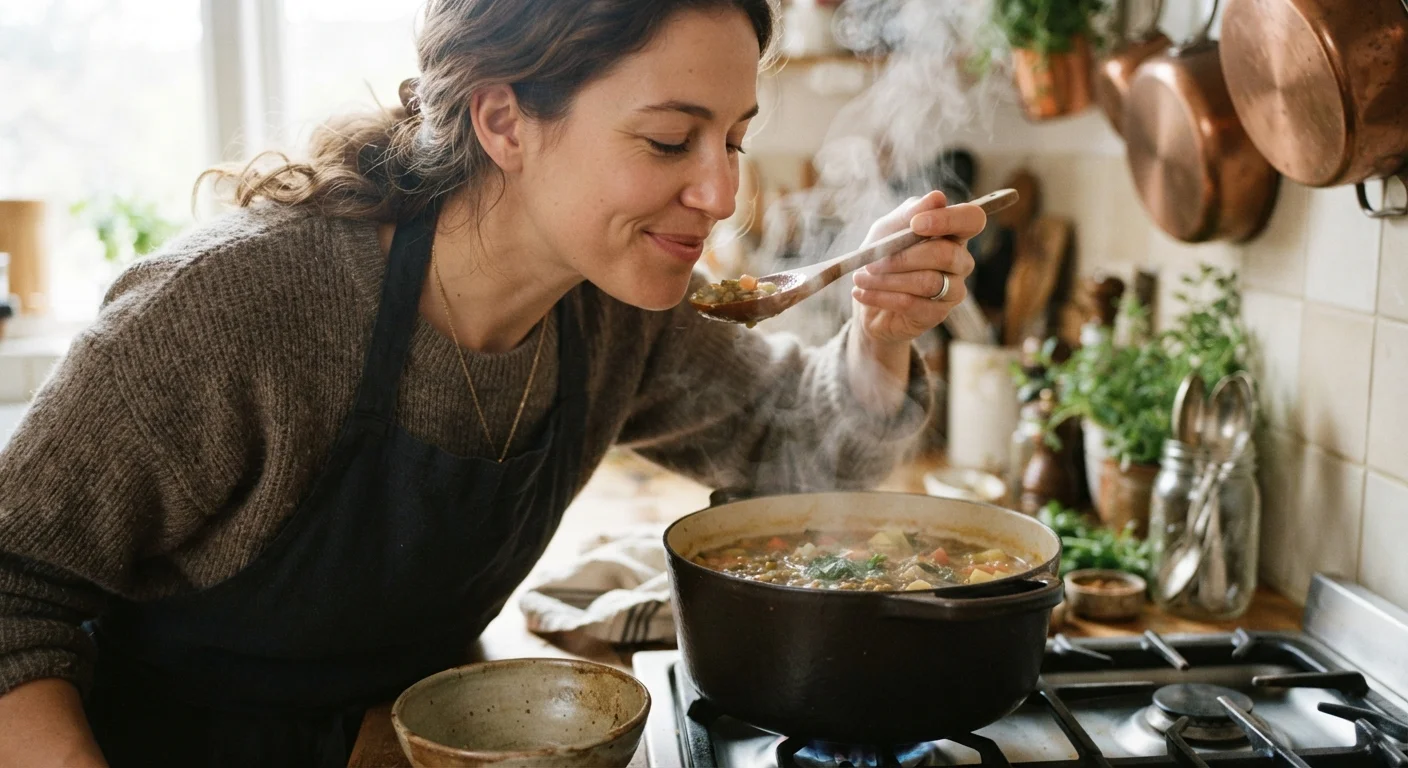
Photo: BridgeWish.com | Reliable Source Of Information editorial
Key Takeaways
- Tasting at multiple stages lets you correct seasoning before a dish is beyond saving.
- Your palate is the most reliable tool in the kitchen — more useful than a timer or recipe.
- Flavor builds in layers; each ingredient addition is an opportunity to evaluate and adjust.
- Tasting trains your cooking instincts over time, reducing dependence on recipes.
- Understanding salt, acid, fat, and heat helps you diagnose exactly what a dish is missing.
Why Tasting Matters More Than Any Recipe
Most home cooks follow a recipe faithfully — measuring, timing, following instructions to the letter — and still end up with a dish that tastes flat or off-balance. The reason is almost always the same: they didn't taste along the way.
A recipe is a map, not a guarantee. Ingredients vary — one tomato is sweeter than another, one batch of stock is saltier, one onion is sharper. No written instruction can account for those differences. Only your palate can. The habit of tasting as you cook is what allows you to bridge the gap between a recipe's intention and the actual ingredients in front of you.
This isn't about second-guessing the recipe. It's about staying engaged with the dish — noticing what's developing, what's missing, and what needs a nudge. As you build this habit, pair it with an understanding of the core flavor forces at play. Our guide to salt, fat, acid, and heat explains why those four elements drive nearly every great dish — and how balancing them transforms even simple meals.
Taste before you add anything, not just after.
Season in stages, not all at once at the end.
Pause and diagnose what the dish is actually missing.
Clear your palate between tastes.
Taste the dish at the temperature it will be served.
Use tasting as a learning tool, not just a correction step.
What to Listen for When You Taste
Tasting without a framework is just eating. To make it useful, you need to know what you're listening for. When you take a spoonful mid-cook, ask yourself four questions:
- Is it salty enough? Underseasoned food tastes flat and one-dimensional.
- Does it have brightness? Acid — from citrus, vinegar, wine, or tomatoes — lifts flavor and prevents dishes from feeling heavy.
- Is there enough richness? Fat (butter, oil, cream) carries flavor and gives dishes body.
- Has it cooked long enough? Raw or undercooked elements taste harsh or starchy; proper heat develops sweetness and complexity.
For a deeper look at how to apply these adjustments without a recipe, see our guide on building flavor without a recipe. And if you want to understand what recipe language is actually asking you to do at each stage, reading a recipe breaks it down in plain language.
Tasting Raw or Undercooked Food
Build the Habit Into Every Cook
Tasting as you go doesn't require extra time — it just requires intention. The best cooks make it automatic: a quick taste when the aromatics hit the pan, another when the liquid goes in, another before the final seasoning. Each check takes seconds but can save a dish.
“Taste everything. Cook by instinct, guided by your palate — not just by the clock or the recipe.”
— Jacques Pépin, French-American chef and culinary educator, author of numerous foundational cooking books
Combine this habit with solid prep and you'll spend less time correcting mistakes. Our guide on mise en place explains how organizing ingredients before you cook frees up the attention you need to actually taste and adjust. And if you're curious about how salt behaves differently depending on when and how you add it, salt myths that affect your cooking separates the folklore from what actually works.
The content on this site is for informational purposes only and is not a substitute for professional advice. Always consult a qualified professional for guidance specific to your situation.