
Food Labeling Terms Decoded: Organic, Natural, Free-Range, and More

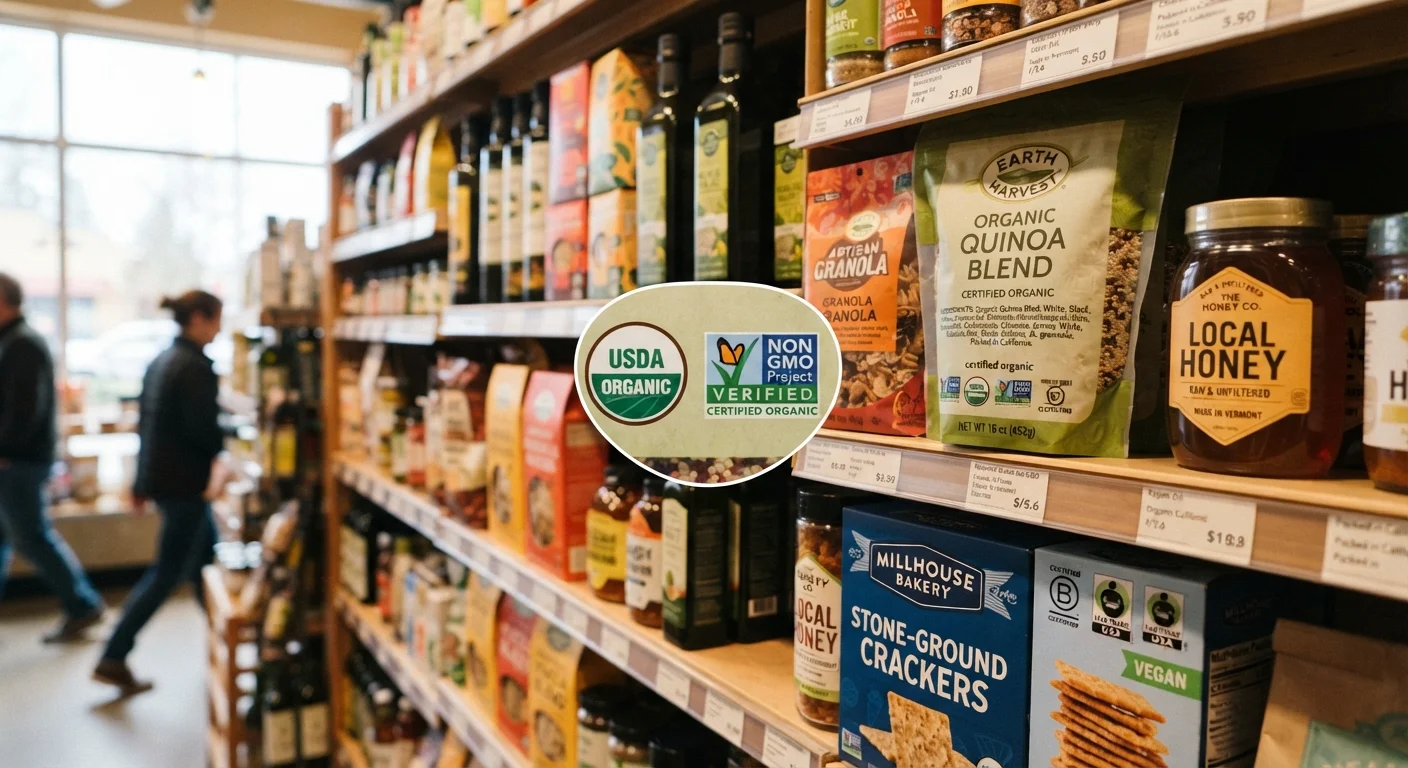
Photo: BridgeWish.com | Reliable Source Of Information editorial
Why Food Labels Can Be Misleading
Grocery packaging is designed to attract attention, and marketing teams are skilled at deploying words that sound healthier or more ethical than they may actually be. The critical distinction shoppers need to grasp is this: some label terms are federally regulated with specific, enforceable definitions, while others are loosely defined or essentially unregulated, meaning any manufacturer can apply them.
The U.S. Department of Agriculture (USDA) and the Food and Drug Administration (FDA) oversee food labeling in the United States, but their jurisdictions differ — the USDA governs meat, poultry, and eggs, while the FDA covers most other packaged foods. That split creates gaps where some terms slip through without meaningful oversight.
Understanding which terms hold regulatory weight — and which are little more than marketing language — is one of the most practical skills you can bring to the grocery store. For a deeper look at the numbers behind the packaging, see our guide on decoding nutrition labels.
| Regulator for meat & poultry labels | USDA (Food Safety and Inspection Service) |
| Regulator for most packaged foods | FDA (Food and Drug Administration) |
| "Organic" minimum threshold | 95% organic ingredients (for the USDA Organic seal) (USDA National Organic Program) |
| "Natural" — federally defined? | No binding federal definition exists for most foods (FDA) |
| "Grass-Fed" — federally regulated? | USDA withdrew its official standard in 2016; largely unregulated (USDA, 2016) |
| Hormone use in poultry/pork | Already prohibited by U.S. federal law (USDA) |
Terms with Defined Federal Standards
These labels carry specific legal definitions enforced by either the USDA or FDA. They are not guarantees of nutritional superiority, but they do mean producers must meet documented criteria to use them.
Certified Organic
Regulated by the USDA's National Organic Program (NOP), the USDA Organic seal means crops were grown without most synthetic pesticides or fertilizers, and livestock were raised without antibiotics or growth hormones and had access to pasture. Products labeled "100% Organic" contain only organic ingredients; those simply labeled "Organic" must be at least 95% organic by weight.
Free-Range (Poultry)
For poultry, the USDA requires that birds labeled free-range have been allowed access to the outdoors. However, the regulation does not specify the duration, quality, or size of that outdoor space, so the practical reality can vary widely between producers.
Cage-Free (Eggs and Poultry)
The USDA defines cage-free to mean birds are not kept in cages and can roam within a building or enclosed area. This does not guarantee outdoor access.
No Antibiotics / Raised Without Antibiotics
When verified by the USDA, this claim means the animal was raised without any antibiotics throughout its lifetime. Look for the accompanying USDA Process Verified shield to confirm the claim has been audited.
No Added Hormones
On beef and lamb, this USDA-verified claim means no hormones were administered during the animal's growth. Notably, U.S. federal law already prohibits hormone use in pork and poultry production — so seeing this label on chicken or pork adds no meaningful distinction.
USDA Organic
A federally regulated certification administered by the USDA's National Organic Program. It requires that crops are grown without most synthetic pesticides and fertilizers, and that livestock are raised without antibiotics or growth hormones with access to pasture.
Free-Range
A USDA-regulated term for poultry indicating that birds were given access to the outdoors. The regulation does not specify the amount of time or the quality of outdoor space required.
Cage-Free
A USDA term indicating that birds are not confined to cages and can move within an enclosed space. It does not require outdoor access.
Third-Party Certification
Verification of a producer's practices conducted by an independent organization rather than by the producer or a government agency. It provides an additional layer of accountability for claims like 'humanely raised' or 'grass-fed.'
Bioengineered (BE) Disclosure
A USDA-mandated label required on foods containing detectable genetic material from bioengineered sources, effective under rules finalized in 2022. It uses different criteria than the Non-GMO Project's certification standard.
Minimally Processed
A term used by the USDA in the context of 'natural' claims on meat and poultry, meaning the product was not fundamentally altered from its raw state. It does not address how the animal was raised or fed.
Terms That Are Loosely Defined or Unregulated
These terms appear frequently on packaging but carry little or no enforceable regulatory standard. They are not necessarily false, but they are not independently verified unless paired with a third-party certification seal.
Natural
The FDA has not established a formal definition for "natural" on food labels. The agency has informally stated it does not object to the term when a food contains no artificial or synthetic ingredients, but this is not legally binding. The USDA allows "natural" on meat and poultry if the product is minimally processed and contains no artificial ingredients — but the standard is self-reported by manufacturers.
Humanely Raised / Pasture-Raised
Neither "humanely raised" nor "pasture-raised" has a federal legal definition. Their reliability depends entirely on whether a credible third-party organization (such as Certified Humane or Animal Welfare Approved) has audited and certified the producer. Without a certification seal, these terms are unverified marketing language.
Grass-Fed
The USDA withdrew its official grass-fed marketing standard in 2016. Today, "grass-fed" on its own is largely unregulated. Products backed by third-party certifications (such as the American Grassfed Association label) offer greater assurance that animals were fed a diet of grass and forage throughout their lives.
Non-GMO
"Non-GMO" claims are not federally regulated in the same way as organic. The most widely recognized verification comes from the Non-GMO Project, a nonprofit that runs its own testing and certification program. In addition, the USDA's bioengineered food disclosure standard (effective 2022) requires labeling of foods containing detectable bioengineered ingredients — but the two systems use different thresholds and definitions.
Understanding added sugars on packaging is a related skill — our article on natural versus added sugars on labels breaks that down clearly.
When Third-Party Seals Matter Most
How to Apply This at the Grocery Store
A practical approach to food label literacy comes down to a few consistent habits:
- Look for the certifying body. A term like "humane" or "pasture-raised" means far more when a named third-party organization has audited the claim. Seek out recognizable certification seals rather than relying on text alone.
- Understand jurisdiction. The USDA governs meat, poultry, and eggs. The FDA governs most other packaged foods. Knowing who is responsible tells you which terms are likely regulated in a given product category.
- Read the full ingredient list. No front-of-pack claim replaces a careful look at what is actually in the food. For guidance on reading ingredient lists and daily value percentages, our nutrition label guide is a useful companion.
- Prioritize where it matters to you. Whether your priorities are animal welfare, pesticide reduction, or environmental impact, identify the one or two labels that genuinely address your concern and focus there rather than treating every front-of-pack claim as equally meaningful.
This article is for general informational purposes only. Always verify label claims with the certifying organization or relevant federal agency if accuracy is important for your specific dietary or health needs.
The content on this site is for informational purposes only and is not a substitute for professional advice. Always consult a qualified professional for guidance specific to your situation.