
Healthy Eating on a Budget: What Dietitians Actually Recommend

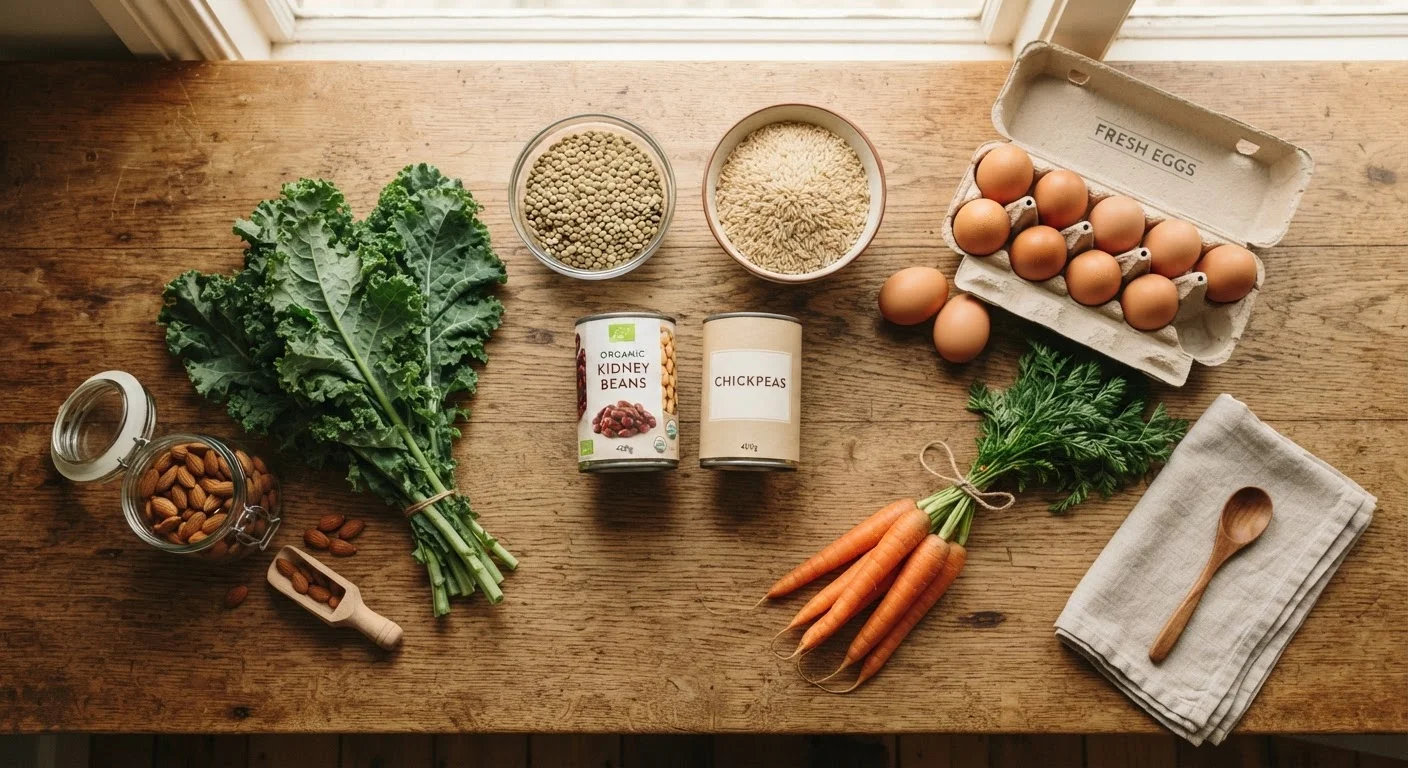
Photo: BridgeWish.com | Reliable Source Of Information editorial
Key Takeaways
- Dried and canned legumes are among the most affordable, nutrient-dense protein sources available.
- Frozen vegetables retain most of their nutritional value and cost significantly less than fresh out-of-season produce.
- Meal planning before shopping consistently reduces food waste and impulse spending.
- Whole grains like oats, brown rice, and barley deliver fiber and micronutrients at low cost.
- Eggs remain one of the most complete, budget-friendly protein options in any grocery store.
- Buying versatile staples in bulk and cooking in batches stretches both nutrition and dollars further.
Why Budget and Nutrition Don't Have to Conflict
The idea that eating well automatically means spending more is one of the most persistent myths in food culture. In practice, many of the foods dietitians consistently recommend — legumes, whole grains, frozen vegetables, eggs — are also among the least expensive items in any grocery store.
What separates genuinely budget-conscious healthy eating from accidental junk-food frugality is intention: knowing which categories to prioritize, how to build flexible meals around affordable staples, and where spending a little more actually pays off nutritionally. The strategies below are grounded in established dietary guidance and the practical experience of registered dietitians working with everyday households.
For a broader look at how supermarket navigation affects your cart, see our guide to grocery shopping habits that support a healthier diet.
Make legumes your primary protein anchor
Dried or canned beans, lentils, and chickpeas consistently rank among the highest-value foods in any nutrition-per-dollar calculation. They supply protein, soluble fiber, iron, and folate at a fraction of the cost of most meat. A one-pound bag of dried lentils, for example, can yield multiple meals when cooked.
Lentils cook faster than other legumes and require no soaking, making them particularly practical on weeknights. Canned options trade a small amount of control over sodium for convenience — rinsing canned beans under water reduces sodium content substantially.
Lentils and beans deliver protein, fiber, and key micronutrients at a cost few other foods can match.
Lean on frozen vegetables without hesitation
Frozen vegetables are harvested and flash-frozen at peak ripeness, which locks in most of their vitamin and mineral content. Research consistently shows that the nutritional difference between fresh and frozen vegetables is minimal — and for out-of-season produce, frozen is often nutritionally superior to fresh that has traveled long distances.
The cost advantage is significant, particularly for vegetables like spinach, peas, edamame, broccoli, and mixed greens. Keeping a well-stocked freezer allows you to add vegetables to nearly any meal without worrying about spoilage. See also: vegetables you may be undereating and how to add them.
Flash-frozen vegetables retain most of their nutrients and cost far less than out-of-season fresh produce.
Build meals around whole grains
Oats, brown rice, barley, and whole wheat pasta are inexpensive, shelf-stable, and nutritionally meaningful. Whole grains provide complex carbohydrates, B vitamins, magnesium, and dietary fiber — nutrients that refined grains largely lose during processing.
Buying whole grains in larger quantities (where storage allows) generally reduces the per-serving cost further. Oats in particular are worth highlighting: plain rolled oats are among the most cost-effective breakfast options available, offering beta-glucan fiber that supports cardiovascular health according to well-established research.
Plain rolled oats offer exceptional fiber and micronutrient value at one of the lowest price points in any store.
Keep eggs as a regular staple
Eggs are one of the most complete protein sources in conventional nutrition, containing all essential amino acids as well as choline, vitamin D, and vitamin B12. Per gram of protein, they remain competitively priced against most other animal proteins.
Their versatility across breakfast, lunch, and dinner settings makes them particularly practical for budget cooking. Scrambled eggs with frozen vegetables and whole-grain toast, for example, is a nutritionally solid meal assembled in under ten minutes.
Eggs supply complete protein and essential micronutrients at a cost that's hard to beat across any food category.
Plan meals before you shop — not after
Meal planning is the behavioral strategy that makes all the others possible. Without a plan, grocery shopping defaults to impulse and habit, which tends to increase both spending and food waste. A simple weekly plan — even a loose one covering four or five dinners — allows you to shop with intention and use ingredients across multiple meals.
Planning also helps you identify where a single purchase (a large container of yogurt, a whole chicken, a bag of brown rice) does multiple jobs across the week, reducing overall cost per meal. For a practical checklist approach to the supermarket, see grocery shopping with nutrition in mind.
A simple weekly meal plan reduces impulse spending and food waste more reliably than any other single habit.
Cook in batches to stretch time and money
Batch cooking — preparing larger quantities of staples like grains, legumes, or roasted vegetables at one time — reduces both the cost per serving and the daily effort of cooking from scratch. A pot of cooked lentils or a tray of roasted root vegetables prepared on a weekend can anchor lunches and dinners across several days.
This approach also reduces reliance on convenience foods, which tend to cost more and contain more sodium, added sugar, and refined ingredients than home-prepared equivalents. Even modest batch cooking habits — doubling a recipe, cooking a full grain pot — compound meaningfully over weeks.
Doubling recipes and cooking staples in bulk reduces both cost per meal and the temptation to reach for pricier convenience foods.
Putting It All Together
None of these strategies requires a complete overhaul of how you cook or shop. Start with one or two changes — swapping a pricey protein for lentils a couple of nights a week, or adding a bag of frozen spinach to your cart — and build from there.
Start with one swap, not a full overhaul
Nutritious eating on a budget is fundamentally about prioritizing nutrient density per dollar: foods that deliver meaningful amounts of protein, fiber, vitamins, and minerals relative to their cost. That framework cuts through a lot of marketing noise and helps you make clear-headed decisions in any store.
For more evidence-based strategies, explore what nutrition research actually supports when eating on a budget and which nutrient-dense foods offer the strongest value.
This article is for general informational purposes only and does not constitute personalized nutrition or medical advice. Consult a registered dietitian or qualified healthcare professional for guidance tailored to your individual health needs.
The content on this site is for informational purposes only and is not a substitute for professional advice. Always consult a qualified professional for guidance specific to your situation.