
Plant-Based Proteins vs. Animal Proteins: Comparing Nutritional Profiles

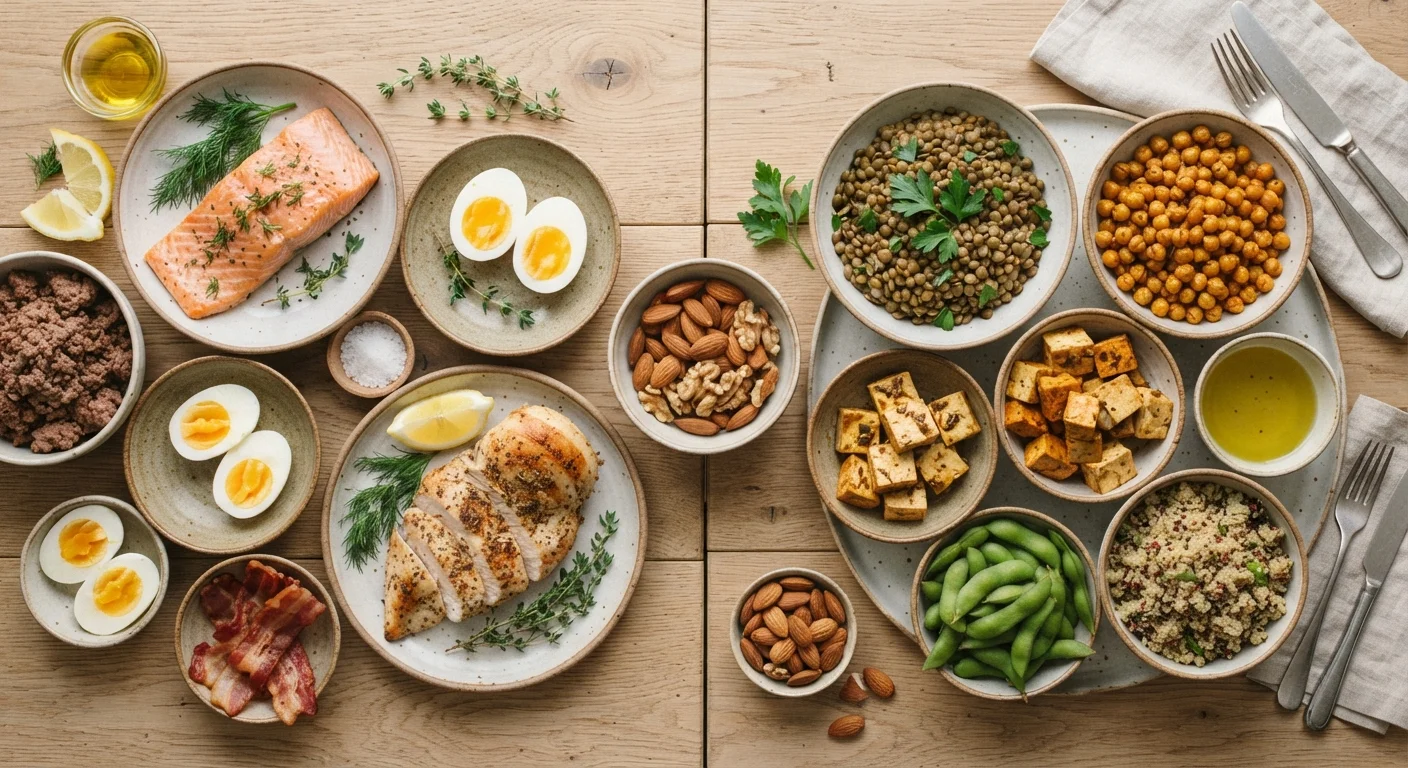
Photo: BridgeWish.com | Reliable Source Of Information editorial
Key Takeaways
- Animal proteins are 'complete,' supplying all nine essential amino acids in one source.
- Most plant proteins lack one or more essential amino acids but can be combined effectively.
- Bioavailability — how well the body absorbs protein — tends to be higher for animal sources.
- Plant proteins often come packaged with fiber, antioxidants, and lower saturated fat.
- Eating a varied diet makes it straightforward to meet protein needs from either source type.
What Makes a Protein 'Complete'?
Proteins are built from amino acids — twenty in total, nine of which the body cannot manufacture on its own. These nine are called essential amino acids, and they must come from food. A protein source that contains all nine in adequate proportions is called a complete protein.
Animal proteins — including meat, poultry, fish, eggs, and dairy — are complete by nature. Plant proteins are a more varied picture. Soybeans and quinoa are notable exceptions that supply all nine essential amino acids, but most legumes, grains, nuts, and seeds fall short of one or more. Lysine is commonly low in grains; methionine is often limited in legumes.
This doesn't make plant proteins inadequate. Eating a range of plant foods throughout the day — say, rice and beans, or whole-grain bread with nut butter — naturally fills in the gaps. You don't need to combine them at every single meal; a varied daily diet accomplishes the same result. For a broader look at how protein fits into overall eating patterns, see our guide to dietary protein.
Bioavailability: How Much Protein Actually Gets Used?
Consuming protein and absorbing it are two different things. Bioavailability refers to how efficiently the body digests and uses the protein in a given food. One standard measure is the Digestible Indispensable Amino Acid Score (DIAAS), which accounts for both amino acid profile and digestibility in the small intestine.
~1.0
DIAAS score for whole eggs
Eggs score at or near 1.0 on the DIAAS scale, indicating highly digestible and complete protein, per FAO methodology.
~0.6–0.7
Typical DIAAS for cooked legumes
Most cooked legumes score in this range, reflecting lower digestibility compared with most animal proteins, according to FAO-cited research.
Animal proteins — particularly eggs, dairy, and meat — score highest on DIAAS, meaning more of what you eat is actually put to work in the body. Plant proteins generally score lower, though some (like soy isolate and pea protein concentrate) perform competitively. Anti-nutritional factors in plants, such as phytates and tannins, can reduce absorption, though soaking, cooking, and fermentation significantly mitigate these effects.
Practical implication: people relying on plant proteins may benefit from eating somewhat more total protein across the day to account for this difference — but this is a manageable adjustment, not a serious barrier. See our detailed protein source comparison for a deeper look at digestibility scores by food.
Beyond Protein: The Full Nutritional Picture
Protein rarely travels alone. The foods that deliver it carry other nutrients — and those co-passengers matter.
| Criterion | Animal Proteins | Plant Proteins | |
|---|---|---|---|
| Amino acid completeness | Complete (all 9 essential amino acids) | Often incomplete; soy and quinoa are exceptions | |
| Bioavailability (DIAAS) | Generally high | Moderate; improves with processing/cooking | |
| Saturated fat content | Varies; can be higher (red meat, dairy) | Generally lower | |
| Fiber content | None | Often significant (legumes, whole grains) | |
| Vitamin B12 | Naturally present | Absent; supplementation needed | |
| Iron type | Heme iron (readily absorbed) | Non-heme iron (less easily absorbed) | |
| Phytonutrients & antioxidants | Minimal | Abundant |
Animal proteins often come with vitamin B12 (found almost exclusively in animal foods), heme iron (more readily absorbed than non-heme iron from plants), zinc, and omega-3 fatty acids (especially in fatty fish). They may also carry higher saturated fat and dietary cholesterol, depending on the source and cut.
Plant proteins, by contrast, arrive bundled with dietary fiber, a wide range of antioxidants, and phytochemicals that have been linked in observational research to reduced chronic disease risk. They tend to be lower in saturated fat overall. The trade-off is that certain nutrients — iron, zinc, calcium, vitamin B12, long-chain omega-3s — require more planning to obtain in adequate amounts from plants alone.
For a more thorough side-by-side of what each dietary approach provides, our plant-based vs. omnivore nutrition comparison covers the full spectrum of nutrients to watch.
Maximizing Iron Absorption From Plants
Putting It Into Practice
Understanding protein quality is useful — but what matters most is what you consistently put on your plate. A few practical principles help regardless of which type of protein you favor:
- Diversify plant proteins by rotating legumes, whole grains, tofu, tempeh, edamame, nuts, and seeds across the week.
- Consider fortified foods or supplementation if you eat no animal products — particularly for vitamin B12, which is not reliably available from plant sources.
- Pair plant protein sources thoughtfully. Lentil soup with whole-grain bread, or hummus with whole-wheat pita, naturally complements amino acid profiles.
- Watch preparation methods: grilling, baking, or steaming preserves protein quality better than high-heat frying, which can degrade some amino acids.
If you're exploring a more plant-centered approach, our explainer on plant-based vs. vegan eating helps clarify what each framework actually looks like day-to-day. For foundational nutrition context, visit our Nutrition Basics hub.
This article is for general informational purposes only and does not constitute medical or dietary advice. Consult a registered dietitian or qualified healthcare professional for guidance tailored to your individual health needs.
The content on this site is for informational purposes only and is not a substitute for professional advice. Always consult a qualified professional for guidance specific to your situation.