
Protein Sources Side by Side: Animal vs. Plant

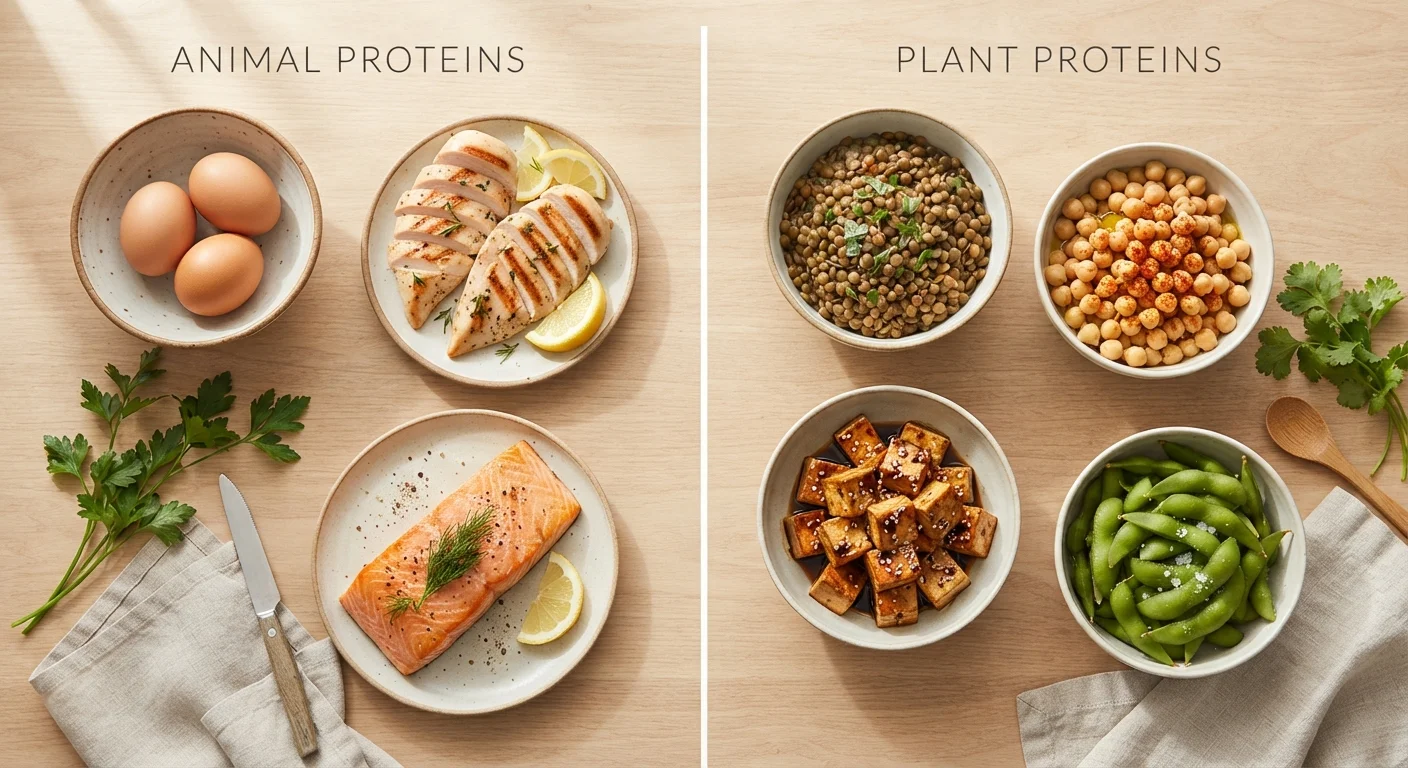
Photo: BridgeWish.com | Reliable Source Of Information editorial
Key Takeaways
- Animal proteins are generally 'complete,' supplying all nine essential amino acids in one source.
- Most plant proteins lack one or more essential amino acids, but smart food combinations can close this gap.
- Digestibility scores consistently favor animal proteins, though well-prepared plant sources score respectably.
- Plant proteins come packaged with fiber, antioxidants, and phytonutrients absent from most animal foods.
- Neither source is automatically superior — dietary context, variety, and overall eating patterns matter most.
- Speak with a registered dietitian before making major shifts to your protein intake or food choices.
Amino Acid Completeness: Where Each Source Stands
Proteins are built from 20 amino acids, nine of which are essential — meaning the body cannot synthesize them and must obtain them through food. This distinction is central to understanding how animal and plant proteins differ.
Animal proteins — found in meat, poultry, fish, eggs, and dairy — are considered complete proteins because they supply all nine essential amino acids in proportions the body can readily use. Plant proteins, with notable exceptions such as soy and quinoa, are typically incomplete, meaning they are low in one or more essential amino acids. For example, most legumes are low in methionine, while grains tend to be low in lysine.
This does not make plant proteins inadequate. Eating a varied diet — pairing legumes with grains, for instance — allows the body to receive a full complement of essential amino acids over the course of a day. Nutrition research supports the view that dietary amino acid needs can be met through thoughtful combinations of plant foods. For a deeper look at how these nutritional profiles compare, see the nutritional trade-offs between plant and animal proteins.
| Criterion | Animal Protein | Plant Protein |
|---|---|---|
| Amino acid completeness | Complete (all 9 essential AAs) | Often incomplete; soy and quinoa are exceptions |
| DIAAS digestibility score | Generally 0.9–1.18 | Generally 0.4–0.9; improves with preparation |
| Saturated fat | Variable; can be high in red/processed meats | Generally low |
| Dietary fiber | None | Significant in legumes, grains, and seeds |
| Vitamin B12 | Naturally present | Absent; requires fortified foods or supplements |
| Iron type | Heme iron (highly bioavailable) | Non-heme iron (lower bioavailability) |
| Phytonutrients & antioxidants | Minimal | Abundant |
| Environmental footprint | Generally higher (especially beef and lamb) | Generally lower |
Digestibility and Bioavailability: How Well Your Body Uses Each
Eating enough protein is only part of the equation — the body must also be able to digest and absorb it. Nutritionists use a measure called the DIAAS to rate protein quality by both amino acid content and how completely the body can digest each source.
Animal proteins consistently score at or above 1.0 on the DIAAS scale, indicating high digestibility and full amino acid availability. Eggs, dairy, and fish score among the highest of any food source. Plant proteins generally score lower — whole legumes, grains, and nuts range from about 0.4 to 0.9 — partly because plant cell walls and certain compounds like phytates can reduce absorption.
Preparation matters, however. Cooking, soaking, fermenting, and sprouting plant foods can significantly improve their digestibility. Tofu and tempeh, both derived from soy, score notably higher than whole soybeans for this reason. For a side-by-side look at bioavailability across specific sources, see comparing amino acid completeness and bioavailability.
~0.91
Average DIAAS score for cooked lentils
According to FAO assessments, well-cooked lentils score comparably to some animal proteins, narrowing the digestibility gap considerably.
~1.13
DIAAS score for whole eggs
Eggs are consistently ranked among the highest-quality proteins by digestibility measures, making them a nutrition reference benchmark.
2x
Heme vs. non-heme iron absorption difference
Research indicates the body absorbs heme iron from animal foods at roughly two to three times the rate of non-heme iron found in plant sources.
Nutritional Trade-Offs Beyond Protein Content
Protein quality is not the only lens worth applying. Both animal and plant sources carry distinct nutritional passengers — beneficial and otherwise — that affect overall dietary health.
Animal proteins provide readily absorbed heme iron, vitamin B12 (essential and found almost exclusively in animal foods), zinc, and omega-3 fatty acids in oily fish. Some animal proteins, particularly processed and fatty red meats, also carry substantial saturated fat and dietary cholesterol, which current evidence links to elevated cardiovascular risk when consumed in excess.
Plant proteins come bundled with dietary fiber, magnesium, folate, and a wide range of antioxidants and phytonutrients associated with reduced chronic disease risk. They are also free of dietary cholesterol and typically lower in saturated fat. The trade-off is that certain nutrients — iron, zinc, calcium — are present in less bioavailable forms in plants, and vitamin B12 is absent entirely, requiring supplementation or fortified foods for those relying solely on plant sources.
Understanding how these patterns interact at the whole-diet level is explored further in this nutritional comparison of plant-based and omnivore diets. And for information on how much protein you may need overall, dietary protein needs by age and activity level offers a grounded starting point.
Combining Plant Proteins: A Practical Note
This article is for general informational and educational purposes only and does not constitute medical or dietary advice. Speak with a registered dietitian or qualified healthcare provider before making significant changes to your diet, especially if you have an existing health condition.
The content on this site is for informational purposes only and is not a substitute for professional advice. Always consult a qualified professional for guidance specific to your situation.