
Whole Foods vs. Processed Foods: What the Difference Really Means for Your Diet

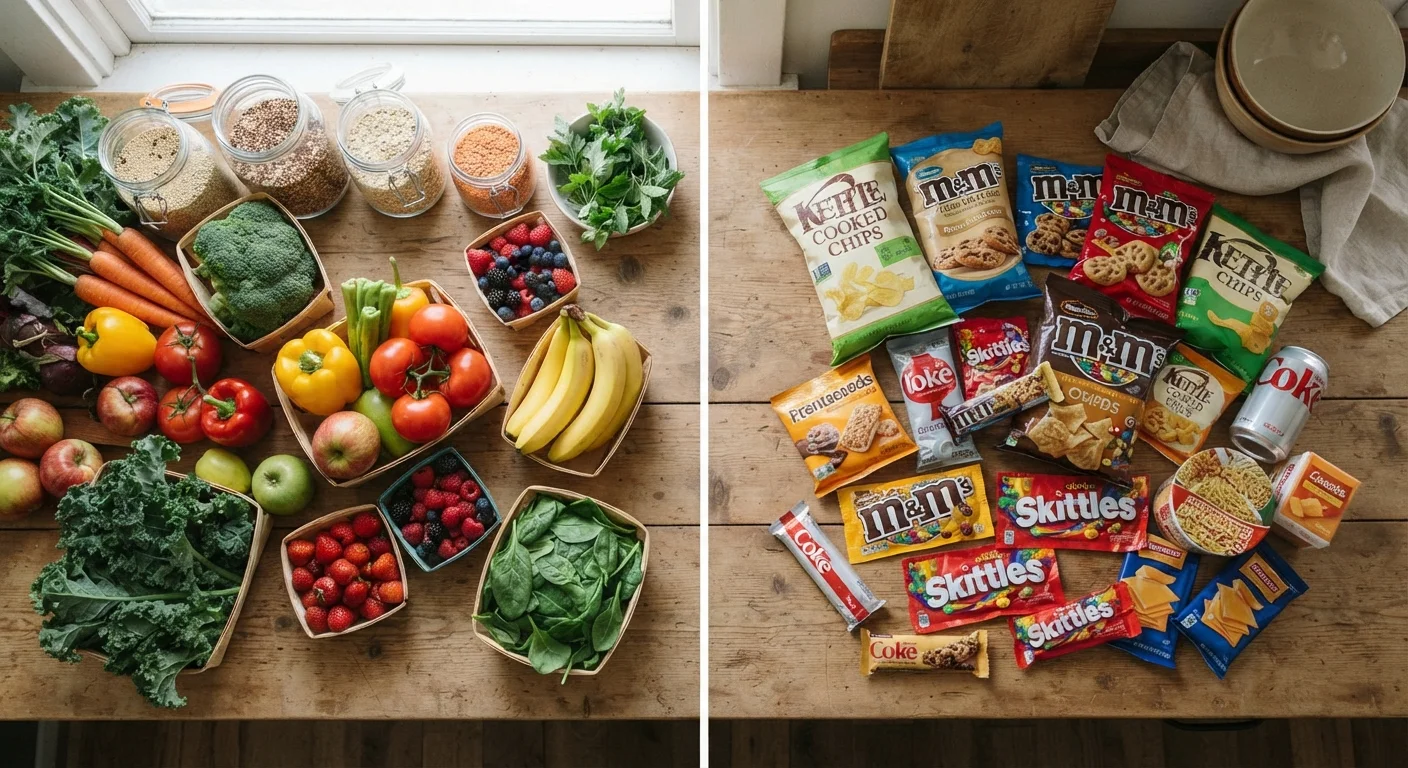
Photo: BridgeWish.com | Reliable Source Of Information editorial
Key Takeaways
- Processing exists on a spectrum; not all processed food poses the same health concerns.
- Ultra-processed foods — high in additives, sodium, and refined ingredients — are most consistently linked to negative health outcomes.
- Whole foods retain their natural fiber, vitamins, and minerals without significant alteration.
- Minimally processed foods like frozen vegetables or canned beans can still support a healthy diet.
- Diet quality overall matters more than any single food being 'whole' or 'processed.'
What 'Whole Food' Actually Means
A whole food is one that has been eaten with little or no alteration from its natural state. Think of an apple, a handful of almonds, a piece of salmon, or a cup of dried lentils. These foods arrive at your plate with their original package of nutrients — fiber, vitamins, minerals, phytonutrients, and healthy fats — largely intact.
The defining feature isn't that the food has never been touched. Washing, chopping, or briefly cooking vegetables doesn't disqualify them. Rather, it's the degree of change that matters. Whole foods haven't had nutrients stripped away or significant amounts of salt, sugar, or artificial additives introduced. For a deeper look at how researchers formally draw this line, see how nutrition researchers define the distinction.
Common examples of whole foods include fresh fruits and vegetables, unprocessed meats and fish, eggs, legumes, nuts, seeds, and intact whole grains. They tend to be rich in dietary fiber — a nutrient most Americans don't get enough of — and naturally lower in added sodium and sugar.
The Processing Spectrum Explained
"Processed food" is one of the most misunderstood terms in everyday nutrition conversations. In reality, processing covers an enormous range — from washing and bagging spinach to manufacturing cheese puffs with artificial flavoring and 30 ingredients. Treating all of it the same leads to both unnecessary anxiety and overlooked risks.
Nutrition researchers often use a classification system called NOVA, developed at the University of São Paulo, which groups foods into four categories based on the extent and purpose of processing:
- Group 1 — Unprocessed or minimally processed foods: Fresh or frozen vegetables, plain meats, eggs, milk, unsalted nuts, and plain whole grains. Little or no industrial alteration.
- Group 2 — Processed culinary ingredients: Oils, butter, flour, sugar, and salt — used in cooking but not usually eaten alone.
- Group 3 — Processed foods: Canned fish, cheese, cured meats, and canned legumes. These have added salt, sugar, or oil, but remain recognizable as food.
- Group 4 — Ultra-processed foods: Packaged snacks, soft drinks, instant noodles, reconstituted meat products, and many breakfast cereals. These contain industrial additives — emulsifiers, flavor enhancers, colorings — and are formulated for palatability and shelf life rather than nutrition.
The health concerns associated with "processed food" are largely concentrated in Group 4. For a closer look at what separates the extremes, see what sets whole foods apart from ultra-processed foods.
| Criterion | Whole Foods | Processed Foods |
|---|---|---|
| Definition | Unaltered or minimally altered from natural state | Altered by industrial methods to varying degrees |
| Nutrient Retention | High — fiber, vitamins, minerals largely intact | Varies; ultra-processed often stripped of nutrients |
| Added Ingredients | None or negligible | Ranges from salt/oil to dozens of additives |
| Shelf Life | Generally shorter; often requires refrigeration | Often extended via preservatives or packaging |
| Health Risk Profile | Associated with better long-term health outcomes | Ultra-processed linked to higher chronic disease risk |
| Convenience | Requires preparation; limited portability | Ready-to-eat options widely available |
| Cost | Variable; fresh produce can be expensive | Often lower cost, especially shelf-stable options |
What the Research Actually Shows
Evidence linking ultra-processed food consumption to adverse health outcomes has grown substantially over the past decade. Observational studies — including large cohort studies published in journals such as The BMJ and JAMA Internal Medicine — have found associations between high ultra-processed food intake and increased risk of cardiovascular disease, type 2 diabetes, obesity, and all-cause mortality. It's important to note that most of this evidence is observational, meaning it shows association rather than direct causation.
57%
Share of US calories from ultra-processed foods
Research published in BMJ Open estimated that ultra-processed foods account for approximately 57% of energy intake in the average American diet.
+32%
Higher cardiovascular disease risk association
A large cohort study published in The BMJ found higher ultra-processed food consumption was associated with meaningfully increased cardiovascular disease risk.
95%
Americans falling short on dietary fiber
The U.S. Dietary Guidelines Advisory Committee has noted that dietary fiber is a nutrient of public health concern, with the vast majority of Americans not meeting recommendations.
Whole food diets, by contrast, are consistently associated with better health markers across populations. The fiber, antioxidants, and micronutrients in whole foods support gut health, stable blood sugar, and cardiovascular function in ways that are difficult to replicate through fortified or reformulated products.
That said, nutritional context still matters. A diet built mostly on whole foods but including some minimally processed items — plain canned tomatoes, frozen edamame, or pasteurized dairy — is still a diet the evidence supports. For related reading on how grain processing specifically affects nutrition, see what changes when whole grains are refined.
This article is for general informational purposes only and does not constitute medical or dietary advice. Consult a qualified healthcare professional or registered dietitian for guidance tailored to your individual health needs.
The content on this site is for informational purposes only and is not a substitute for professional advice. Always consult a qualified professional for guidance specific to your situation.