
Caulking vs. Weatherstripping: Sealing Gaps the Right Way

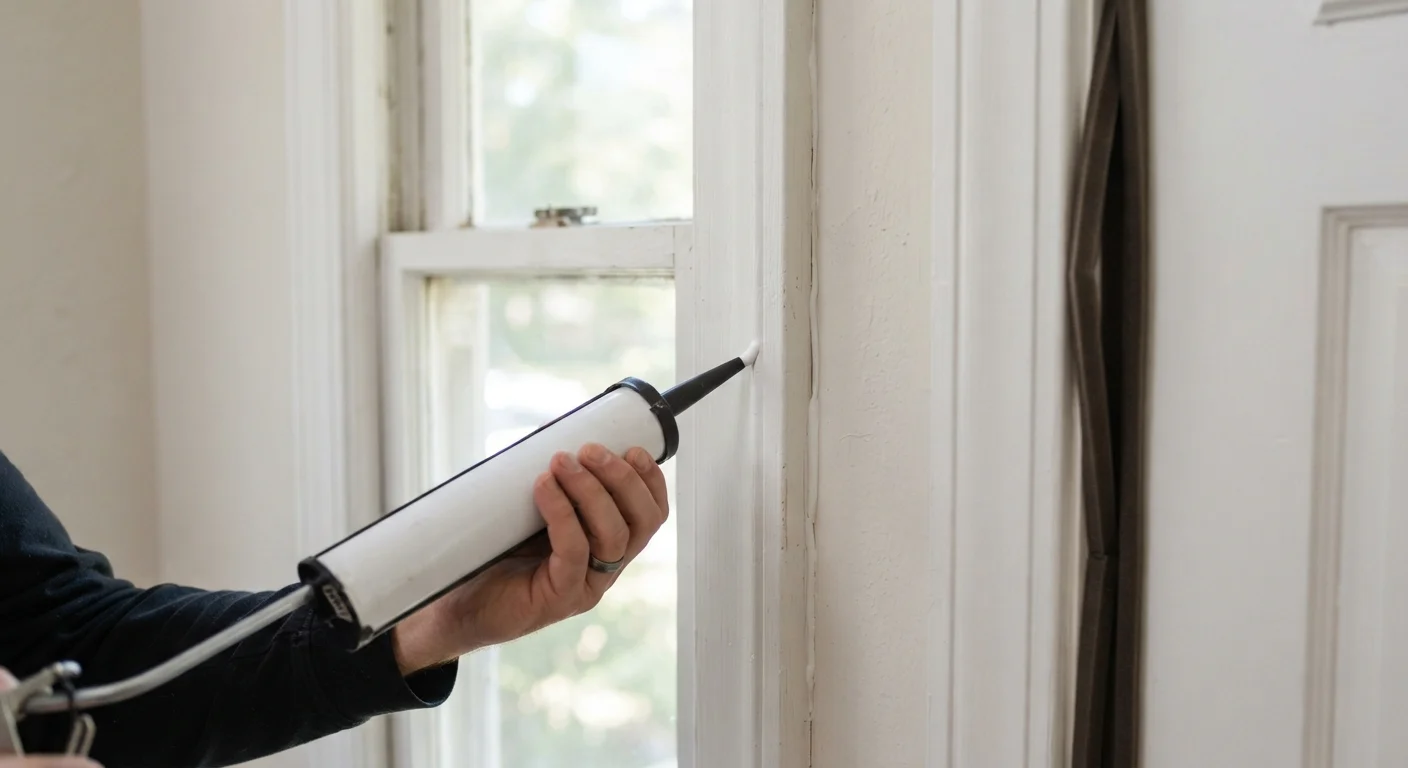
Photo: BridgeWish.com | Reliable Source Of Information editorial
Key Takeaways
- Caulk is designed for stationary joints; weatherstripping handles gaps that move when doors and windows operate.
- Using the wrong product in the wrong location leads to premature failure and wasted effort.
- Most homes need both — they address different types of air and moisture infiltration.
- Inspect seals seasonally, especially before winter, to catch failures before they drive up energy costs.
- Weatherstripping wears out faster than caulk and typically needs replacement every few years.
The Core Difference: Movement Is Everything
The single most useful question when sealing a gap is: does this gap move? If the joint is static — two surfaces permanently fixed in place — caulk is almost always the right tool. If the gap opens and closes as part of normal operation, weatherstripping is what you need.
Caulk is a flexible sealant that, once cured, forms a rigid-yet-slightly-pliable bond between two stationary surfaces. It's designed to fill and seal cracks, not absorb repeated mechanical stress. Weatherstripping, by contrast, is a compressible material — foam, rubber, silicone, or felt — that creates a seal by being squeezed between a door or window and its frame each time it closes. It's built to survive thousands of compression cycles.
Confusing the two is one of the most common mistakes in home weatherproofing. Caulk applied to a door stop will crack and peel within a single season. Weatherstripping tucked into a fixed window-frame seam won't bond properly and will let air pass around it. Getting the location right before you buy anything saves time, money, and frustration. For a broader seasonal checklist, see our winter home preparation guide.
| Criterion | Caulk | Weatherstripping |
|---|---|---|
| Best application | Fixed, stationary joints | Operable doors and windows |
| Material types | Silicone, latex, polyurethane | Foam, rubber, silicone, felt, vinyl |
| Typical lifespan | 5–10 years | 2–5 years |
| Handles movement? | No — will crack if flexed repeatedly | Yes — designed for compression cycles |
| DIY skill level | Low to moderate | Low |
| Failure signs | Cracking, shrinkage, peeling | Visible light gaps, felt drafts |
| Typical cost range | Low (per tube) | Low to moderate (per door/window) |
Where Each One Belongs
Caulk belongs on static joints:
- The perimeter of window frames where they meet interior or exterior wall surfaces
- Door casings and trim where they meet walls or siding
- Gaps where baseboards meet flooring or walls
- Around plumbing pipes, vents, and electrical conduits passing through exterior walls
- Joints between different exterior materials — siding to foundation, siding to trim
Weatherstripping belongs on operable openings:
- The top, bottom, and sides of exterior door frames (the door stop and threshold)
- The sash channels and meeting rails of double-hung or sliding windows
- Attic hatch perimeters
- Garage door edges
It's worth noting that many windows and doors actually require both. The operable sash gets weatherstripping; the fixed frame where it meets the wall gets caulk. If you're also seeing condensation or operational problems, our seasonal window maintenance guide covers those issues in detail.
25–30%
Home heating energy lost through gaps and cracks
The U.S. Department of Energy estimates that air leaks through gaps, cracks, and openings can account for roughly 25–30% of a home's heating and cooling energy use.
$0.50–$5
Average cost to weatherstrip one linear foot
Material costs vary by type, but weatherstripping is generally one of the most cost-effective sealing improvements a homeowner can make.
Durability, Failure Signs, and Replacement Timing
Caulk generally lasts five to ten years depending on the formulation, sun exposure, and how much thermal movement occurs in the joint. Silicone caulk tends to outlast latex-based versions and holds up better in wet areas. Signs of caulk failure include visible cracking, shrinkage away from the surface, or sections that have become brittle and are pulling free. For a more detailed look at what causes deterioration, see why caulk fails and when to reapply it.
Weatherstripping has a shorter functional lifespan — typically two to five years for foam types, and somewhat longer for denser rubber or silicone versions. The tell-tale sign is simple: light is visible around a closed door, or you can feel airflow when running your hand along the door's edge. Door sweeps — the strip along the door bottom — often wear faster than side strips and should be checked annually.
Inspecting both systems before the heating season each year is a straightforward habit that pays dividends in comfort and energy costs. If your home has aging windows or doors, repeated seal failures may indicate a larger issue. Our guide on patching versus replacing can help you decide when resealing makes sense and when it doesn't.
When to Call a Professional
The content on this site is for informational purposes only and is not a substitute for professional advice. Always consult a qualified professional for guidance specific to your situation.