
DIY vs. Hiring a Pro: How to Decide for Common Home Repairs

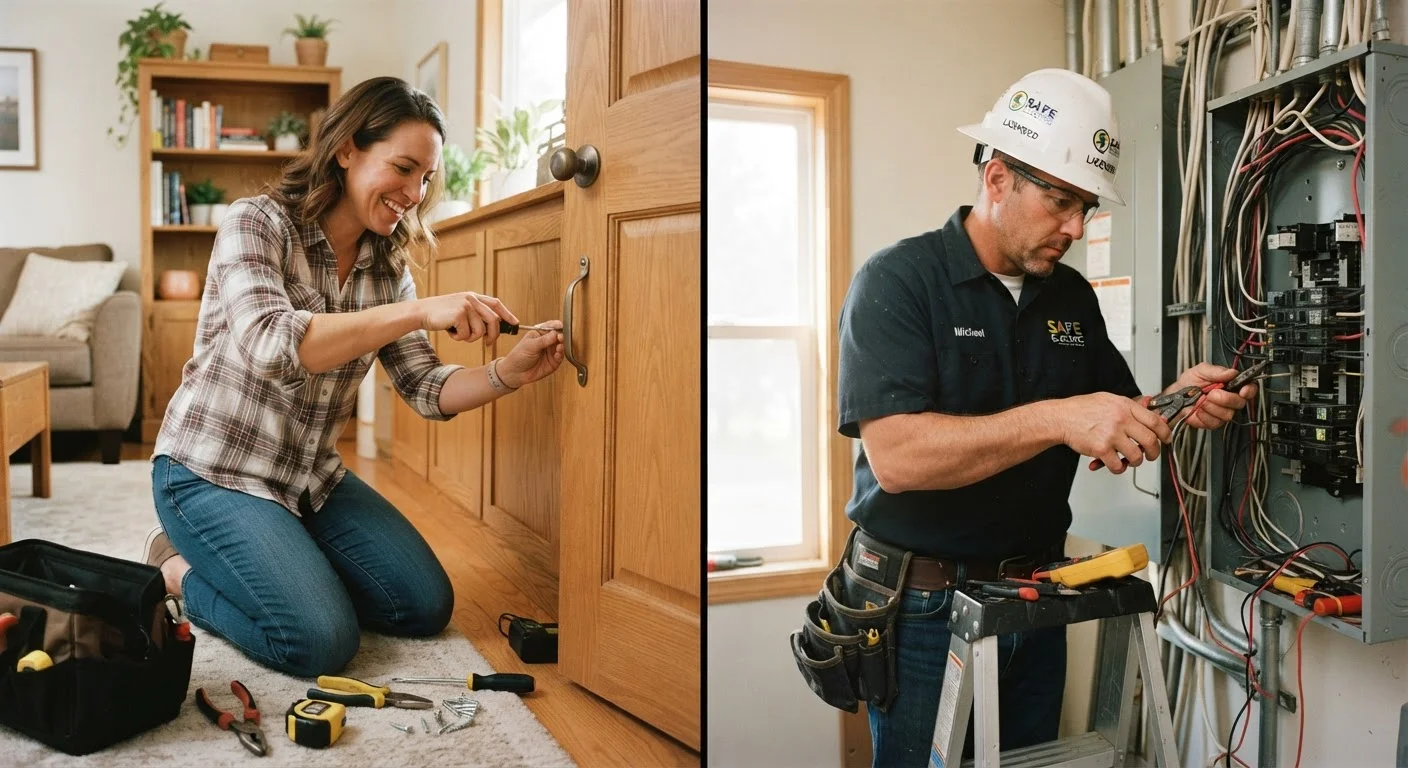
Photo: BridgeWish.com | Reliable Source Of Information editorial
Key Takeaways
- Skill level, safety risk, and permit requirements are the three core factors in any DIY vs. pro decision.
- Electrical, gas, and structural work almost always requires a licensed professional and local permits.
- DIY is often appropriate for cosmetic fixes, basic maintenance, and low-risk repairs with clear instructions.
- Unpermitted hazardous work can void your homeowner's insurance and complicate a future home sale.
- Getting a professional estimate first doesn't obligate you — it gives you a baseline for comparison.
The Core Framework: Three Questions to Ask First
Before picking up a wrench or dialing a contractor, run any repair through three questions:
- What's the safety risk if it goes wrong? A botched paint job is cosmetic. A miswired outlet is a fire hazard.
- Does this work require a permit or licensed trade? In most US jurisdictions, electrical panel work, gas line changes, and structural alterations require permits — and in many cases, only a licensed contractor can pull them.
- Do you genuinely have the skill and tools? Watching a tutorial is not the same as hands-on competency. Honest self-assessment here protects both your safety and your budget.
These three filters will resolve most decisions before you go any further. For a broader look at self-reliant home upkeep, see our guide to maintaining a home on your own.
| DIY | Hiring a Pro | |
|---|---|---|
| Typical cost | Lower upfront (materials only) | Higher upfront (labor + materials) |
| Safety risk management | Relies on homeowner judgment | Licensed, insured, and accountable |
| Permit eligibility | Often cannot pull permits for regulated work | Can pull required permits legally |
| Time investment | Often higher for complex tasks | Faster due to expertise and tools |
| Quality assurance | Varies with skill level | Professional warranty often included |
| Insurance implications | Risk if work is unpermitted or causes damage | Work is covered by contractor liability |
Where DIY Makes Sense
Many routine maintenance tasks are well within reach for a careful, patient homeowner. Examples that are generally DIY-friendly include:
- Patching small drywall holes — cosmetic, low-risk, and well-documented in manufacturer instructions.
- Replacing faucet washers and aerators — involves water shutoff but no structural plumbing changes.
- Caulking around tubs, sinks, and windows — prevents moisture intrusion and requires only basic prep.
- Seasonal gutter cleaning — straightforward with proper ladder safety practices.
- Painting interior walls — time-intensive but low risk and highly reversible.
- Replacing light switch covers or outlet covers — strictly cosmetic, requiring no wiring.
The common thread: these tasks are cosmetic or preventive, reversible if done imperfectly, and don't intersect with systems that carry injury or code risk. Having the right tools matters — improvising with the wrong equipment increases both mistakes and injuries.
Start With the Manufacturer Instructions
Where a Licensed Professional Is the Right Call
Certain categories of home repair carry consequences severe enough — physical harm, insurance voidance, failed inspections — that professional involvement is strongly advisable regardless of your DIY confidence level.
- Electrical panel work, new circuit installation, or rewiring — requires permits in virtually every US jurisdiction; improper work is a leading cause of residential fires.
- Gas line repairs or appliance connections — leaks from faulty work can cause explosions or carbon monoxide exposure.
- Structural changes — removing or modifying load-bearing walls without engineering review risks collapse.
- Roofing beyond minor patching — fall risk and the potential for concealed damage make professional assessment essential.
- HVAC system repairs — refrigerant handling is federally regulated and requires certified technicians.
Unpermitted work in these categories can also create serious problems when you sell your home, as buyers' inspectors typically flag it. Our article on where the licensed-professional line really is covers these categories in greater depth.
Unpermitted Work Has Lasting Consequences
Cost Isn't the Whole Picture
It's tempting to frame this purely as a cost comparison — DIY saves money, hiring a pro costs more. But that calculus is incomplete. Factor in:
- The cost of mistakes. A DIY plumbing error that causes water damage can far exceed what a plumber would have charged.
- Your time. A two-hour job for a professional might take an inexperienced homeowner a full weekend — plus multiple hardware store trips.
- Tool costs. Specialty tools purchased for a single repair rarely pay for themselves.
- Insurance implications. Some homeowner insurance policies limit or deny claims for damage resulting from unpermitted or unlicensed work.
A practical approach: for any repair where you're uncertain, get a professional quote first. It costs nothing to gather that information, and it gives you a concrete basis for deciding whether the DIY savings are actually meaningful. The same framework applies in other domains — our look at DIY car maintenance vs. shop visits explores parallel trade-offs.
This article is for general informational purposes only. Always verify local building codes, permit requirements, and safety regulations with qualified professionals before beginning any home repair project.
The content on this site is for informational purposes only and is not a substitute for professional advice. Always consult a qualified professional for guidance specific to your situation.