
DIY Car Maintenance vs. Taking It to a Shop: Knowing Where the Line Is

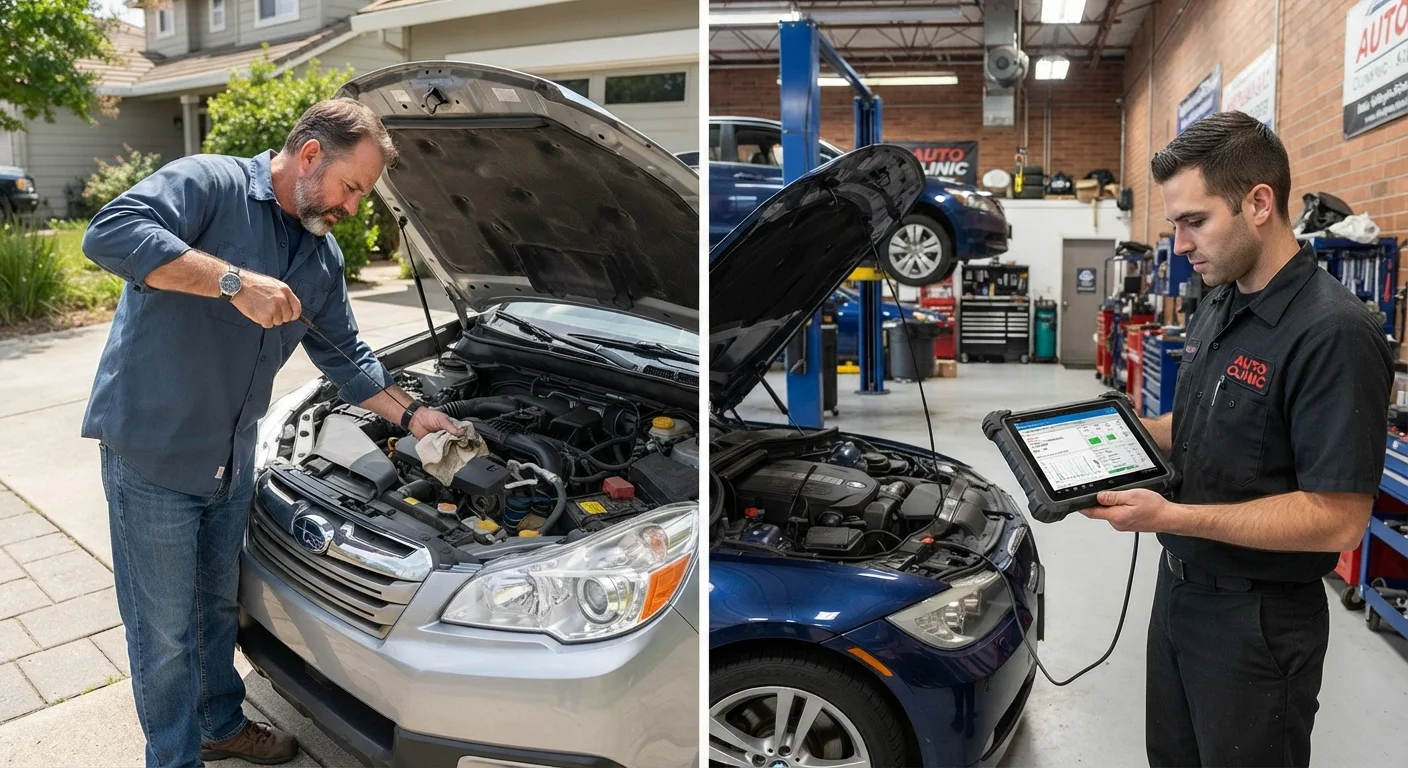
Photo: BridgeWish.com | Reliable Source Of Information editorial
Key Takeaways
- Basic fluid checks, air filters, and wiper blades are generally safe for careful home mechanics to handle.
- Brake system work, suspension repairs, and anything involving the fuel system carry serious safety risks and warrant professional attention.
- Your main decision factors are safety risk, tool requirements, vehicle warranty implications, and your own honest skill level.
- A mistake on a safety-critical system can cost far more - in money and risk - than the shop visit you avoided.
The Real Question Isn't Cost - It's Consequences
Most drivers weigh DIY against shop visits purely in terms of money. That's understandable, but it misses the more important variable: what happens if something goes wrong? A slightly crooked wiper blade is an inconvenience. An improperly bled brake line is a genuine hazard.
The better framework sorts tasks by three factors: safety risk (could an error cause an accident or injury?), tool and knowledge threshold (does the job require specialized equipment or diagnostic software?), and reversibility (can a mistake be easily corrected, or does it compound into a bigger problem?). Low scores on all three generally point toward DIY. High scores on any one of them - especially safety risk - point toward a shop.
For a broader look at applying this same logic to other types of repairs, see our guide to DIY versus hiring a pro.
Tasks That Are Genuinely DIY-Friendly
Several routine maintenance items sit comfortably in the home-mechanic category for most drivers - provided you follow your owner's manual and take basic precautions.
- Engine air filter replacement: Typically a tool-free or single-clip job accessible under the hood. Consult your owner's manual for the correct filter specification.
- Cabin air filter replacement: Usually located behind the glove box or under the dashboard. Straightforward on most vehicles.
- Windshield wiper blades: Simple clip-and-slide installation; blade packaging usually includes vehicle-specific instructions.
- Checking and topping off fluids: Engine oil, coolant reservoir, windshield washer fluid, and power steering fluid (where applicable) all have clearly marked dipsticks or reservoirs. Checking levels costs nothing and prevents real damage.
- Tire pressure checks: A quality tire pressure gauge costs a few dollars. Maintaining correct inflation improves fuel economy, handling, and tire life.
- Battery terminal cleaning: Disconnecting and cleaning corroded terminals with a wire brush is low-risk - but if the battery itself needs testing or replacement, a shop or auto parts store with a battery tester can give you a reliable read.
Always Start With Your Owner's Manual
First-time car owners often discover that staying on top of these basics prevents the more expensive repairs that follow from neglect.
Where DIY Becomes Genuinely Risky
Some jobs look approachable in online tutorials but carry real consequences for errors - especially when performed without proper tools, a lift, or hands-on training.
Don't Let a Tutorial Oversimplify the Risk
- Brake system work: Pad replacement, rotor resurfacing, caliper service, and especially brake line work require correct torque specs, proper bleeding technique, and the right hardware. Errors here directly affect stopping distance.
- Suspension and steering components: Ball joints, tie rods, and wheel bearings involve precise tolerances. Incorrect installation can cause handling failure or wheel separation at speed.
- Timing belt or chain service: Misalignment by even one tooth can cause catastrophic engine damage. Most manufacturers specify exact procedures and torque sequences.
- Fuel system work: Fuel injectors, fuel pumps, and fuel lines involve flammable materials under pressure. This work warrants professional handling.
- Advanced electrical diagnosis: Modern vehicles rely on complex networks of sensors and control modules. Diagnosing a fault often requires factory-level scan tools. Understanding the difference between a battery, alternator, and starter failure is a useful first step, but deeper electrical faults typically need a shop.
Comparing DIY and Shop Across Key Dimensions
No single rule applies to every driver or every vehicle. The table below lays out how DIY and professional service compare across the factors that matter most.
| DIY Maintenance | Professional Shop | |
|---|---|---|
| Upfront cost | Lower for parts only | Higher - includes labor |
| Safety-critical work | High risk if done incorrectly | Qualified, accountable technician |
| Specialized tools required | Significant barrier for many jobs | Shop equipment available |
| Error consequences | Varies - can be severe | Shop bears liability for workmanship |
| Warranty implications | Risk if documentation lacking | Documented service records provided |
| Best suited for | Fluids, filters, wipers, tire pressure | Brakes, suspension, electrical, fuel |
When your vehicle is still under a manufacturer's powertrain or bumper-to-bumper warranty, check the warranty terms before performing any service yourself. Some warranties require documented service intervals performed at qualified shops - though the Magnuson-Moss Warranty Act generally prevents manufacturers from voiding a warranty solely because you used a qualified independent mechanic or performed basic maintenance yourself. When in doubt, review your warranty documentation.
If you're trying to make sense of what a shop is actually charging you for, our guide to reading a mechanic's estimate explains the line items and what's worth questioning.
Calibrating Your Own Skill Level Honestly
DIY automotive work rewards preparation and punishes overconfidence. Before taking on any task, ask yourself: Do I have the correct tools - not makeshift substitutes? Have I read the service procedure for my specific vehicle, not just a generic tutorial? Do I have a safe place to work, with the vehicle properly supported on jack stands if it needs to be lifted?
Your skill level is also a moving target. A brake pad replacement on a simple passenger car is within reach for a careful, well-prepared first-timer. The same job on a performance vehicle with a multi-piston caliper setup is a different undertaking. Start with the lowest-risk tasks, build familiarity with your vehicle, and scale up incrementally rather than attempting complex repairs as your first project.
The costs of vehicle ownership extend well beyond the purchase price - understanding which maintenance you can genuinely handle yourself is part of managing those costs responsibly over the long term.
This article is for general informational purposes only. Automotive repair involves safety-critical systems; always consult a qualified mechanic for work beyond your verified skill level, and follow all safety precautions when working on any vehicle.
The content on this site is for informational purposes only and is not a substitute for professional advice. Always consult a qualified professional for guidance specific to your situation.