
Battery, Alternator, and Starter: Telling Apart Three Common Electrical Failures

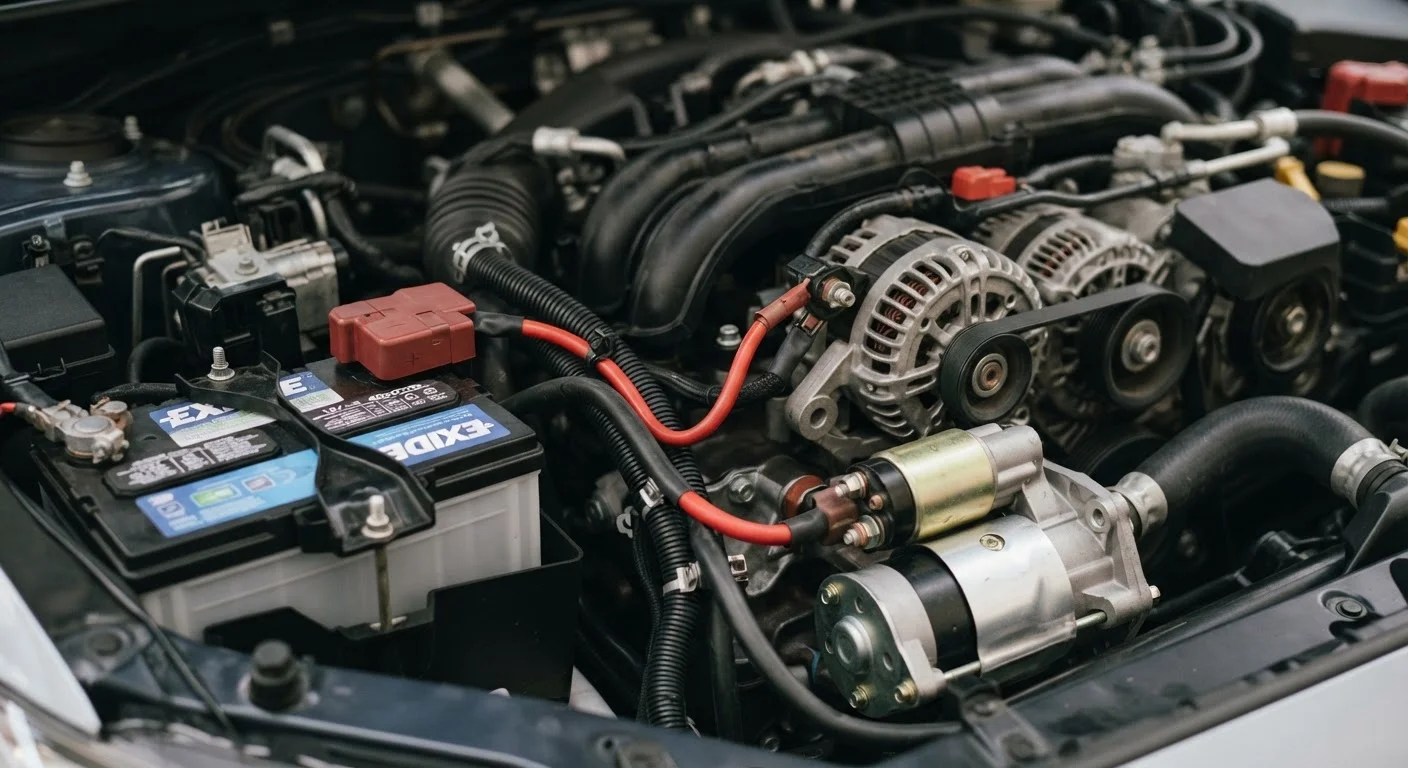
Photo: BridgeWish.com | Reliable Source Of Information editorial
Key Takeaways
- A dead battery, a failing alternator, and a bad starter each produce distinct, identifiable symptoms.
- Clicking sounds, dim lights, and slow cranking are often battery-related, not starter problems.
- An alternator failure typically shows up as repeated battery drain or flickering electronics while driving.
- A starter problem usually means the engine won't crank at all despite a fully charged battery.
- A multimeter or load test can confirm a battery issue before replacing parts unnecessarily.
- Understanding the difference can save you from paying for the wrong repair.
Why These Three Components Get Confused
When a car refuses to start, most drivers instinctively blame the battery. Sometimes they're right - but not always. The battery, alternator, and starter form an interdependent electrical system, and a failure in any one of them can leave you stranded in ways that look deceptively similar from the driver's seat.
The confusion is understandable. All three components affect whether and how the engine starts. But once you know what each part actually does, the symptom differences become much clearer - and you're far less likely to replace a perfectly good battery when the real problem lies elsewhere.
For a broader look at electrical systems alongside other maintenance fundamentals, see the complete car ownership and maintenance guide.
3-5 years
Typical car battery lifespan
AAA research indicates most conventional lead-acid batteries last three to five years, with extreme temperatures shortening that range significantly.
1 in 5
Roadside calls attributed to battery failure
Battery-related issues consistently rank among the top causes of roadside assistance calls in the US, according to AAA annual data.
13.5-14.5V
Normal alternator output range
A properly functioning alternator should produce between 13.5 and 14.5 volts while the engine is running, as measured at the battery terminals.
The Battery: Storage, Not Generation
The battery's job is to store electrical energy and deliver a large, short burst of power to start the engine. It also powers accessories when the engine is off. A battery does not generate electricity on its own - that's the alternator's role.
Symptoms of a failing battery
- Slow or labored cranking - the engine turns over sluggishly before starting, or barely at all
- Rapid clicking when the key is turned, with dim dashboard lights and weak headlights
- The car starts fine after a jump but dies again after sitting
- Swollen or corroded battery case visible under the hood
A battery that's three or more years old and showing any of these signs is worth having load-tested. Voltage alone doesn't tell the full story - a battery can read 12.6 volts at rest but collapse under the load of cranking.
Get a Free Battery Load Test First
The Alternator: The System's Generator
The alternator is belt-driven by the engine and converts mechanical energy into electricity. It keeps the battery charged while driving and powers all electrical systems - headlights, climate control, infotainment - when the engine is running. When the alternator fails, the battery carries the entire load alone, and it won't last long.
Symptoms of a failing alternator
- Battery warning light illuminates on the dashboard while driving
- Flickering or dimming headlights and interior electronics while the engine is running
- Repeated battery drain - new batteries going dead within days
- Unusual electrical behavior such as radio cutting in and out or power windows slowing down
- A burning rubber or electrical smell from the engine bay
An alternator typically produces between 13.5 and 14.5 volts when functioning correctly. A mechanic can verify output with a simple diagnostic tool. Alternator replacement is generally not a DIY task for most drivers - see when to take a repair to a professional shop for guidance on where to draw the line.
The Starter: The Mechanical Bridge
The starter motor receives power from the battery and uses it to physically spin the engine - a process called cranking - until combustion takes over. It only operates for a second or two per start cycle and then disengages. Starter problems are distinct because the battery can be completely healthy and fully charged while the starter still fails to do its job.
Symptoms of a failing starter
- A single loud click or complete silence when the key is turned, with normal dashboard lights
- Intermittent starting - the car starts sometimes but not others, with no pattern
- Grinding noise during starting, which may indicate worn starter gears
- Engine cranks extremely slowly even with a known-good battery
If your lights and electronics are fully bright but the engine simply won't turn over, the starter is a strong suspect. This is one of the clearer diagnostic distinctions between these three components.
First-time owners often overlook early warning signs of starter wear. The maintenance tasks new car owners most commonly miss covers this and other frequently ignored issues.
Intermittent Starting Problems Are Harder to Diagnose
A Practical Approach to Narrowing It Down
Before authorizing any repair, it helps to approach the diagnosis methodically. A few straightforward observations can point you toward the right component:
- Turn the key and observe your lights. Dim or flickering lights during cranking suggest low battery voltage. Bright lights with no engine response suggest the starter.
- Note the sound. Rapid clicking = low battery. Single click or silence = starter. No click at all and no lights = potentially a completely dead battery or a blown fuse.
- Try a jump-start. If the car starts immediately and runs well, a weak battery is likely. If it won't start even with a jump, the starter or a severely discharged battery may be the issue.
- Watch for recurring battery drain. If a good battery keeps going dead, the alternator isn't charging it properly.
These observations don't replace a professional diagnosis, but they give you useful information before you call a shop - and help ensure you're not talked into replacing something that doesn't need replacing.
For those learning the basics of what maintenance actually involves, the beginner's guide to car ownership and maintenance is a useful starting point.
“The most common and preventable mistake drivers make is replacing the battery when the real problem is the alternator. A proper load test and charging system check takes minutes and can save hundreds of dollars.”
— Automotive Service Excellence (ASE), National certification body for professional automotive technicians
Frequently Asked Questions
The content on this site is for informational purposes only and is not a substitute for professional advice. Always consult a qualified professional for guidance specific to your situation.