
Keeping Crawl Spaces and Basements From Becoming Moisture Problems

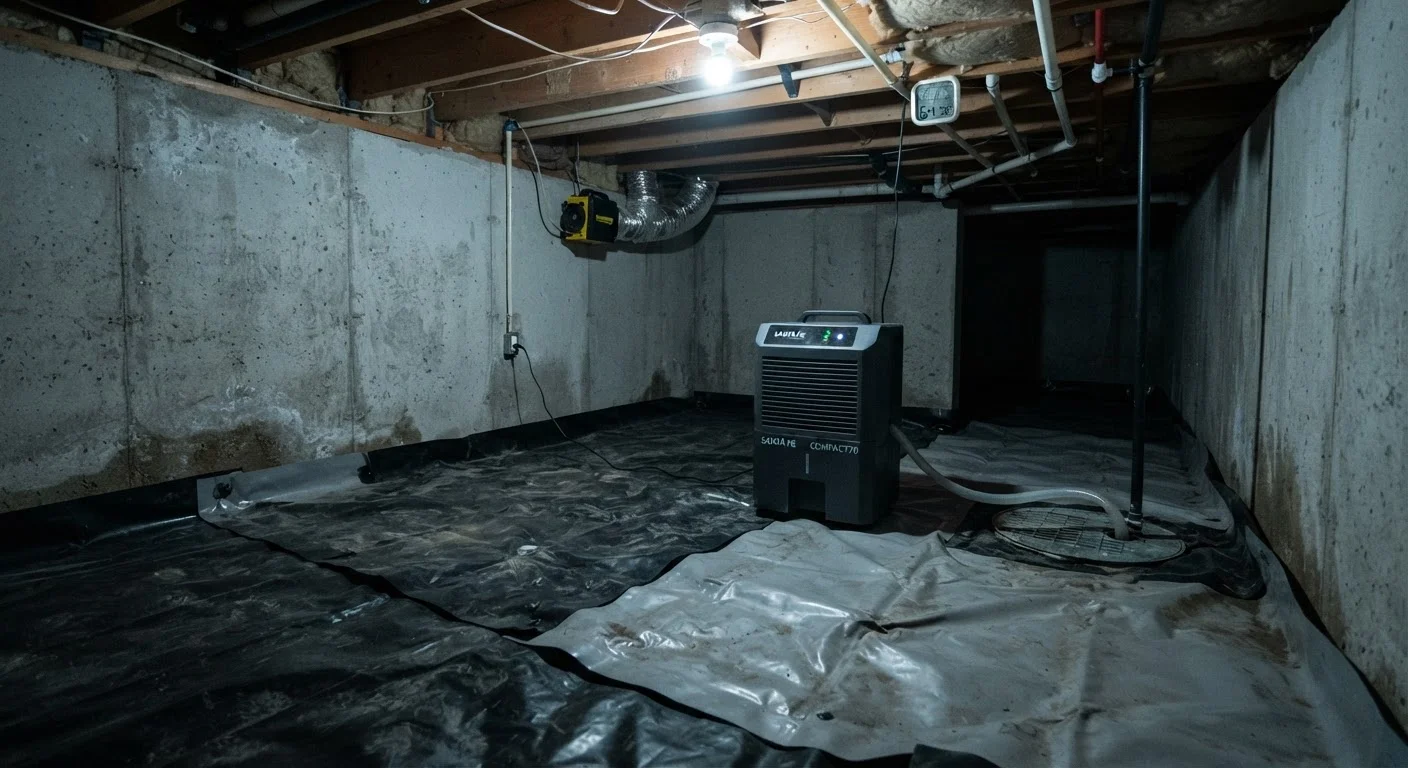
Photo: BridgeWish.com | Reliable Source Of Information editorial
Key Takeaways
- Moisture in crawl spaces and basements commonly comes from condensation, groundwater, and exterior drainage failures.
- A vapor barrier installed on the crawl space floor significantly reduces moisture migration from the soil.
- Drainage grading, gutter management, and interior dehumidification work together — no single fix is sufficient.
- Uncontrolled moisture creates conditions for mold growth, wood rot, and pest infestation over time.
- Some moisture control tasks are DIY-friendly, but structural waterproofing and mold remediation warrant licensed professionals.
Why Below-Grade Moisture Is Such a Stubborn Problem
Crawl spaces and basements sit at the lowest point of your home — exactly where water wants to go. Soil releases moisture vapor continuously, groundwater can migrate through concrete during wet seasons, and warm indoor air condensing on cool surfaces adds more humidity. The result is a below-grade environment that is naturally biased toward dampness.
What makes this particularly tricky is that the damage often develops slowly and invisibly. Mold colonies can establish behind insulation or on floor joists long before you notice a smell. Wood rot weakens structural framing before it visually deteriorates. Understanding where moisture originates is the first step to controlling it — for a deeper look at sources and risk categories, see Basement Moisture: Sources, Risks, and What You Can Control.
Condensation vs. Seepage: An Important Distinction
Best Practices for Crawl Space and Basement Moisture Control
Effective moisture management combines exterior prevention with interior mitigation. The practices below address both sides of the problem and are arranged from the outside in — starting with where water enters your home's perimeter.
Install a ground-cover vapor barrier in all crawl spaces.
Grade soil away from the foundation on all sides of the home.
Keep gutters clean and extend downspouts well away from the foundation.
Use a dehumidifier sized to the space to maintain relative humidity below 60%.
Inspect and maintain crawl space vents or encapsulation based on your climate and system type.
Address cracks in foundation walls and floors promptly.
Quick Actions You Can Take This Season
Not every moisture fix requires a contractor or a weekend project. Several high-impact steps can be completed in an afternoon and make a measurable difference heading into wetter months.
For related exterior sealing work that complements moisture control, see Caulking vs. Weatherstripping: Sealing Gaps the Right Way and Gutters: Cleaning, Inspecting, and Knowing When to Replace Them.
60%
Relative humidity threshold for mold risk
The EPA generally identifies indoor relative humidity above 60% as creating conditions favorable to mold growth.
~50%
US homes with some basement moisture
The American Society of Home Inspectors has estimated that a substantial share of US homes with basements experience some form of moisture problem.
When to Call a Professional
Some moisture problems exceed routine maintenance. If you observe standing water after rain, active efflorescence (white salt deposits on concrete walls indicating ongoing water pressure), visible black mold covering more than a small area, or sagging floor joists, these are signs of conditions that typically require a licensed waterproofing contractor or structural engineer. Mold remediation in particular is regulated in many states and should not be treated as a straightforward DIY task.
Permits may be required for interior drainage systems, sump pump installations, or any structural repairs — verify local requirements with your municipality before starting work. A qualified inspector can also distinguish between surface condensation, which is manageable, and hydrostatic pressure, which demands more involved intervention.
Check Caulking Around Penetrations Too
This article is for general informational purposes only. It does not constitute professional engineering, construction, or mold remediation advice. Always consult a licensed professional for assessments and work specific to your home's conditions.
The content on this site is for informational purposes only and is not a substitute for professional advice. Always consult a qualified professional for guidance specific to your situation.