
Teaching a Dog to Stay: Building Duration, Distance, and Distraction

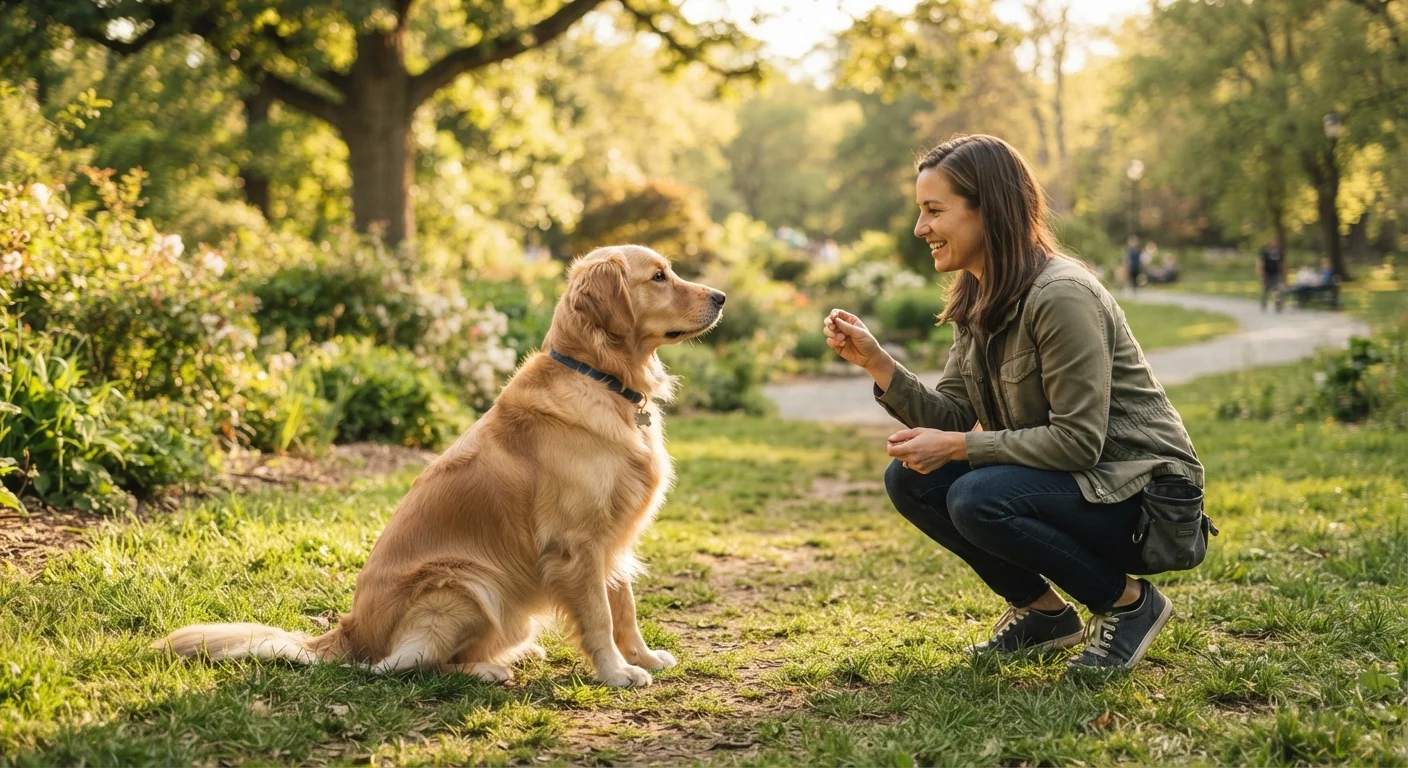
Photo: BridgeWish.com | Reliable Source Of Information editorial
Key Takeaways
- Stay is three separate skills — duration, distance, and distraction — that must be taught individually.
- Always train one element at a time; combining them too early is the most common reason dogs fail.
- Return to your dog to release them rather than calling them out of the stay.
- Short, frequent sessions of 5–10 minutes produce better results than long, infrequent ones.
- If your dog breaks the stay, you've moved too fast — reduce criteria and rebuild from success.
Why 'Stay' Is More Than One Command
Many dog owners treat stay as a single behavior, but trainers and behaviorists widely recognize it as three distinct skills stacked together: duration (how long the dog holds position), distance (how far away the handler moves), and distraction (how well the dog holds position despite competing stimuli). Trying to build all three at once is the most reliable way to frustrate both dog and owner.
A dog that holds a 10-second stay while you stand directly in front of them is not yet equipped to stay for 30 seconds while you walk to another room and a doorbell rings. Each layer requires its own foundation. The good news: once you separate them, progress is usually quick and genuinely rewarding for both of you.
Before diving in, make sure you have a consistent training routine in place. See our guide to building a training routine that sticks for practical session-structuring advice. If you're working with a marker word or clicker, our overview of clicker training explains how precise timing accelerates learning.
What you will need
Step-by-Step: Building the Stay
Work through these steps in order, spending as many sessions as needed on each before advancing. A good rule of thumb: your dog should succeed roughly 80% of the time before you raise the criteria.
Teach Duration First — With You Standing Still
Ask your dog to sit or lie down. Wait one to two seconds, then mark (with a click or a verbal marker like 'yes') and reward. Gradually increase the wait time in small increments — 2 seconds, then 4, then 7, then 10 — over multiple sessions. Do not add a verbal cue like 'stay' until your dog is holding position reliably for 10–15 seconds.
Introduce your release word clearly and consistently so your dog learns the stay ends when you say so, not when they decide to move.
Add a Verbal Cue and Hand Signal
Once your dog holds position for 15 seconds reliably, introduce your stay cue just before the pause. Use a consistent hand signal alongside your verbal cue — an open palm held toward the dog is common. Say 'stay,' pause, mark, reward, then release. The cue should predict what is about to happen, not command something the dog hasn't learned yet.
Introduce Distance — Separately From Duration
Reset duration back to just 2–3 seconds. Ask for a stay, then take one step back, pause briefly, return to your dog, mark, and reward. Critically: return to your dog to deliver the reward rather than calling them to you — this keeps the stay intact. Gradually increase distance one step at a time over several sessions, always returning before releasing.
Rebuild Duration at a Distance
Once your dog holds a stay with you 6–8 feet away, begin extending duration again at that distance. The combination of distance and time is harder than either alone, so expect to progress more slowly here. Short stays at a distance are more valuable than long ones that repeatedly break.
Introduce Distractions — Last and Gradually
Begin with mild distractions in your familiar training space: drop a low-value item nearby, walk past with a slightly exaggerated step, or let another person stand in the background. Only after your dog handles these confidently should you move to a new environment or introduce higher-value distractions like other animals or outdoor noises.
Each new environment effectively resets difficulty. Start as if your dog is a beginner in any new location — shorter durations, shorter distances — then rebuild. For puppies working on alone-time independence, the same graduated approach applies; see teaching a puppy to stay alone without anxiety for related guidance.
End Every Session on a Win
Common Pitfalls and How to Troubleshoot
Even with a careful approach, most owners hit snags. Here are the most frequent ones:
- Dog breaks the stay repeatedly: You've increased criteria too fast. Drop back to the last level where your dog was succeeding and rebuild more gradually.
- Dog only stays when treats are visible: Vary when and how you reward — sometimes after release, sometimes mid-stay, sometimes with praise only. The reward should feel unpredictable but reliable.
- Stay works at home but falls apart outside: This is normal. Distractions outdoors are far more powerful than most owners anticipate. Start the entire process over in the new environment at a much lower level of difficulty.
If progress stalls entirely, our article on why training plateaus happen and how to move forward offers concrete troubleshooting strategies. Older dogs may need a slightly adjusted pace — training an older dog covers what to adapt without abandoning the fundamentals.
Avoid Repeating the Cue Mid-Stay
The content on this site is for informational purposes only and is not a substitute for professional advice. Always consult a qualified professional for guidance specific to your situation.